
Book I
The Corpus Hermeticum
Seventeen treatises, from Poimandres, the Shepherd of Men, to the Secret Sermon on the Mountain.
“I am Man‑Shepherd, Mind of all‑masterhood; I know what thou desirest and I’m with thee everywhere.”
The writings of Hermes Trismegistus
The Corpus Hermeticum, the Asclepius, the Emerald Tablet, and texts buried in the Egyptian desert, newly translated.
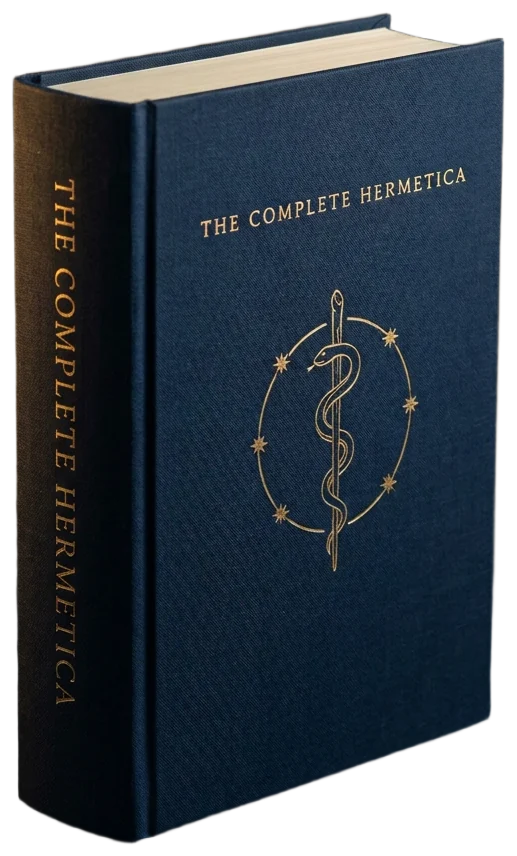
The Hermetica survived in pieces, scattered across four ancient languages.
Ἑρμῆς Τρισμέγιστος
In Roman Egypt, in the first centuries of our era: seventeen treatises and dozens of shorter passages.
Hermes Trismegistus
The Asclepius, the great dialogue whose Greek original is lost, survives only in a Latin translation.
ⲫⲉⲣⲙⲏⲥ
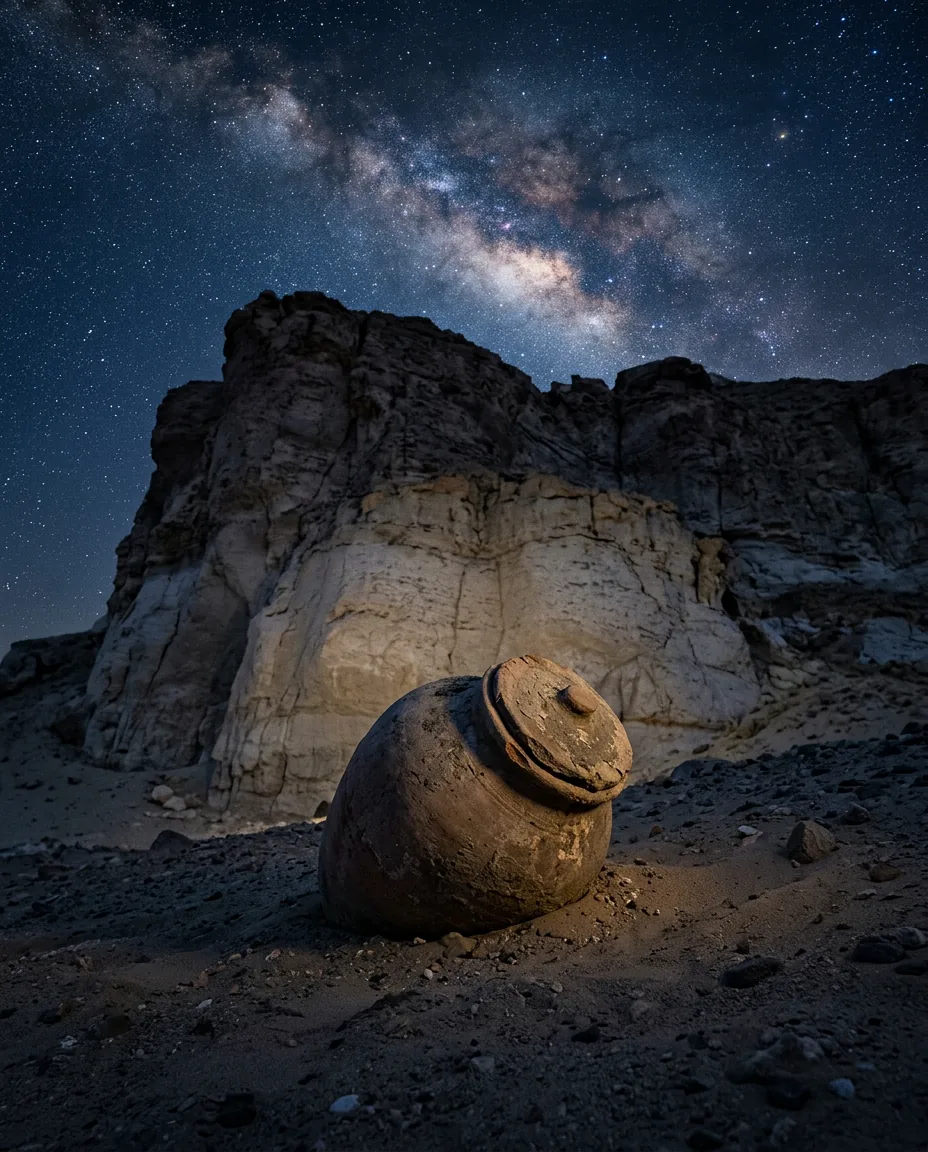
Three texts sealed in a jar near Nag Hammadi around 350 to 400 CE, and found in 1945.
ՀԵՐՄԵԱՅ ԵՌԱՄԵԾԻ
The Definitions of Hermes to Asclepius survive only in an Armenian translation of a lost Greek original.
Hermes, Thrice‑Great
All of it, in one volume. The texts that had no public-domain English version are newly translated.
Book I
Seventeen treatises, from Poimandres, the Shepherd of Men, to the Secret Sermon on the Mountain.
“I am Man‑Shepherd, Mind of all‑masterhood; I know what thou desirest and I’m with thee everywhere.”
Book II
The great dialogue between Hermes and his pupil, with the Lament for Egypt.
“Egypt is the image of the Heaven.”
Book III
Thirty-one passages kept by a 5th-century anthologist, including the Virgin of the World.
Book IV
Twenty-eight fragments quoted by Tertullian, Lactantius, Cyril of Alexandria and others, with what ancient writers said of Hermes.
Book V
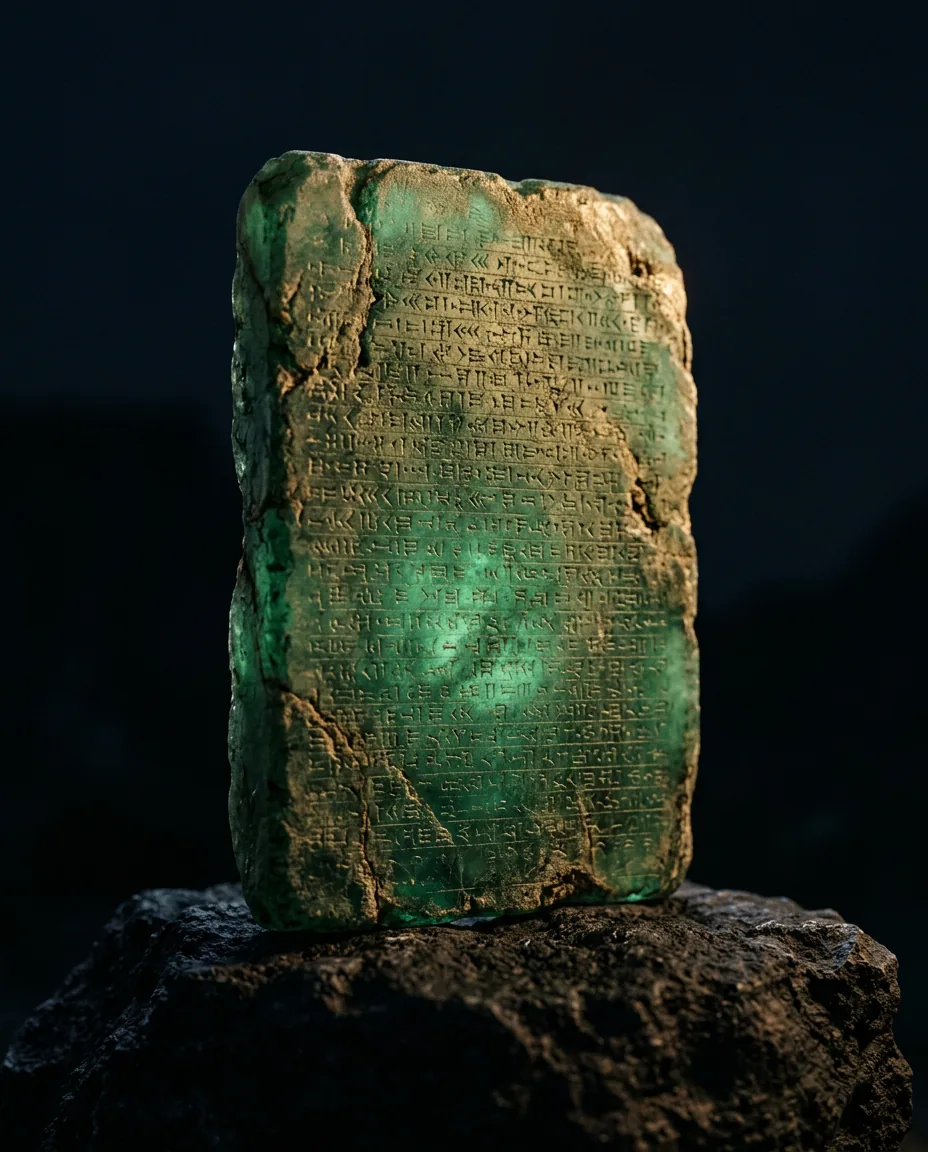
The Latin text and Isaac Newton’s own translation.
New
The Discourse on the Eighth and Ninth, from the Coptic. The Definitions of Hermes to Asclepius, from the Armenian. Five Oxford extracts, from the Greek.
New for this edition
About 80% of the Hermetica already existed in public-domain English. The rest was only available in modern, copyrighted editions.
A Hermetic initiation into the eighth heaven and the vision of the ninth. A single Coptic copy survives, about 1,600 years old.
Translated line by line from photographs of the manuscript, Nag Hammadi Codex VI.
“I see a spring welling up with life.”
Sayings on God, the world, the soul and the mind, kept only in an Armenian translation made around the 6th century.
Translated from the first edition of the Armenian text (Yerevan, 1956), based on six medieval manuscripts.
“Nothing is empty of God.”
Five short passages on the soul, the senses, human law and how the body takes shape in the womb, found only in a medieval manuscript in Oxford.
Translated from the Greek of the first edition, in the Revue des Études Grecques (1991).
A brand-new AI-assisted translation, made from the ancient languages themselves, not from modern versions.
“That which is below is like that which is above, & that which is above is like that which is below, to do the miracles of one only thing.”
c. 1680
His own translation of the Emerald Tablet, kept in manuscript.
1906
Thrice‑Greatest Hermes: the main translation in this book.
1924
Four excerpts of Stobaeus that Mead did not translate.
2026
New translations from the Coptic, the Armenian and the Greek.

The book
Mostly not. About 80% of the Hermetica already existed in public-domain English. This edition uses G. R. S. Mead’s translation (1906), Isaac Newton’s Emerald Tablet (about 1680) and four excerpts translated by Walter Scott (1924). The texts that had no public-domain English version are newly translated.
From the ancient texts themselves, never from modern translations. The Coptic was read line by line from photographs of the original manuscript, the Armenian from the first edition of the text (Yerevan, 1956), and the Oxford extracts from the first edition of the Greek (1991). The translations were drafted with AI (Claude, by Anthropic).
The “Thrice-Great” Hermes: the Greek god Hermes merged with Thoth, the Egyptian god of writing and wisdom. He is the teacher in these dialogues, which were written in Greek in Roman Egypt, mostly between 100 and 300 CE.
No. The Kybalion was published in Chicago in 1908 and is not an ancient text. This book holds only the ancient Hermetic writings.
Each copy is printed to order as a hardcover and shipped directly to you. Delivery is free.