Editor's entry
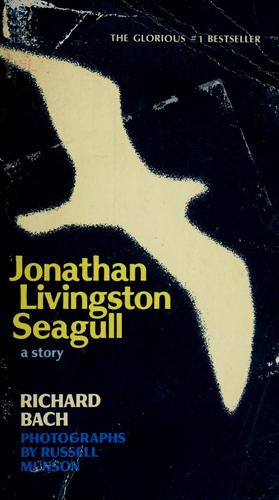
~1 min readRichard Bach’s short fable about a seagull who chooses to perfect the art of flight rather than scavenge with his flock, is exiled as an Outcast, and discovers higher levels of being where flight is unrestricted by physical form. Illustrated with Russell Munson’s black-and-white photographs, the book’s allegorical project is unmistakable: spiritual self-mastery as the rejection of conformist mediocrity.
Macmillan editor Eleanor Friede acquired the manuscript after a string of rejections; the first 1970 printing was only 3,000 copies. By July 1972 the book was on the New York Times Best Seller list (where it remained 37 weeks) and Macmillan had over 440,000 copies in print. The 2014 expanded edition, Jonathan Livingston Seagull: The Complete Edition, restored a fourth part Bach had cut from the original — written contemporaneously and finished after his near-fatal 2012 plane crash. The 1973 film adaptation, with its Grammy-winning Neil Diamond soundtrack, locked the book into the visual vocabulary of 1970s counterculture.
Themes & tags
8 totalRead / watch next
auto-computedLoading related entries…
Contents
3 chapters- Part One
- Part Two
- Part Three
Reception
editor-collectedHeld the #1 New York Times bestseller spot for 38 weeks in 1972–73 and is one of the all-time top-selling books of the 1970s — over 40 million copies worldwide. Treated by the counterculture as a quasi-mystical text and lampooned in equal measure by literary critics; Roger Ebert called it "so banal that it had to be sold to adults; kids would have seen through it," and the birding community received it as sentimental anthropomorphism (Bill Oddie’s 1980 takedown is the canonical example). The 2014 expanded edition, which restored the fourth chapter Bach had cut from the original, divided his readership: some saw it as completing the parable, others as undermining it.
Index reception note
Frequently asked
3 questions- What is Jonathan Livingston Seagull about?
- It is an allegorical fable about a seagull who chooses to perfect flight rather than scavenge with the Flock, is exiled as an Outcast, and discovers higher levels of being where flight is unrestricted by physical form. Bach’s allegory is spiritual self-mastery as the rejection of conformist mediocrity.
- How did such a slim book become a phenomenon?
- Macmillan’s 1970 first printing was only 3,000 copies; the book climbed mostly by word of mouth. By July 1972 it had entered the New York Times Best Seller list, where it remained 37 weeks, and over 440,000 copies were in print. The 1973 film and Neil Diamond’s Grammy-winning soundtrack then locked it into the visual vocabulary of 1970s counterculture.
- What is different about the 2014 "Complete Edition"?
- In 2014 Bach published Jonathan Livingston Seagull: The Complete Edition, which restored a 17-page fourth part written contemporaneously with the original and finished after his near-fatal 2012 plane crash. Part Four shifts to a period several hundred years later, when Jonathan’s teaching has been venerated rather than practised, and asks what becomes of an awakening that has hardened into ritual.
Catalogue record
- Author
- Richard Bach
- Title
- Jonathan Livingston Seagull: A Story
- Original title
- Jonathan Livingston Seagull
- Publisher
- Macmillan
- Year
- 1 January 1970
- Pages
- 112
- Language
- English
- ISBN
- 9780743278904
- Shelf
- Awakening · Philosophy · Consciousness
Availability
By the same author
no other entriesLoading other entries by Richard Bach…