What is Embodiment?
Embodiment is the practice of inhabiting the physical body with full, awake attention. Rather than seeking spiritual states by moving away from sensation, it treats the body itself as the ground of awareness. Felt experience, breath, posture, and physical sensation are treated as valid pathways to presence and self-knowledge.
Embodiment vs related practices
Yoga cultivates union of body and mind as a path toward liberation. Embodiment focuses on the act of inhabiting the body as spiritually significant in itself. Mindfulness can be practised with or without somatic focus; embodiment is specifically about attention to felt experience. It also differs from subtle-body work such as prana or chakra awareness, which concerns an energetic anatomy beyond ordinary sensation. Spiritual bypassing is the use of practice to avoid rather than process difficult experience. Embodiment work most directly aims to correct that tendency.
Roots: phenomenology and somatic practice
The philosophical foundation comes largely from Maurice Merleau-Ponty (1908–1961), whose Phenomenology of Perception (1945) argued that all perception is grounded in bodily being-in-the-world. In parallel, somatic therapists Wilhelm Reich and Alexander Lowen developed methods for working with physical tension as a record of emotional history. Thomas Hanna coined the term somatics in 1967 to describe this emerging field. Bessel van der Kolk's research on trauma and the nervous system brought somatic principles into mainstream medicine and psychotherapy from the 1990s onward.
Embodiment in contemplative traditions
Yoga's framework already treats the body as sacred ground. Asana and pranayama in hatha yoga are exercises in inhabiting the body more fully, not escaping it. The five-kosha model (see kosha) places the physical body (annamaya kosha) as the outermost layer of a nested self rather than something to be discarded.
In Buddhist contexts, satipatthana, the mindfulness of the body, places somatic awareness at the start of formal practice. The body scan is the most direct translation of this into seated meditation. Jon Kabat-Zinn drew on these roots to build Mindfulness-Based Stress Reduction in 1979, making bodily attention the primary entry point for a secular clinical framework. Tara Brach's teaching regularly returns to embodied awareness as an antidote to the tendency to practise from the neck up.
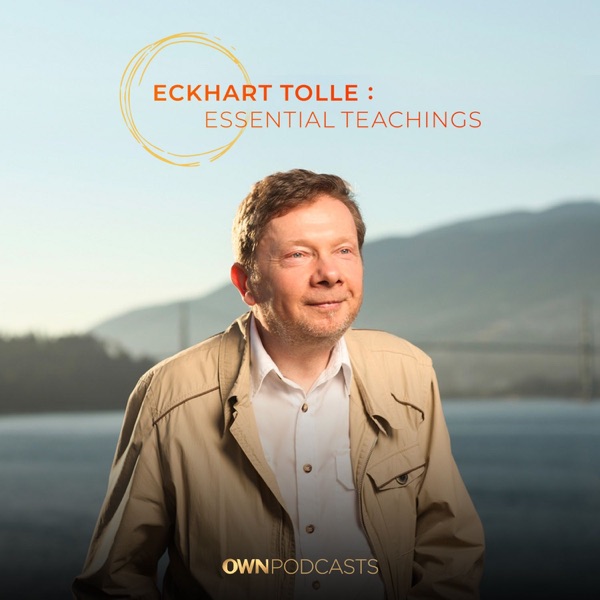
Eckhart Tolle's concept of the pain body describes accumulated emotional pain carried as a physical field. His talks on body identification and podcast on the pain body frame inner-body awareness as a direct route to the present moment. Anita Moorjani's work, including her talk on not forgetting the body and her podcast on embodying love, treats returning to full physical presence as central to healing after her near-death experience.
A note on disagreement
The embodiment movement is not monolithic. Some teachers in the non-dual tradition, particularly those in the advaita lineage, hold that the body is itself a projection of consciousness and that identifying with it reinforces a subtle attachment. The somatic perspective does not necessarily contradict this. It tends to argue that liberation through the body is more accessible for most practitioners than liberation by attempting to transcend it. The question is genuinely open, and thoughtful teachers sit on both sides.