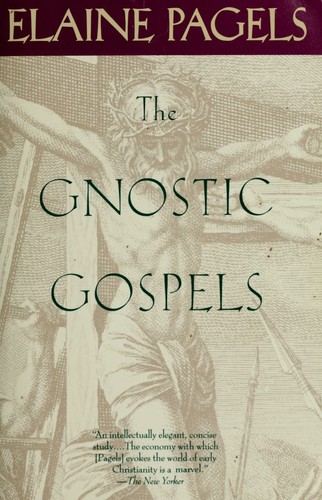
The Gnostic Gospels examines a trove of early Christian texts found buried in Egypt in 1945, known as the Nag Hammadi library. Elaine Pagels uses these manuscripts to explore traditions that the emerging orthodox church suppressed: alternative accounts of the resurrection, female imagery for the divine, the politics behind bishop authority, and a form of spiritual knowledge (gnosis) that early church councils rejected.
The book shows how the selection of texts that became the New Testament, and the exclusion of others, was shaped by institutional politics alongside theological discernment. Pagels reads the Gnostic gospels not primarily as theological curiosities but as evidence that early Christianity was far more diverse than the tradition that survived. Her argument is accessible and tightly structured: each chapter isolates one dimension of the Gnostic challenge to orthodoxy and traces how orthodox leaders responded to it.
Yet to know oneself, at the deepest level, is simultaneously to know God; this is the secret of gnosis.
Chapter 6, "Gnosis: Self-Knowledge as Knowledge of God"
First lines
In December 1945, an Arab peasant made an astonishing archaeological discovery in Upper Egypt. Digging around a massive boulder in the Nile River cliffs, he struck a red earthenware jar, nearly a meter high. Hoping it might contain gold, he smashed the jar open and discovered inside thirteen papyrus books, bound in leather.
Contents
The Controversy over Christ's Resurrection: Historical Event or Symbol?
"One God, One Bishop": The Politics of Monotheism
God the Father/God the Mother
The Passion of Christ and the Persecution of Christians
Whose Church Is the "True Church"?
Gnosis: Self-Knowledge as Knowledge of God
Reception
The Gnostic Gospels won both the National Book Award and the National Book Critics Circle Award in 1979. The Modern Library named it one of the 100 best nonfiction books of the twentieth century (number 72). The book brought the Nag Hammadi texts to a wide general audience for the first time and remains a standard introduction to the subject on university syllabuses in religious studies. Academic reception has been mixed: historians of early Christianity have credited Pagels with illuminating the diversity of early Christian belief, while some scholars have raised questions about the degree to which she foregrounds institutional politics over theological and textual factors in explaining which gospels were canonised. It has sold millions of copies in translation.
Frequently asked
What is The Gnostic Gospels about?
It is Elaine Pagels's study of early Christian texts discovered at Nag Hammadi, Egypt, in 1945. The book examines how these alternative gospels — suppressed by the emerging orthodox church — reveal a more diverse early Christianity, with different accounts of the resurrection, female divine imagery, and a tradition of inner spiritual knowledge called gnosis.
What is the Nag Hammadi library?
It is a collection of thirteen papyrus books, containing over fifty texts, found buried in a jar in Upper Egypt in 1945. Dating from roughly the 2nd to 4th centuries CE, they include Gnostic gospels, secret teachings, and apocalyptic writings that were excluded from the canonical New Testament. The discovery is considered one of the most important archaeological finds of the twentieth century for the study of early Christianity.
Why were the Gnostic gospels excluded from the Bible?
Pagels argues that the exclusion was not purely a matter of theology. Church leaders in the 2nd and 3rd centuries, particularly bishops asserting centralised authority, rejected texts that supported decentralised, individual spiritual knowledge and challenged hierarchical structures. The canonical gospels reinforced the authority of bishops and clergy; the Gnostic gospels, which often located authority in personal spiritual experience, were a direct challenge to institutional power.