What is Christianity?
Christianity is the Abrahamic tradition founded on the life and teaching of Yeshua of Nazareth (c. 4 BCE – 30 CE), whom its adherents recognise as the Christ. It is preserved through the canonical Gospels and the New Testament letters of Paul. About 2.4 billion people identify with the tradition today, organised broadly into Orthodox, Catholic and Protestant streams.
Christianity vs adjacent concepts
Christianity is one of the three Abrahamic religions, alongside Judaism and Islam. It shares the Hebrew scriptures with Judaism but differs in identifying Yeshua as the Messiah. It shares many prophets with Islam but differs in the doctrine of the Incarnation: that God became human in Christ.
Within Christianity, the institutional and contemplative streams are often conflated. The institutional layer is the Sunday liturgy, the creeds, the church hierarchy. The contemplative layer is the prayer of silent encounter, traceable through the Desert Fathers, Meister Eckhart, John of the Cross and Thomas Merton. Both streams have run together for two thousand years.
Christian mysticism is often equated with non-duality. The vocabularies overlap, but the frames differ. Christian mystics speak of union with a personal God. Non-dual traditions speak of recognising that no separate self ever existed. Many serious readers conclude the territory is the same. The traditions themselves disagree.
The contemplative current
Most of what reaches a contemporary spiritual seeker as Christianity is the institutional layer: the Sunday liturgy, the doctrinal creeds, the social ethics. A second tradition runs beneath this in unbroken lineage from the third-century Desert Fathers in Egypt. This is contemplative or mystical Christianity. It centres on direct, silent encounter with God. Its practices often resemble what Buddhist or Hindu traditions call meditation.
Meister Eckhart (1260–1328) wrote of the Godhead beyond God and the spark of the soul. His language reads like non-duality in Latin. John of the Cross described the dissolution of the small self as the dark night of the soul. Thomas Merton, a 20th-century American Trappist, opened a long correspondence with Buddhist teachers including the Dalai Lama and Thich Nhat Hanh. He is widely read across traditions today.
Christianity in the index
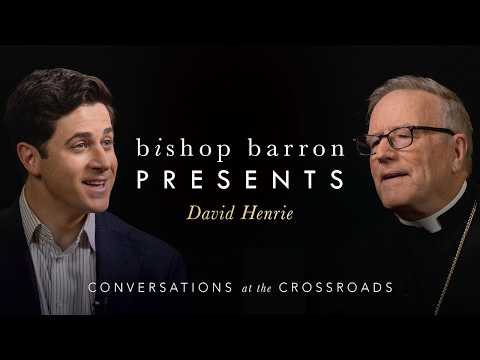
Jonathan Pageau is the index's clearest voice on Eastern Orthodox symbolism and Christian iconographic thought. His work bridges traditional theology and modern cultural analysis. David Henrie's reflection on faith and film speaks from a Catholic perspective on art-making as devotion. Amy Coney Barrett on faith, law and listening is the index's view of how Christian conviction shows up in public life.
Many figures in the index, including Wayne Dyer and Eckhart Tolle, quote Yeshua as a teacher of non-duality. They read the Gospel of Thomas and the Sermon on the Mount as pointer-teachings rather than as moral codes. This reading is older than it sounds. It is essentially the contemplative reading of the same texts that the Desert Fathers were producing in the third century.
Why it matters here
An honest spirituality index can't skip the tradition that shaped 1500 years of European thought, two millennia of Western art, and the moral grammar most readers were raised inside. The contemplative Christianity above is also the place where this tradition meets the Buddhist and non-dual currents that fill more of the index's shelves. The doors connect.