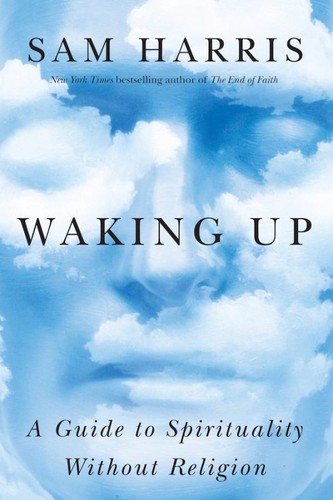
Sam Harris's argument — from inside neuroscience and outside religion — that the contemplative claims of Buddhism and Advaita about the illusory nature of the self are empirically supportable, that meditation is a rational practice once stripped of metaphysical scaffolding, and that 'spirituality' need not entail any of the supernatural commitments his New Atheist colleagues have spent decades rejecting. The book is part argument, part autobiography of his own meditation training in Burma and India.
First lines
I once participated in a twenty-three-day wilderness program in the mountains of Colorado. If the purpose of this course was to expose students to dangerous lightning and half the world’s mosquitoes, it was fulfilled on the first day. What was in essence a forced march through hundreds of miles of backcountry culminated in a ritual known as "the solo," where we were finally permitted to rest — alone, on the outskirts of a gorgeous alpine lake — for three days of fasting and contemplation.
Contents
Spirituality
The Mystery of Consciousness
The Riddle of the Self
Meditation
Gurus, Death, Drugs, and Other Puzzles
Conclusion
Reception
A New York Times bestseller and the book that Harris's broader audience most often reads from his catalogue alongside The End of Faith. Within Buddhist circles the reception has been split: Stephen Batchelor and Joseph Goldstein endorsed it; some traditional Buddhists have argued the book strips out commitments (rebirth, dependent origination) that the tradition treats as load-bearing rather than ornamental. Within New Atheism the book represented a partial schism, with Harris drawing fire from Dawkins-aligned readers for legitimising contemplative practice at all.
Frequently asked
What is Waking Up about?
Sam Harris argues from inside neuroscience and outside religion that the contemplative claims of Buddhism and Advaita about the illusory nature of the self are empirically supportable, that meditation is a rational practice once stripped of metaphysical scaffolding, and that 'spirituality' need not entail any supernatural commitments. The book is part argument, part autobiography of his meditation training in Burma and India.
How does Waking Up fit with the rest of Harris’s work?
It sits between the New Atheist polemics (The End of Faith, Letter to a Christian Nation) and the later Waking Up meditation app. Within his catalogue it is the title his contemplative readers most often start with; within New Atheism it represented a partial schism, with Harris drawing fire from Dawkins-aligned readers for legitimising contemplative practice at all.
Who did Harris train with?
Harris trained in Theravāda Vipassanā under S.N. Goenka and at the Insight Meditation Society, in Dzogchen under Tulku Urgyen Rinpoche, and is a longstanding student of the Advaita Vedānta direct path. The book’s memoir sections describe extended retreats in Burma and India.