What is Sam Harris?
Sam Harris is an American philosopher and neuroscientist (b. 1967) who teaches non-dual meditation in a secular frame. His *Waking Up* book (2014) and app present the contemplative recognition of *no-self* without religious doctrine. His practice training spans Theravāda vipassanā, Tibetan Dzogchen, and the Advaita Vedānta direct path. He is also known as one of the New Atheists of the mid-2000s.
The intersection his work names
Harris works both sides of a boundary the twentieth century treated as nearly uncrossable: the academic critique of religion and the first-person practice of meditation. He holds a B.A. in philosophy from Stanford and a Ph.D. in cognitive neuroscience from UCLA (2009), where his dissertation examined neuroimaging of belief, disbelief, and uncertainty. He spent roughly eleven years between degrees studying with contemplative teachers, an experience that runs through all his later writing. His public profile rests on three projects: the New Atheist polemics of the mid-2000s (The End of Faith, 2004; Letter to a Christian Nation, 2006), the Making Sense podcast (launched 2013), and the Waking Up book (2014) and app. On his own account, these three projects are not separate.
Harris and adjacent secular teachers
Harris is often grouped with Jon Kabat-Zinn and Joseph Goldstein because all three draw on the vipassanā tradition. The difference is emphasis. Kabat-Zinn's MBSR frames meditation as a therapeutic tool for stress and illness. Goldstein teaches within the Theravāda framework, including its doctrinal commitments. Harris aims at the specific non-dual recognition that consciousness has no centre, presented without the Buddhist framework. He is also placed alongside Eckhart Tolle as a secular spiritual teacher. Tolle's teaching is more intuitive and less formally trained; Harris emphasizes neuroscience and a documented practice lineage.
The practice lineage
Harris is unusual in the secular meditation space for the depth of his contemplative training. His early formation, during the years he was away from Stanford, was in Theravāda vipassanā retreats in India and the United States. These included the ten-day S.N. Goenka courses and longer sittings at the Insight Meditation Society under Joseph Goldstein and Sharon Salzberg. A later phase added the Tibetan Dzogchen instruction of Tulku Urgyen Rinpoche and his sons Mingyur Rinpoche and Tsoknyi Rinpoche. The pointing-out teachings of that lineage are the structural source of the headless attention exercises in the Waking Up curriculum. The third stream is the Advaita Vedānta direct path, running from Ramana Maharshi through Nisargadatta Maharaj to Rupert Spira, which Harris names as a primary contemporary reference. The Waking Up curriculum presents the non-dual recognition reached through vipassanā-style attention training. The sequencing follows the lineage of his teachers rather than the doctrinal claims of any one school.
Where to encounter him in the index
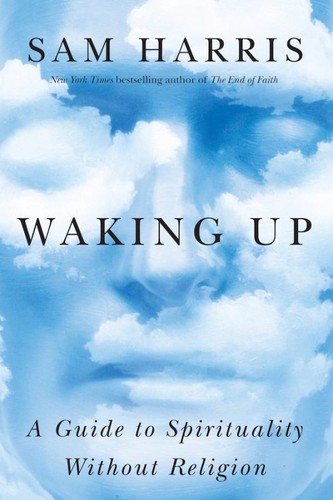
*Waking Up: A Guide to Spirituality Without Religion* is the 2014 book where Harris argues that consciousness itself is the only ground sufficient for a serious spirituality once supernatural claims are set aside. Waking Up: Introductory Course is the standalone first month of the app's practice instruction and the clearest entry point for a reader who wants the practice. Sam Harris on Vipassana, Non-duality, and the Self is the long-form interview in which he explains the lineage and synthesis in his own voice. Sam Harris on Cutting Through to Consciousness Without a Center covers the same material at podcast length, with the anattā recognition in Theravāda vocabulary at the front. Sam Harris: Why Smart People Turn to Christianity is a recent talk in which he addresses, more sympathetically than his early polemics did, what the contemplative core of traditional religions retains. The early polemical books (The End of Faith, Letter to a Christian Nation, The Moral Landscape) are not in the index.
What his work isn't
Harris's contemplative project is not Buddhist. He is explicit about not taking on the doctrinal architecture of the tradition that gave him most of his practice training: no rebirth, no cosmology, no refuge. The Waking Up curriculum is not a secular religion. Harris is sceptical of the perennialism the Aldous Huxley line of thought represents. Whether the various traditions point at one recognition is, for him, an open empirical question and not settled by convergent vocabulary. His contemplative work is also not separable from his political commentary. The same epistemic standards that drive the Making Sense podcast drive his meditation instruction. On his own account, the contemplative and the polemical projects are the same project applied to two different domains.