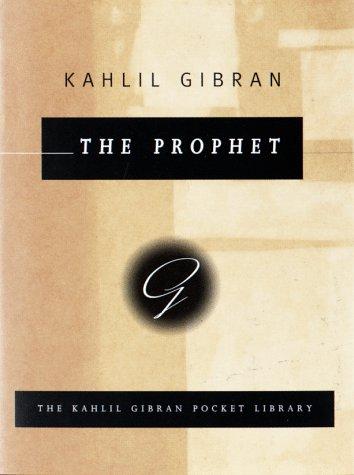
Editor's entry
~1 min readKahlil Gibran’s 1923 cycle of 26 prose-poetry sermons framed as the parting addresses of Almustafa — a prophet who has lived in the city of Orphalese for twelve years and is about to leave by ship. The seeress Almitra and the people of Orphalese ask him to speak in turn on love, marriage, children, giving, eating and drinking, work, joy and sorrow, houses, clothes, buying and selling, crime and punishment, laws, freedom, reason and passion, pain, self-knowledge, teaching, friendship, talking, time, good and evil, prayer, pleasure, beauty, religion, and death. Written in English by a Lebanese-American poet steeped in both Maronite Christianity and Sufi influence, with reference points in William Blake and Walt Whitman.
Knopf printed 2,000 copies in 1923 and sold 1,159 of them; demand doubled each year that followed. The book had sold its millionth copy by 1957, had reached nine million in its American edition alone by 2012, and has been translated into more than 100 languages. It has never been out of print. The 1974 musical interpretation with Richard Harris, and the 2014 animated film produced by Salma Hayek, are the most widely known of the many adaptations.
Themes & tags
8 totalRead / watch next
auto-computedLoading related entries…
Contents
28 chapters- The Coming of the Ship
- On Love
- On Marriage
- On Children
- On Giving
- On Eating and Drinking
- On Work
- On Joy and Sorrow
- On Houses
- On Clothes
- On Buying and Selling
- On Crime and Punishment
- On Laws
- On Freedom
- On Reason and Passion
- On Pain
- On Self-Knowledge
- On Teaching
- On Friendship
- On Talking
- On Time
- On Good and Evil
- On Prayer
- On Pleasure
- On Beauty
- On Religion
- On Death
- The Farewell
Reception
editor-collectedOne of the bestselling books in any language ever published — estimated 100+ million copies sold worldwide, never out of print since 1923, translated into 100+ languages. Particularly enduring at weddings and funerals, where the chapters on love and on death are read more frequently than almost any other modern poetry. Literary scholars have always sat awkwardly with it: the language is consciously archaic, the Christian-Sufi syncretism is more suggestive than rigorous, and Gibran’s standing in academic Arabic literature is markedly higher in prose than in this English work. The book’s cultural reach is independent of and far larger than its literary standing.
Index reception note
Frequently asked
3 questions- What is The Prophet about?
- A cycle of 26 prose-poetry sermons by the prophet Almustafa, who has lived in the city of Orphalese for twelve years and is asked, before he leaves by ship, to speak on love, marriage, children, giving, work, joy and sorrow, freedom, self-knowledge, friendship, prayer, beauty, religion, death, and 13 further themes. The framing chapters — The Coming of the Ship and The Farewell — bracket the addresses.
- How did the book sell?
- Knopf printed 2,000 copies in 1923 and sold 1,159 of them; demand doubled each year that followed. The book had sold its millionth copy by 1957, had reached nine million in its American edition alone by 2012, and has been translated into more than 100 languages. It has never been out of print.
- What influences shape Gibran’s writing here?
- Born a Maronite Christian, Gibran drew on his own tradition together with the Bahá’í Faith, Islam, and the mysticism of the Sufis. Parallels have been made to William Blake’s prophetic books and to the theological reach of Walt Whitman and Ralph Waldo Emerson; the language is consciously archaic, and the Christian-Sufi syncretism is more suggestive than rigorous.
Catalogue record
- Author
- Kahlil Gibran
- Title
- The Prophet
- Publisher
- Alfred A. Knopf
- Year
- 23 September 1923
- Pages
- 96
- Language
- English
- ISBN
- 9780394404288
- Shelf
- Philosophy · Awakening · Esoteric
Availability
By the same author
no other entriesLoading other entries by Kahlil Gibran…