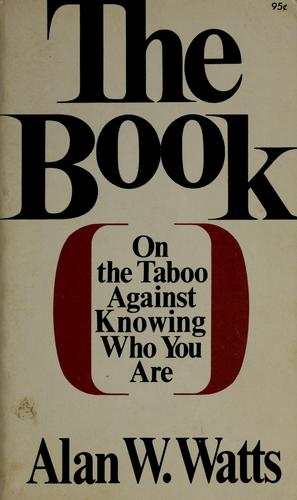
Editor's entry
~1 min readAlan Watts’s late-career essay arguing that the experience of being a separate ego inside a hostile universe is a culturally-conditioned hallucination, not an actual fact about reality, and that Vedanta’s identification of Atman with Brahman is the cleanest statement of what is actually the case. Less academic than The Way of Zen; written for readers raised on Western individualism rather than Asian philosophy.
Published by Pantheon in 1966, then carried into mass-market by the Vintage paperback line in 1972 and again in 1989, the book reads as the distilled version of arguments Watts had been making for two decades in lectures and longer studies. The opening conceit — a “book on what you would tell your children about who they really are” — sets the register: conversational, addressed, deliberately untechnical, and structured around a small set of insistent moves between cosmology, language and the self.
Themes & tags
8 totalRead / watch next
auto-computedLoading related entries…
Reception
editor-collectedThe Watts book his audience most often names as the one that changed how they thought — particularly noted by readers in psychology, design and Silicon Valley (Steve Jobs cited it; Pixar’s leadership cited it; Sam Altman cited it in 2017). Academic Indologists are more tepid: the popular Vedanta Watts presents is closer to neo-Advaita than to traditional Sankara, and his fluency was as a lecturer rather than as a scholar. The 1966 publication catches him at the top of his form; the prose has aged better than most mid-century Western writing on Eastern philosophy.
Index reception note
Frequently asked
3 questions- What is The Book by Alan Watts about?
- It is Alan Watts’s 1966 argument that the felt experience of being a separate ego inside a hostile universe is a culturally-conditioned hallucination rather than a fact about reality. Watts uses the Vedanta identification of Atman with Brahman as the cleanest statement of what is actually the case, and writes the book in the conversational register of something he would say to a young reader rather than to a fellow specialist.
- How does it differ from The Way of Zen?
- The Way of Zen (1957) is a more scholarly survey of the Buddhist and Daoist sources of Zen. The Book is shorter, less academic, and aimed at a reader who has not yet read any Asian philosophy. It distils into about 160 pages the cosmological and self-related claims Watts had been making across two decades of lectures.
- Why is it cited so often by readers in tech?
- It is widely cited by figures in psychology, design and Silicon Valley as the Watts title that most directly reframed their sense of self. Steve Jobs and the leadership at Pixar named it; Sam Altman cited it as influential in 2017. The book’s conceit — that the separate self is an unexamined convention rather than a discovery — translates cleanly into reader contexts that have nothing to do with religious practice.
Catalogue record
- Author
- Alan Watts
- Title
- The Book: On the Taboo Against Knowing Who You Are
- Publisher
- Pantheon Books
- Year
- 1 January 1966
- Pages
- 160
- Language
- English
- ISBN
- 9780679723004
- Shelf
- Non-duality · Philosophy · Awakening
Availability
By the same author
no other entriesLoading other entries by Alan Watts…