What is Ātman?
Ātman is the Sanskrit term for the innermost reality of a person. Advaita Vedānta holds that ātman is identical with brahman, the absolute ground of all existence. That recognition is summed up in the mahāvākya tat tvam asi: that thou art.
The word derives from a Sanskrit root meaning roughly to breathe, possibly cognate with the German Atem. Ātman is grammatically masculine and is sometimes translated as soul, but that translation imports Christian baggage that does not fit. In the Western tradition, a soul is an immaterial part of an individual person, distinct from God and from other souls. In the dominant Vedāntic reading, ātman is not individual. It is what every apparent person turns out to be when the apparent person is investigated to its end.
Ātman, the Soul, and Anattā
Ātman is not the same as the soul in the Christian sense. The Christian soul is an individual immaterial substance, distinct from God and from other souls. Ātman in Advaita is the opposite of individual: it is the single awareness in which every apparent individual appears. Ātman is also not the psychological self of modern usage. What most people call themselves is the jīva, the apparent individual self bound to a particular body and history. Ātman is the awareness in which the jīva, like everything else, arises and passes. The doctrine is also distinct from Buddhist anattā, despite frequent conflation. Anattā says no self can be found among the aggregates. Advaita says the awareness in which all aggregates appear is what one most fundamentally is. Whether these are two descriptions of one recognition or two genuinely different positions has been debated for two millennia. The English-language popularisation that uses the true Self as a self-help motivator usually flattens this distinction past the point of usefulness.
Ātman and brahman
The cardinal teaching of Advaita Vedānta, systematised by Ādi Śaṅkara in the eighth century, is the identity of ātman and brahman. The two words name one reality from two sides. Brahman is the absolute ground seen from outside. Ātman is the same ground seen from inside, as what each apparent individual most fundamentally is. The four mahāvākyas drawn from the Upaniṣads compress the doctrine into short formulae: tat tvam asi (that thou art), aham brahmāsmi (I am brahman), ayam ātmā brahma (this self is brahman), prajñānaṃ brahma (consciousness is brahman). The teaching is not that an individual self has been promoted to divinity. The assumption of an individual self was already mistaken. The only thing unconditionally there is the awareness in which any apparent individual appears.
The structural move is the same one Nisargadatta Maharaj's *I Am That* makes in twentieth-century vernacular. Hold the bare sense I am until even that drops, and what remains is what the Vedāntic vocabulary points at. The dialogues that became Spira's *Being Aware of Being Aware* work the same territory in plain English prose. The Sanskrit register is absent, but the structural recognition is the same.
Where to encounter it in the index
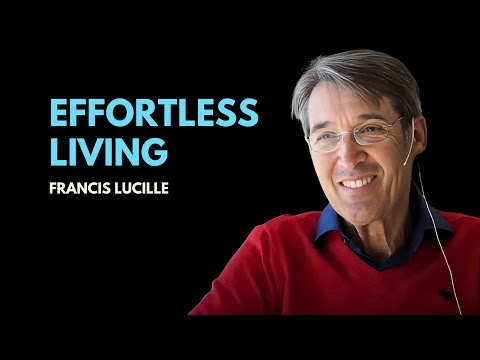
Almost the entire English-language non-dual stream that the index covers is some refraction of the ātman-brahman teaching, even when the Sanskrit is not used. Rupert Spira's longer-form talk opens from the side of ātman, beginning with consciousness as one's own most intimate fact and working toward the recognition that this consciousness is not personal. The Q&A on intellectual versus lived knowing extends the same line into the difficulty of moving from concept to recognition. Francis Lucille carries the same teaching through the direct-path lineage that descends from Atmananda Krishna Menon via Jean Klein. His vocabulary is closer to the original Sanskrit register, even when delivered in French-accented English. Adyashanti's *Do Nothing* approaches the recognition through the door of laying down every spiritual technique and asking what is left to be aware. Yogananda's *Autobiography of a Yogi* carries the older devotional-yogic articulation. The kriyā yoga lineage holds that the recognition is a matter of disciplined practice over many lifetimes, not a one-shot insight. Ram Dass's late teaching translates the same recognition into Hindu bhakti idiom. Maharaji's instruction love everyone, tell the truth, remember God is functionally an ātman-as-brahman practice in three sentences.