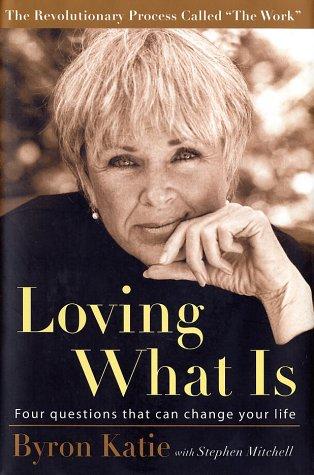
What is Byron Katie?
Byron Katie (born Byron Kathleen Reid, 1942) is an American teacher and author known for The Work, a self-inquiry method she developed in 1986. The practice applies four questions to any stressful belief to examine whether it holds up, with the aim of releasing the suffering the belief causes.
Byron Katie vs adjacent teachers and practices
Katie is sometimes grouped with teachers in the non-dual or self-inquiry lineage, but the resemblance is only structural. Self-enquiry in the Ramana Maharshi tradition asks the inquirer to locate the source of the sense 'I', working at the level of identity itself. The Work asks the inquirer to question specific thoughts and beliefs one at a time. The Work is closer in procedure to cognitive-behavioural therapy's thought-challenging techniques than to classical Advaita, and Katie does not use Sanskrit or Buddhist vocabulary. Mindfulness develops steady present-moment attention; The Work is explicitly analytical and moves through questions toward conclusions. Eckhart Tolle's teaching locates suffering in identification with the thought-stream as a whole; Katie works with individual statements. The methods are adjacent in their target but proceed differently.
The 1986 awakening and the origins of The Work
Katie grew up in Barstow, California. By the mid-1980s she had spent about a decade in serious depression and agoraphobia, partly self-medicated. In February 1986, while at a women's counselling centre in Los Angeles, she describes waking one morning in a radically different state. The familiar sense of a self that resented the world was simply absent. She recognised, in her own account, that when she believed her thoughts she suffered, and that when she did not believe them the suffering lifted. She spent several years offering the method informally in the Barstow community before beginning to teach in workshops. The Work was not derived from any existing tradition. Katie has said she had no prior engagement with Eastern philosophy or contemplative practice.
The four questions and the turnaround
The practice begins by writing down a stressful belief about a person or situation. The four questions are then applied to it in sequence. First: Is it true? Second: Can you absolutely know that it is true? Third: How do you react, what happens, when you believe that thought? Fourth: Who would you be without the thought? These are followed by the turnaround, in which the original statement is reversed and the reversed version examined for its own truth. Katie has described the process as investigation rather than therapy, affirmation, or positive thinking. The inquiry does not require agreeing with the turnaround; it requires testing it honestly against one's own experience.
Reception and critique
The Work has been warmly received in therapy and recovery communities, and some clinicians have used it as an adjunct to cognitive-behavioural therapy. Two main critiques have emerged. Some psychologists have warned that the method can be misapplied: a harmful situation, for example, examined through the turnaround and reassigned to the person being harmed rather than acted against. Teachers in contemplative traditions have noted that The Work operates within the ego's frame, questioning specific beliefs without asking who is believing them. These critiques have not been substantially addressed by Katie in published work. The pattern of strong endorsement from practitioners alongside structural critique from researchers has held since Loving What Is appeared in 2002.
Byron Katie in the index
The index holds *Loving What Is* (2002), the foundational book in which Katie and Stephen Mitchell present the method through verbatim transcripts of The Work in action. It covers the worksheet process, the four questions, and extended live demonstrations across a range of painful beliefs. Katie's work sits alongside other contemporary Western teachers who approach self-acceptance through practical method rather than metaphysical doctrine. Her closest neighbours in the index's broad map are teachers of presence and ego, and the separate inquiry tradition of A Course in Miracles, which also uses written worksheets and structured self-examination.