What is A Course in Miracles?
A Course in Miracles is a 1,200-page channelled spiritual text published in 1976. Helen Schucman, a research psychologist at Columbia University, took down the material between 1965 and 1972 from an inner voice she identified as Jesus. Her colleague William Thetford transcribed the notes. The text teaches a non-dual reading of Christian vocabulary: sin is misperception rather than transgression, and forgiveness is not a moral act but the withdrawal of the illusion of a separate self.
What the Course teaches
The Course is a self-study curriculum in three volumes: a Text laying out the metaphysics, a Workbook of 365 daily lessons, and a Manual for Teachers. Its frame is non-dual under Christian vocabulary. Only the unified mind is real. The perceived world of separate bodies and selves is the projection of an ego that believes it has separated from God, though the Course insists the separation never actually occurred. Atonement is the undoing of that belief. Salvation is the recognition that the separation was never real. The Course's central practice is forgiveness, used technically rather than morally. To forgive, in the Course's sense, is to recognise that any apparent offence rests on the illusion of a separate self that could be offended, and to withdraw that perception. The miracle of the title is the moment that reversal lands. The Workbook's 365 daily lessons train the practitioner to sustain that orientation over time.
A Course in Miracles vs Christianity and New Thought
The Course is not a text in any historical Christian tradition. Its non-dual idealism places it closer to Advaita Vedānta and the mysticism of Meister Eckhart than to any of the denominations whose vocabulary it borrows. Contemplative writers including Thomas Keating have generally found it compatible with contemplative practice but not with Christian doctrine.
It also sits in different territory from the new-thought literature it is often shelved beside. Its emphasis on forgiveness rather than manifestation marks a practical difference in where the practice is centred. The text is internally consistent across 1,200 pages of dense argument, which is the reason it has kept an audience for fifty years where most comparable channelled texts have not. Schucman herself was an atheist who never identified publicly as a student of the material she had transcribed and found the dictation experience troubling throughout.
Where to encounter it in the index
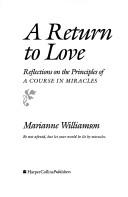
The original 1975 text itself is the source document; its Workbook is what most students actually work through. Marianne Williamson's *A Return to Love* (1992) reached a mass audience after Oprah Winfrey featured it and is the most-cited popular introduction to the Course's vocabulary. Her lecture *A Course in Miracles and the Power of Thought* shows how she presents the material to a general audience. *Marianne Williamson on Love and Action* carries the political direction the lineage took during her presidential campaigns. Powerful Beyond Measure is her structured course built directly on the Course's metaphysics. The Course sits in adjacent vocabulary to the new-thought lineage that produced Wayne Dyer and Esther Hicks and the broader law-of-attraction literature. Its non-dual idealism gives the thought-creates-reality family of claims a more rigorous metaphysical base than they usually carry, while its emphasis on forgiveness over manifestation places its centre of practice elsewhere.