What is Zecharia Sitchin?
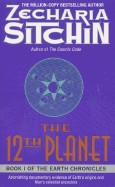
Zecharia Sitchin (1920–2010) was a researcher who spent fifty years arguing that the Sumerian and Akkadian texts describe real events: flesh-and-blood Anunnaki beings from a planet called Nibiru came to Earth, created humanity, and were the gods of every ancient pantheon. His seven-volume Earth Chronicles, beginning with The 12th Planet (1976), is the canonical statement of that reading.
What he claimed
Sitchin's central argument is that the Sumerian and Akkadian sources should be read at face value. Those sources include the Atrahasis epic, the Enuma Elish, the Eridu Genesis, and the Sumerian King List. Taken literally, they describe a flesh-and-blood civilisation called the Anunnaki, which came to Earth around 450,000 years ago from a body in our solar system on a 3,600-year elliptical orbit. They came for gold. They engineered Homo sapiens through deliberate hybridisation with an existing hominid. And they were the gods of every subsequent ancient pantheon: Mesopotamian, Egyptian, Indus-Valley, Andean. His case rests on his own translations of the cuneiform record and on the iconographic evidence, cylinder seals, tablets, and reliefs, read not as myth but as historical chronicle.
The Earth Chronicles in the index
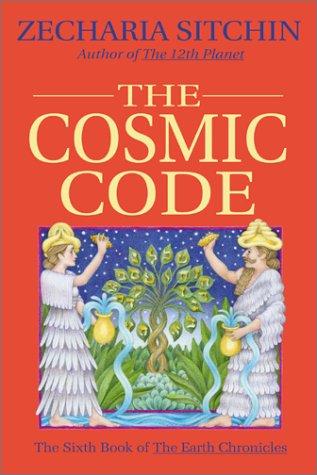
The full canon is here. The 12th Planet is the first volume and the foundational statement of the thesis. The Stairway to Heaven extends it to Giza and the Egyptian pyramids. The Wars of Gods and Men reads the late-third-millennium Sumerian texts as a record of an Anunnaki nuclear conflict. The Lost Realms applies the same framework to the pre-Columbian Americas. When Time Began tackles the ancient calendar systems. The Cosmic Code and The End of Days close the seven-volume sequence. The Lost Book of Enki is the companion piece: a reconstruction of the narrative as a first-person memoir by the Anunnaki engineer of humanity. There Were Giants Upon the Earth is the late book on the Nephilim and the Hebrew Bible. It is the closest Sitchin came to engaging the biblical material that Paul Wallis and Mauro Biglino later worked on from the other direction. For the curated entry point, The Anunnaki Chronicles is an audio reader through the whole canon. Sitchin's own Anunnaki lecture and the Planet X conversation are the principal surviving recordings.
What the academy says
Academic Sumerologists reject Sitchin's translations as systematically wrong. The specific charges: he reads cuneiform signs against their attested values, treats Sumerian and Akkadian as interchangeable, and draws on glosses outside the standard reference dictionaries. The professional consensus has been clear since the late 1970s. His readership has nonetheless multiplied through five decades. His audience tends to read the academic consensus as institutional defensiveness rather than as evidence about the texts. And the primary material he centres on is almost entirely unknown to mainstream popular culture. The result is a literature with very wide reach and almost no academic engagement. A reader approaching Sitchin honestly probably needs his volumes and the standard Sumerological reference works open at the same time.
Sitchin vs adjacent figures
Sitchin is often labelled a channeller or psychic. He was neither. His method was philological and bibliographic, carried out from a Manhattan apartment over fifty years. He claimed no spiritual contact and no mystical authority for his conclusions.
He was also not the originator of the ancient-astronaut hypothesis. Erich von Däniken's Chariots of the Gods? preceded The 12th Planet by eight years, and the broader genre runs back to at least the 1950s. What Sitchin contributed was a sustained, text-based reading of the Sumerian and Akkadian cuneiform record. Every later paleocontact writer has had to position their work relative to his. Whether his reading holds is for the texts to decide. That the texts now have far more readers because of him is not in dispute.