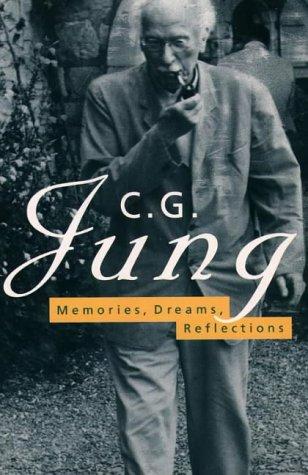
Memories, Dreams, Reflections is the autobiographical memoir of Carl Gustav Jung, recorded in conversation with his secretary Aniela Jaffé between 1957 and Jung's death in 1961, and published by Pantheon in 1962. The book is the principal first-person source for Jung's account of his childhood No. 1 / No. 2 personalities, his confrontation with the unconscious after the 1913 break with Freud, his Septem Sermones ad Mortuos and the Red Book material, his travels to Africa, India, and Pueblo country, and the formation of the major concepts of analytical psychology — anima, shadow, Self, individuation.
Jaffé acted as editor as well as recorder, a fact that has complicated questions of authorship since the typescript and edits became available to scholars. Jung's family removed or rewrote passages after his death, and the 2009 publication of The Red Book made clear that the autobiography is best read as a shaped narrative rather than a transparent record. It remains by a wide margin the most-read of Jung's books and the standard entry point to his intellectual biography.
My life is a story of the self-realization of the unconscious.
p. 3 · Prologue
First lines
My life is a story of the self-realization of the unconscious. Everything in the unconscious seeks outward manifestation, and the personality too desires to evolve out of its unconscious conditions and to experience itself as a whole.
Contents
Prologue
I. First Years
II. School Years
III. Student Years
IV. Psychiatric Activities
V. Sigmund Freud
VI. Confrontation with the Unconscious
VII. The Work
VIII. The Tower
IX. Travels
X. Visions
XI. On Life after Death
XII. Late Thoughts
Retrospect
Reception
Memories, Dreams, Reflections is by a wide margin the most-read of Jung's books and is one of the standard 20th-century texts on the religious-symbolic life of the psyche; alongside The Varieties of Religious Experience and Modern Man in Search of a Soul, it forms the small canon of depth-psychological writing routinely cited in serious work on contemplative practice. Jung scholars (Sonu Shamdasani, Deirdre Bair) have argued that the book is not a transparent autobiography but a heavily-mediated text in which Jaffé and the Jung family removed or rewrote passages in ways that softened Jung's wartime statements and his more difficult personal material; the 2009 publication of The Red Book underscored that the book is best read alongside, not in place of, the primary sources. Vintage Books has kept the volume continuously in print since 1989, and it remains the standard entry point to Jung's intellectual biography.
Frequently asked
What is Memories, Dreams, Reflections about?
It is Carl Jung's autobiographical memoir, recorded with his secretary Aniela Jaffé between 1957 and Jung's death in 1961. It covers his childhood, his break with Freud, his confrontation with his own unconscious during the Red Book years, his travels to Africa, India, and Pueblo country, and the formation of his major concepts — anima, shadow, Self, individuation.
Who actually wrote Memories, Dreams, Reflections?
Jung wrote the first three chapters on childhood and contributed to sections on his travels and late thoughts. The rest was recorded and edited by Aniela Jaffé. Scholars including Sonu Shamdasani have shown that the Jung family and editors made significant cuts and revisions after Jung's death, complicating questions of authorship.
Why is this the usual starting point for reading Jung?
It presents Jung's thought in first-person narrative form rather than the technical language of the Collected Works. The story of his break with Freud, the Red Book period, and his encounters with patients and traditions gives newcomers the biographical frame that makes the theoretical constructs easier to approach.