What is Carl Jung?
Carl Jung (1875–1961) was a Swiss psychiatrist and the founder of analytical psychology. He broke from Sigmund Freud in 1912–1913 and developed his own account of the unconscious, centered on the idea of a collective unconscious shared across humanity and populated by recurring structures he called archetypes. His work gave the modern West a vocabulary for taking the symbolic content of dreams, myth, and contemplative tradition seriously as psychological data.
Jung and his contemporaries
Jung is often grouped with Freud, but the differences run deep. Freud held that the unconscious is built from repressed personal experience, primarily sexual in nature. Jung argued that below the personal unconscious lies a collective layer, inherited rather than acquired, whose contents manifest as universal symbols rather than private memories. Where Freud read religious and mythic imagery as sublimated instinct, Jung read it as genuine expression of the psyche's deeper structure. Among his intellectual heirs, Joseph Campbell applied Jung's archetypal framework to comparative mythology, extending his ideas into literature and popular culture.
His work and ideas
Jung's career had three main phases. The first was the empirical psychiatry of the word-association test at the Burghölzli hospital in Zurich. This procedure produced measurable evidence of unconscious complexes affecting conscious behavior and brought him into the early Freudian circle. The second phase was the break with Freud, centered on whether the unconscious is organized around exclusively sexual drives. Jung's answer was no. He proposed that the deeper layer is collective, not personal, and that its recurring figures — gods, heroes, shadows, anima and animus — appear cross-culturally because they are structural, not biographical. The lifelong work of consciously assimilating these archetypal contents he called individuation. The third phase developed this position across the Collected Works, drawing on alchemy, Gnostic cosmology, and the symbolic languages of Eastern contemplative traditions. The Red Book — the illustrated record of Jung's 1913–1930 confrontation with his own unconscious, published by the Philemon Foundation in 2009 — is the experiential source behind most of those constructs. *Synchronicity* (meaningful coincidence not reducible to cause), the Self (the central archetype of wholeness), and active imagination (a method of consciously engaging unconscious imagery) are the most-cited.
Where to encounter him in the index
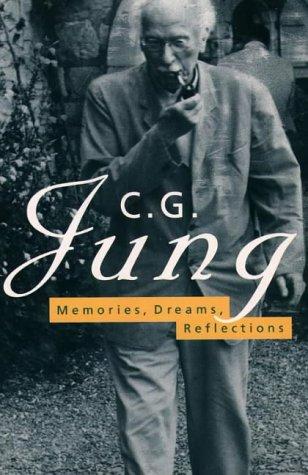
*Memories, Dreams, Reflections*, assembled with his secretary Aniela Jaffé and published posthumously in 1962, is the autobiography most general readers arrive through. *Modern Man in Search of a Soul* is the earlier essay collection (1933) that brings the post-Freudian program to the clinical and cultural questions of the interwar period. The Academy of Ideas YouTube channel reads Jung as a working therapist across a series of long-form explainers: *How to Stop Wasting Your Life — Carl Jung as Therapist*, *Carl Jung and the Psychology of Dreams*, *Why Are Most People Cowards?*, *Why Are So Many Men Psychologically Infantile?*, and *The Manufacturing of a Mass Psychosis*. Among his intellectual heirs, Erich Neumann's *The Origins and History of Consciousness* and *The Great Mother* extend the developmental-archetypal program. Joseph Campbell's *The Hero with a Thousand Faces* applies it to comparative mythology for a popular audience. Jung's forewords also matter: his introduction to D.T. Suzuki's *An Introduction to Zen Buddhism* helped shape how English-reading audiences first encountered satori, and his foreword to the second edition of the *Tibetan Book of the Dead* reads the bardo deities as projections of the unconscious. Rupert Spira's *Intuition, Synchronicity, and the Collective Unconscious* brings a non-dual reading to Jung's constructs. Facing Your Shadow and Andrew Harvey on the Shadow carry shadow work into the contemporary spiritual-formation market. Eckhart Tolle on the collective human consciousness approaches the Jungian inheritance without using its vocabulary.
What is contested
Three reservations are now standard in the secondary literature. First, scholars including Sonu Shamdasani have shown that Memories, Dreams, Reflections is not the unmediated autobiography it appeared to be. Substantial portions were composed or rewritten by Jaffé, edited after Jung's death at his family's direction, and shaped toward a more theologically tidy account than the 1913–1930 record supports. Second, Jung's sustained engagement with astrology, alchemy, Gnostic cosmology, and the I Ching is read by the academic-psychology mainstream as a drift away from clinical method, and by sympathetic readers as the core of his actual position. Third, the empirical status of archetypes and the collective unconscious is contested. The constructs work in clinical practice and generate readings in comparative mythology, but experimental psychology has been unable to isolate them by independent measurement. Defenders say the experimental method is not the right tool for what analytical psychology studies; critics reply that this is what every unfalsifiable program says. The dispute remains open.
Why he matters here
Jung is the Western clinician whose work made it possible to take the symbolic vocabulary of contemplative traditions seriously without reducing it to primitive cosmology. His forewords to Suzuki on Zen, to the Evans-Wentz *Tibetan Book of the Dead*, to Heinrich Zimmer on Indian philosophy, and to Richard Wilhelm's translation of the I Ching introduced those texts to a broad English-reading audience with a register that took them seriously. Contemporary writers in the index whose work converges with his include Iain McGilchrist, whose right-hemisphere argument addresses the same concern that modern Western attention is unsuited to contemplative report; Bernardo Kastrup, whose analytic idealism reads dissociation as the structure of apparent multiplicity; and Donald Hoffman, whose interface theory brackets the everyday picture of the world as an evolutionary construct. The perennial-philosophy literature, named by Aldous Huxley and developed by Alan Watts and others, sits in the same neighborhood. The unresolved question — whether Jung was reading the symbolic register of contemplative traditions correctly, or projecting onto them a Romantic-German psychology of his own — is one every serious reader of his late work eventually has to address.