What is Perennial philosophy?
The perennial philosophy is the claim that the world's wisdom traditions, despite their different theologies and rituals, all point to a single underlying recognition. Each tradition names it differently: unio mystica in Christian mysticism, fanāʾ in Sufism, kenshō in Zen, mokṣa in Hinduism, satori in Japanese Buddhism. The Latin phrase philosophia perennis was coined by Vatican librarian Augustinus Steuchus in 1540. Aldous Huxley gave it its modern English shape in his 1945 anthology of the same name.
Perennial philosophy vs. syncretism and constructivism
The perennial philosophy is not syncretism. Syncretism blends elements of different traditions into something new. Perennialism claims instead that each tradition is complete on its own, and that its mystics independently reach the same ground. It is also not the claim that all religions are the same or that doctrinal differences don't matter. The Theosophical Society made a related but distinct claim: that a single secret doctrine was transmitted through history. Traditionalist perennialists like Schuon and Guénon explicitly rejected that move. The sharpest opposing position is constructivism. Steven Katz argued in 1978 that mystical experience is always shaped by the tradition the mystic was formed in, and that there is no pre-conceptual raw content different traditions are translating. Perennialists and constructivists have debated this ever since.
The thesis
Huxley's 1945 anthology arranged quotations from Christian, Sufi, Hindu, Buddhist, and Daoist sources under shared thematic headings: the truth, the nature of the ground, that art thou, the world in time and eternity. The structural overlap he was making audible had earlier been claimed by Steuchus, Leibniz, and the Renaissance Hermeticists. Frithjof Schuon, writing at the same time, gave the thesis its most systematic theological form. The core claim: behind the visible diversity of traditions lies a single recognition each tradition is differently equipped to point at. A tradition's theology, cosmology, and ritual are culturally local refractions of that recognition. A figure who attains it through one tradition attains, on this view, what figures in other traditions have attained through theirs.
Three centuries of contest
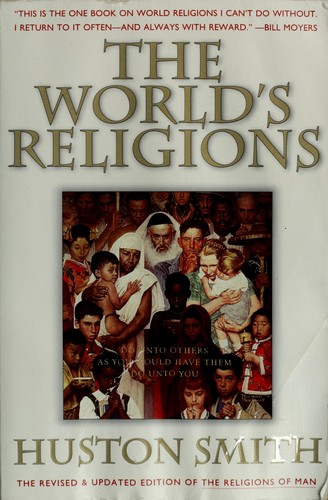
Seventeenth and eighteenth-century deists used a thinner version of the thesis to separate the moral content of Christianity from its dogma. The nineteenth-century Theosophical Society, led by Helena Blavatsky and Henry Steel Olcott, mixed the structural claim with esoteric historiography about a single secret doctrine transmitted through the ages. The early twentieth-century Traditionalist school, including René Guénon, Frithjof Schuon, Ananda Coomaraswamy, and later Seyyed Hossein Nasr, gave it its most rigorous theological articulation. William James's Varieties of Religious Experience (1902) offered a phenomenological version: not a metaphysical claim but an observation that mystical reports across cultures share common features. Huston Smith's *The World's Religions* carried the thesis to a broad non-specialist readership in the second half of the twentieth century.
Steven Katz's 1978 Mysticism and Philosophical Analysis is the principal constructivist challenge. Katz argued that mystical experience is always shaped by the tradition the mystic was formed in. There is no pre-conceptual raw content the traditions are differently translating, only tradition-shaped experiences whose surface similarities come from selective comparison. Robert Forman and Anthony Steinbock answered on phenomenological grounds, distinguishing pure consciousness events from interpretation-laden states. The debate remains open.
Where the thesis surfaces in the index
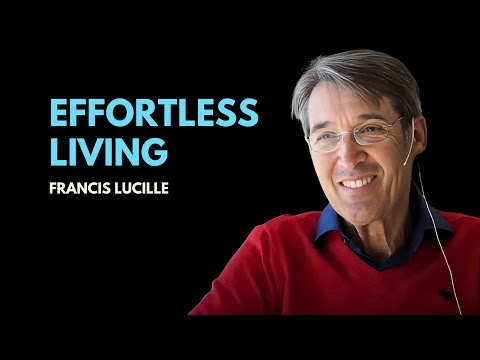
The non-dual teachers the index foregrounds, including Rupert Spira, Adyashanti, and Francis Lucille, do not usually argue the perennialist thesis explicitly. But they operate inside its assumptions: the recognition each tradition points at is treated as a single recognition named differently, and cross-tradition quotation is their everyday mode. Spira's *Being Aware of Being Aware* and Nisargadatta's I Am That draw on Christian apophatic mysticism, Sufi fanāʾ, and Vedāntic neti neti as pointing at the same ground. Jonathan Pageau's iconographic work stands at the opposite end: a thoroughgoing Eastern Orthodox Christianity where the tradition-specific symbolic apparatus is load-bearing, not a local refraction. The contrast between Pageau and the non-dual teachers is structurally the contrast between constructivism and perennialism. Anyone reading across the index is, whether or not they intend to, taking a position on the thesis.