What is the Bible?
The Bible is the collection of sacred texts shared by Judaism and Christianity. In Judaism the canon is called the Tanakh, divided into three parts: Torah (the five books of Moses, from Genesis to Deuteronomy), Nevi'im (Prophets), and Ketuvim (Writings). Christianity adopted these books as the Old Testament and added a second layer: the New Testament, comprising four Gospels, the Acts of the Apostles, letters attributed to Paul and other first-century writers, and the Book of Revelation. The canon was settled through a series of councils and synods in the first four centuries CE. Protestant, Catholic, and Orthodox canons differ slightly on the inclusion of deuterocanonical books, sometimes called the Apocrypha.
The Bible vs the Quran, the Torah, and the Gospel of Thomas
The Bible is one of three Abrahamic scriptures, alongside the Quran and the Torah. The comparison has limits. The Quran, in the Islamic account, is the direct speech of God transmitted through a single prophet over twenty-two years. The Bible was composed across roughly a thousand years by many human authors. The authority structure differs accordingly. The Torah is the first five books of the Bible. In Judaism it occupies a position of primary authority that has no direct equivalent in Christianity's treatment of the canon as a whole. The Gospel of Thomas, a non-canonical collection of sayings attributed to Jesus, was recovered at Nag Hammadi in 1945. It belongs to the same early Christian literary world but was excluded from the canonical Bible. It is covered in the Gospel of Thomas entry.
Structure and composition
The Old Testament follows a narrative arc from creation in Genesis through the stories of Abraham, Moses, and the Hebrew prophets to the post-exilic period. The New Testament opens with four Gospels. Mark is generally considered the earliest, written around 65 to 70 CE. John is the most theologically developed. Paul's letters are the earliest New Testament writings, dating to roughly 50 to 60 CE. They predate the Gospels and contain no sustained narrative of Jesus's life. The Book of Revelation closes the canon with a visionary apocalyptic text. The arrangement implies a theological arc: promise, fulfilment, expectation.
Scholarly work on the Bible's composition has raised questions about authorship and dating that the traditions themselves do not accept as settled. The documentary hypothesis proposes that the Pentateuch combines four distinct source traditions. The authorship of several Pauline letters is disputed. The dating of the Gospels remains a contested question. Historical-critical scholarship and traditional confessional scholarship operate with different methods and different definitions of what counts as evidence. This entry notes the disagreement and does not adjudicate it.
Contemplative readings
The institutional use of the Bible is its most visible function: read aloud in liturgy, cited in doctrine, memorised in catechesis. The contemplative tradition reads the same text differently. Lectio divina, the meditative practice of slow and receptive reading developed in Benedictine monasticism, treats a short passage not as information to extract but as a text to sit with until something stirs. Thomas Merton's *New Seeds of Contemplation* and *Thoughts in Solitude* are dense with biblical citation used in precisely this way. The text does not function as proof but as resonant language pointing at an interior terrain. Thomas Keating's *Open Mind, Open Heart* grounds the centering prayer method in the biblical verse be still and know that I am God (Psalm 46:10). Not as a theological statement but as an instruction for practice.
Richard Rohr's *The Naked Now* makes the most explicit contemporary argument for a contemplative reading of the Bible. Rohr argues that what Paul calls the mind of Christ (1 Cor 2:16) and the metanoia that John the Baptist announces are not calls to behavioural reform but instructions for a shift in mode of perception. The Desert Fathers arrived at the same reading in the third century. The continuity between that early monastic practice and contemporary centering prayer is unbroken. The contemplative prayer entry traces the lineage.
The Bible in the index
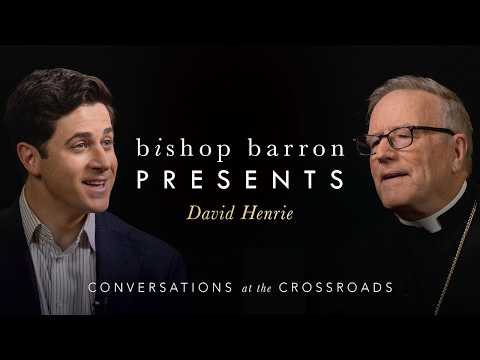
The most consistent biblical interpreter in the index is Jonathan Pageau. He reads the Old and New Testaments through Eastern Orthodox symbolic theology, treating the scriptural narrative as operating on multiple simultaneous levels: the literal, the typological, the moral, and the anagogical. This fourfold method was formalised by the patristic tradition and Pageau applies it to contemporary culture as well as to the biblical text. David Henrie's reflection on faith and film represents the Catholic lay voice: art-making as a form of scriptural attention.
Much of what a reader encounters through this index is not the biblical text itself but downstream from it. Contemplative practices trace their authority to specific passages. The vocabulary of *logos*, grace, messiah, and covenant only makes sense against the biblical background it comes from. The mysticism entry maps the contemplative current that runs through both Testaments and feeds every major Western spiritual tradition.