What is Cave in the Snow?
Cave in the Snow is Vicki Mackenzie's account of Diane Perry (b. 1943), a British woman who took Tibetan Buddhist ordination in 1964 and is known as Jetsunma Tenzin Palmo. Perry spent twelve years in solitary retreat in a cave in Himachal Pradesh's Lahaul valley under the Drukpa Kagyu lineage. Mackenzie, a journalist, built the book from extended interviews with Perry, organised into a chronological narrative.
What the book records
Cave in the Snow: A Western Woman's Quest for Enlightenment was published by Bloomsbury in 1998 and has stayed in print since. The narrative covers Perry's London childhood, her departure for India at twenty, her years as the Khamtrul Rinpoche's secretary in Dalhousie, and the twelve years she spent in a small cave above Tayul Gompa in Lahaul. Perry had been ordained in 1964 by the Eighth Khamtrul Rinpoche as Jetsunma Tenzin Palmo. The retreat ran from 1976 to 1988, with the final three years sealed in strict solitary retreat under the Drukpa lineage's yangti curriculum. Mackenzie's register is biographical, not doctrinal. The book is one extended interview, with Tenzin Palmo's account arranged in chronological order.
What the cave actually was
The cave was small and harsh. The ceiling was too low for an adult to stand upright. The floor was bare earth. Temperatures fell well below freezing for half the year. Food was carried up by villagers from Tayul once a year. The path was impassable from October to May. Tenzin Palmo slept upright in a gomdri, a wooden meditation box roughly a yard square, for the full twelve years. She did not lie down. The cave held a single shrine room built around four three-hour periods of formal practice each day. The Drukpa Kagyu ngöndro, the foundational preparatory practices, was completed there: one hundred thousand prostrations, one hundred thousand Vajrasattva mantras, one hundred thousand maṇḍala offerings, and one hundred thousand guru yoga recitations. After ngöndro, the yidam practice and the Mahāmudrā curriculum followed. Mackenzie asked Tenzin Palmo repeatedly about experiences. Her answer was consistent: the work of the retreat was the dissolution of the framework that wanted experiences, not the accumulation of them.
Cave in the Snow vs similar texts
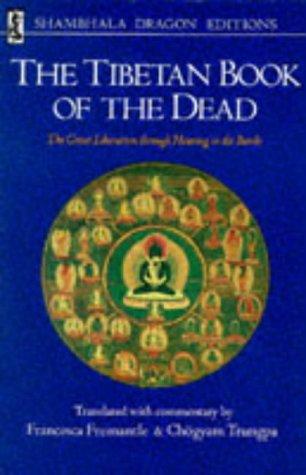
This book is a biography, not a manual. It does not transmit the practices Tenzin Palmo performed, and it is candid that the lineage instructions remain inside the lineage. This sets it apart from doctrinal texts such as Karma Lingpa's *Tibetan Book of the Dead*, which is a practitioner's guide to bardo navigation. It also differs from Chögyam Trungpa Rinpoche's *Cutting Through Spiritual Materialism*, which diagnoses a pattern in Western practice. Cave in the Snow records a form of life. It is closer to literary biography of practice than to a guide for practitioners.
Where the book sits in the index
Vicki Mackenzie's *Cave in the Snow* is the index's closest first-person record of long-form Tibetan retreat practice. The lineage it records is Drukpa Kagyu, descending through Phagmo Drupa from Gampopa. This is a different sub-school from the Karma Kagyu that produced most of the familiar Anglophone Vajrayāna teachers, but it shares the same lineage back through Marpa, Naropa, and Tilopa. Chögyam Trungpa Rinpoche's *Cutting Through Spiritual Materialism* is the Karma Kagyu counterpart on that same line. The diagnosis of spiritual materialism that book offers names precisely the construction the cave retreat was designed to refuse. Pema Chödrön's *When Things Fall Apart*, her course on awakening compassion, and her teaching on uncertainty as the practice carry the related Karma Kagyu bodhicitta and lojong curriculum into plain English. The groundlessness she names as the operative ground of practice is the experiential face of what the cave years produced in Tenzin Palmo's account. Karma Lingpa's *Tibetan Book of the Dead* is the bardo curriculum behind the Vajrasattva and yidam work the cave's daily schedule carried.
Why it matters here
The book is not a doctrinal exposition. It does not lay out the Mahāmudrā curriculum in technical detail, and it is candid that the lineage instructions remain inside the lineage. What it records is the form of life under which a practice is held continuously for over a decade. That gives it a specific role in the index: it is the most concrete answer to what retreat means in the Tibetan tradition's full sense. This is distinct from the weekend retreats and eight-week courses the Western adaptation typically names with the same word. Tenzin Palmo's subsequent teaching career, including the founding of Dongyu Gatsal Ling Nunnery in 2000, sits downstream of the cave. The book is the most reliable English-language access to what was happening upstream.