What is Death and dying?
Death and dying names the encounter every living being has with mortality, and the body of teaching, practice, and cosmology that contemplative traditions have developed to meet that encounter. Every major wisdom tradition addresses death directly: not as a problem to solve or a crisis to be managed, but as one of the primary teachers of the spiritual life.
Death and dying vs adjacent concepts
The afterlife and death and dying address different questions. Afterlife asks what, if anything, follows physical death. Death and dying asks how to meet death while still alive. A practitioner working with this question may hold no settled position on what follows death and still find the encounter with mortality urgent for practice.
Impermanence is the Buddhist analysis of which death is the sharpest instance. The doctrine extends to every momentary arising; death is where the principle becomes impossible to ignore. Grief is the emotional response to loss and belongs to the living. Death and dying covers the encounter from multiple angles: one's own death, the death of others, and the practice of sitting with the dying.
How traditions account for dying
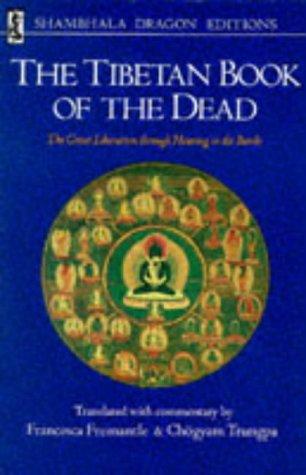
In the Tibetan Buddhist tradition, dying is not only inevitable but trainable. The bardo framework identifies six between-states, three of which unfold through the dying process itself. The Bar do thos grol — the fourteenth-century revealed text the West calls the Tibetan Book of the Dead — is read aloud to the dying and recently deceased. It maps the luminous gap immediately after death as the recognition opportunity the whole contemplative curriculum has been preparing for. The practitioner who has learned to recognise the nature of mind in meditation, the text proposes, will recognise it again in the dissolution of death.
In early Buddhism, maraṇasati — mindfulness of death — is one of the forty meditation subjects listed in Buddhaghosa's fifth-century Visuddhimagga. The practice asks the meditator to reflect on the certainty of death and the uncertainty of its timing, not to induce dread but to sharpen the urgency of practice. The Theravāda tradition holds that a mind well-settled at the moment of death conditions the quality of the next rebirth.
In Christianity, the ars moriendi — the art of dying well — is a tradition of preparation texts that emerged in the fifteenth century. The earliest examples date from around 1415 and spread widely in the aftermath of the Black Death. The texts instructed the dying on the temptations that arise at the end, the virtues that could meet them, and how those present should pray. Underlying this tradition is the conviction that how one dies is spiritually significant — that the final hours of a life are, in some sense, the culminating moment of a lifetime's formation in contemplative prayer and faith.
In the Sufi tradition, [fanāʾ](lexicon:fana) — the dissolution of the ego-self in the divine — is understood as an interior dying that prefigures physical death. The practitioner who has touched fanāʾ in life has already passed through the most significant threshold. Rumi's poetry returns repeatedly to death as the moment the drop re-enters the ocean. A saying widely attributed in Sufi tradition instructs: die before you die.
The modern encounter: hospice and the dying curriculum
The contemporary Western engagement with death and dying begins formally with Elisabeth Kübler-Ross's On Death and Dying (1969), which drew on her clinical work with terminally ill patients in Chicago to introduce the five-stage model: denial, anger, bargaining, depression, acceptance. The model has been widely contested as prescriptive rather than descriptive — Kübler-Ross herself revised her account in later years. Her more durable contribution was insisting that the dying person be spoken to honestly, that their inner experience be taken seriously, and that dying be treated as a human event rather than a medical failure to be managed.
The hospice movement developed alongside the same recognition. Dame Cicely Saunders, trained as a nurse, social worker, and doctor, opened St Christopher's Hospice in London in 1967. Saunders brought a Christian contemplative background to her clinical work and built the hospice around the conviction that pain could be managed well enough to leave the dying person's inner life and dignity intact to the end.
Joan Halifax developed the Being with Dying curriculum at Upaya Zen Center in Santa Fe, training clinicians, chaplains, and caregivers over three decades. Her approach draws on Zen practice, compassion training, and the palliative care literature. The curriculum sits at the intersection of professional caregiving and contemplative practice: neither purely clinical nor purely spiritual, it treats the capacity to bear witness to dying as itself a trainable skill.
Where it appears in the index
Pema Chödrön's *When Things Fall Apart* is the most widely read English-language application of the Tibetan bardo framework to the small dyings of ordinary life — illness, loss, and the dissolution of self-image. The Tibetan Book of the Dead, in the Trungpa-Fremantle rendering, is the canonical bardo curriculum in English and the text behind the contemplative reading of dying as trainable. Anita Moorjani's *Dying to Be Me* and her IANDS conference talk are the index's primary first-person near-death experience records, offering a direct account of what the dissolution of the self in extremis looked like from the inside. Joan Halifax's *On Being* conversation describes the Being with Dying curriculum and its approach to the border between professional caregiving and contemplative presence.