What is Direct path?
The direct path is an Advaita teaching method that begins with first-person enquiry into awareness on the first day rather than building toward recognition through years of preparatory practice. The approach is traced to Atmananda Krishna Menon in early twentieth-century Kerala and was carried to Western audiences through Jean Klein, Francis Lucille and Rupert Spira.
Direct path vs. gradual path and self-enquiry
The direct path is commonly confused with three things it is not. First: it is not a shortcut past Advaita Vedānta. The classic stages of śravaṇa (hearing), manana (reflection) and nididhyāsana (contemplation) are all present in the direct path lineage. The sequence is reorganised: investigation begins on the first day rather than arriving as a reward for preparation. Second: it is not identical with Ramana Maharshi's self-enquiry, its closest neighbour. Both point the student at the same investigation. The difference is instrumental: self-enquiry uses a question (Who am I?) as its engine; the direct path uses dialogue and guided observation of awareness. Third: it is not pointing-out instruction in the Tibetan Buddhist sense. The resemblance to the direct path's first-day commitment is real, but the framework, tradition and surrounding practice differ substantially. The most common Western misreading treats the direct path as instant enlightenment shorn of effort. The absence of preparatory ritual is not the absence of work. The path's actual demand is unrelenting first-person honesty about whether recognition has occurred or whether the student is rehearsing a correct-sounding answer.
What it claims
Most classical Indian formulations treat direct recognition of brahman as the culmination of long preparatory practice. The student receives ethical training, devotional discipline and meditative cultivation. Recognition arrives when the conditions are ripe. The direct path collapses that sequence. Investigation is offered at the start, not at the end. The argument is that preparation is a mistaken metaphor: awareness is not located in a room the student is standing outside. What is being asked for is not an attainment but a recognition. A recognition does not need to be earned. The central instrument is first-person enquiry into the nature of awareness: what kind of thing it is, what its limits are, what changes about it when the contents of experience change. This enquiry is pursued in dialogue with a teacher whose role is to keep it from collapsing into a search for an object.
The lineage
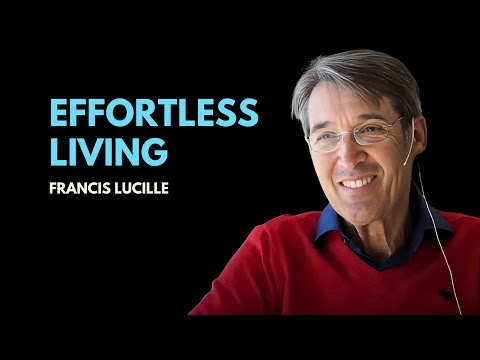
Atmananda Krishna Menon (1883–1959) was a Kerala magistrate who taught quietly from his home in Trivandrum under the name Sri Atmananda. His method relied on guided experiential investigation rather than scriptural commentary. Its technical vocabulary was minimal compared with the classical Advaita Vedānta of Ādi Śaṅkara. Jean Klein (1912–1998), a French musicologist and physician, met Krishna Menon in the early 1950s. He brought the approach to Europe and taught in France, Switzerland and Britain for four decades. Francis Lucille, a French physicist and Klein's student from the 1970s, was authorised to teach in 1985. He is the most articulate living transmitter of the lineage in English. Lucille's most prominent student, Rupert Spira, has refined the language for a wide audience while keeping the method's central commitment intact: investigation of awareness, in dialogue, from the first day.
In the index
Spira's *Being Aware of Being Aware* is the gentlest serious modern presentation of the direct path in English. It is a sustained enquiry into awareness's relation to its objects, written so that the investigation it describes can begin while the book is being read. His longer-form talk opens the same enquiry in the discursive register that suits the early stages of the work. The Q&A on intellectual versus lived knowing addresses the central problem of the path: the gap between a position one can defend and a recognition one inhabits, and what closes it. Francis Lucille's piece in the index shows the teaching method clearly: a question is taken on its own terms, traced to the assumption that produced it, and that assumption is examined directly. Nisargadatta Maharaj's *I Am That* belongs to a parallel non-dual stream rather than to the Krishna Menon lineage proper, but the householder dialogues of his Bombay teaching arrive at the same recognition through the same refusal to defer. Adyashanti's *Do Nothing* approaches recognition by the back door, asking what remains when every spiritual technique has been laid down.