What is God?
God is the name given in monotheistic religions to the one supreme being — the eternal, uncreated reality on which everything else depends. In Judaism, Christianity, and Islam, God is personal: the creator of the world, the source of moral order, and the one to whom worship, prayer, and trust are directed.
The God of monotheism
Monotheism is the belief in a single God rather than many gods. Its decisive historical root is the faith of ancient Israel, which held that the God who made a covenant with Abraham was the only true God and the creator of all things. Classical theology describes this God through a set of attributes: eternal (without beginning or end), omnipotent (all-powerful), omniscient (all-knowing), and wholly good. God is held to be both transcendent — beyond and other than the world — and immanent — present and active within it. Because God is not one being among others but the source of being itself, many theologians insist that human language about God is always analogical, pointing toward a reality it cannot contain.
God in Christianity
Christianity inherits the one God of Israel but confesses that this God is triune: one divine being in three persons — Father, Son, and Holy Spirit — the doctrine of the Trinity. Central to it is the claim that God was decisively revealed in Jesus Christ, whom Christians believe to be God incarnate. As the New Testament scholar N. T. Wright explains, the earliest Christians believed Israel's God had returned to act within history in the person of Jesus and to dwell within his followers through the Holy Spirit. To believe in God, in this account, is less an act of intellectual assent than of being addressed and transformed by a personal presence.
God and "the Absolute"
The personal God of the Abrahamic traditions can be contrasted with the impersonal ultimate of the non-dual traditions — the Absolute, Brahman, or the Tao — which is described not as a being who acts but as the formless ground of all appearance. The two pictures are not always opposed: the apophatic, or "negative," theology of mystics such as Pseudo-Dionysius and Meister Eckhart approaches the Christian God in much the same way, insisting that God is better known by what cannot be said than by what can. The boundary between the personal and the impersonal divine is one of the deepest questions in comparative religion.
Where this entry appears in the index
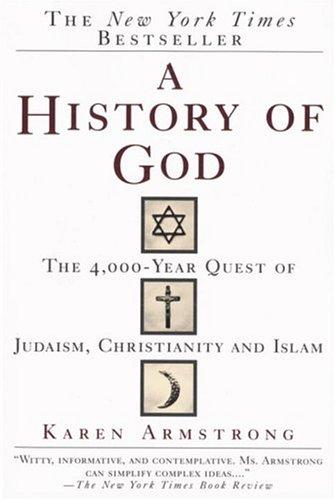
Encyclopædia Britannica's overview of Christianity sets the doctrine of God in its historical frame. N. T. Wright's "What Is a Christian?" traces how the first followers understood the God revealed in Jesus. Karen Armstrong's *A History of God* follows the changing human conception of the divine across four millennia of Judaism, Christianity, and Islam, while Leo Tolstoy's *The Kingdom of God Is Within You* reads the Gospel as a call to locate God in inward moral transformation rather than institutional religion.
Debated questions
Whether God exists, and what could count as evidence either way, is among the oldest questions in philosophy. Classical arguments for God include the cosmological (the world must have a first cause), the teleological (its order implies a designer), and the ontological (the very concept of a perfect being implies existence); each has been contested at length. The strongest objection is the problem of evil: how a God who is both all-powerful and wholly good can permit suffering. Responses range from free-will defences to the claim that finite minds cannot judge an infinite providence. This entry describes the concept and the debate; it does not adjudicate the question.