What is The Absolute?
The Absolute is the term philosophers and mystics use for the ultimate, unconditioned reality. It is the ground of all existence: self-sufficient, beyond all limitation, and dependent on nothing outside itself. Where ordinary things arise in dependence on other things, the Absolute is what requires no prior cause. Different traditions use different names for it: Brahman in Advaita Vedanta, The One in Neoplatonism, Godhead in Christian mysticism, al-Wujūd (the Real) in Sufism. The formal structure is the same across all of them: a reality complete in itself from which everything else derives.
The Absolute vs God, Brahman, and consciousness
The Absolute is related to but not identical with the God of theistic religion. The God of theism is typically personal: a being who creates, loves, and commands. The Absolute, as used in philosophy and mysticism, is usually impersonal. It is not a being among beings but the ground of being itself. It is closer to what Christian mystics call the Godhead (Gottheit) than to the Creator. It is also closely related to Brahman, the Sanskrit term for ultimate reality in Advaita Vedanta. Many Western scholars simply translate Brahman as the Absolute. The distinction from consciousness is subtler: in the non-dual traditions, the Absolute and pure awareness are often declared identical. The Absolute is not a thing that consciousness observes. It is what consciousness is in its unconditioned nature.
The concept across traditions
Plotinus gave the Western philosophical tradition its most systematic account of the Absolute under the name The One (third century CE). For Plotinus, The One is beyond being and beyond thought. It is so simple and self-sufficient that any predicate would limit it. From The One emanates Nous (Intellect), then Soul, then the material world. The Neoplatonic scheme was absorbed into both Christian and Islamic mysticism.
In Christian mysticism, Meister Eckhart (c. 1260–1328) distinguished between God (the personal creator) and the Godhead (Gottheit), which he described as a silent, motionless desert beyond all attributes. This is the Absolute in Christian dress. In Sufism, Ibn Arabī used al-Haqq (the Real) and al-Wujūd (Being itself) for the same function: the one reality of which all creation is a self-disclosure.
In Advaita Vedanta, the Absolute is Brahman, described in the Upaniṣads as sat-chit-ānanda (being, consciousness, bliss). The Vedantic formulation is the most developed: every apparent individual self (jīva) is ultimately identical with Brahman (tat tvam asi, that thou art). Nisargadatta Maharaj’s *I Am That* is among the most direct twentieth-century expressions of this: the sense of "I am" prior to all thought is itself the Absolute.
The Absolute in contemporary non-dual teaching
Contemporary non-dual teachers treat the Absolute as the most immediate object of inquiry rather than a remote metaphysical endpoint. Rupert Spira and Francis Lucille both draw on the direct path of Atmananda Krishna Menon: rather than reasoning toward the Absolute, the invitation is to recognise that pure awareness, what one already is, is the Absolute. Spira’s *Being Aware of Being Aware* works through this recognition step by step, returning to the simplest fact: awareness is present and knows no boundary. Adyashanti’s *Do Nothing* approaches the same recognition from a different angle, asking what remains when all effort at attainment is released.
Where this entry appears in the index
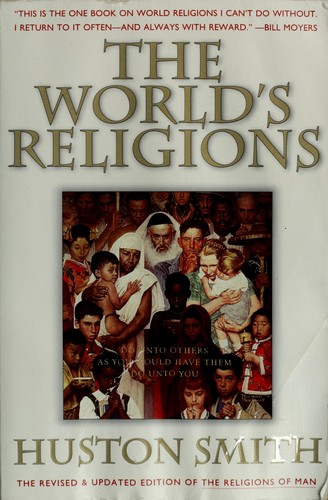
Huston Smith’s *The World’s Religions* makes the cross-traditional comparison explicit: each major tradition posits an ultimate reality that is one, infinite, and the ground of all finite being. The perennial philosophy takes this convergence as its thesis, arguing that beneath differing names and metaphysical vocabularies the traditions are pointing at the same thing. The content in this index that engages the Absolute most directly comes from non-dual teachers: Rupert Spira, Francis Lucille, and Vedantic and contemplative sources that use the term or its equivalents without qualification.
Scholarly and theological disagreements
The claim that the Absolute is the same across traditions is contested. Theologians within theistic traditions often reject the equation of Brahman, The One, and the Godhead, arguing that differences are not merely terminological. Within Hindu thought, the debate between nirguna Brahman (without qualities) and saguna Brahman (with qualities) implies very different relationships between the Absolute and a personal God. This divide runs through Advaita Vedanta, Vaishnavism, and Kashmir Shaivism. In European philosophy, the twentieth-century rejection of Hegelian absolute idealism cast suspicion on the whole category. Whether the Absolute is a meaningful philosophical concept or a category error remains an open question across disciplines.