What are Psychic abilities?
Psychic abilities are claimed human capacities to perceive information or influence physical events through channels that bypass the ordinary senses and physical body. Researchers studying them use the term psi, from the Greek letter, as a neutral scientific label. The capacities divide into two broad families. The first is extrasensory perception (ESP): telepathy (the transmission of information between minds without sensory contact), clairvoyance (perception of distant or hidden objects), precognition (foreknowledge of future events), and remote viewing (directed perception of a distant location). The second is psychokinesis (PK): the claimed ability to influence physical systems, from the output of electronic random-number generators to the movement of objects, through intention alone. Neither family has been demonstrated to the satisfaction of mainstream science.
Psychic abilities vs miracles, intuition, and siddhis
Three concepts are often run together with psychic abilities but carry different meanings. A miracle is a divine intervention in the normal order of things. Its agent is God or a sacred figure, and its significance is theological, not psychological. Psychic abilities, as studied in parapsychology, are conceived as natural human faculties, not acts of divine grace. Intuition is a weaker claim: the felt sense of knowing something without knowing how. It is not typically treated as involving information transmitted across space or time. [Siddhis](lexicon:siddhi), the Sanskrit term from the yogic tradition, overlap most closely with psychic abilities as a category. Patañjali's Yoga Sūtras catalogues capacities that match the parapsychological list almost exactly: knowledge of past and future, knowledge of others' minds, and perception of hidden things. The difference is frame. The yogic tradition places the siddhis inside a cosmological account of how consciousness relates to matter. Parapsychology studies them as anomalous data points within a broadly materialist framework.
The traditions' accounts
Every major contemplative tradition contains material on psychic capacities. The yogic and tantric traditions treat the siddhis as predictable byproducts of deep meditative concentration. Paramahansa Yogananda's *Autobiography of a Yogi* records a long series of encounters with practitioners who exhibit preternatural sight, bilocation, and knowledge of distant events. The uniform teaching across lineages is that the powers are real, not the goal, and that pursuing them is a trap. Manly P. Hall's *The Secret Teachings of All Ages* maps the concept across the Western esoteric traditions from Greek and Egyptian temple practice through Hermeticism, Kabbalah, and Rosicrucianism. Each tradition carries accounts of trained subtle perception, prophecy, and communication with non-physical entities.
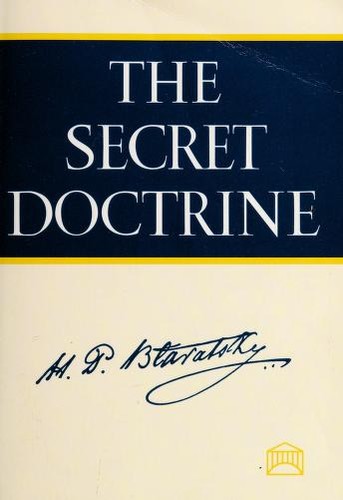
The Theosophical tradition, founded by Helena Blavatsky in the 1870s, gave psychic perception a central technical role. *The Secret Doctrine* grounds its cosmological claims in trained clairvoyant investigation of the Akashic Records. Blavatsky and her successor Charles Leadbeater wrote as if systematic psychic observation were available to any trained investigator. William Walker Atkinson's *Advanced Course in Yogi Philosophy and Oriental Occultism*, published in the early twentieth century, channelled both Theosophical and yogic frameworks into the American popular reader and treated psychic development as a discipline anyone could undertake.
Parapsychology and the scientific debate
The Society for Psychical Research, founded in London in 1882, was the first organised attempt to test psychic claims under controlled conditions. William James and Henri Bergson both served as its presidents. The field now called parapsychology grew from that project. Dean Radin, chief scientist at the Institute of Noetic Sciences, represents its most methodologically systematic contemporary strand. His research applies meta-analysis to thousands of controlled experiments, arguing that cumulative effect sizes for telepathy, remote viewing, and random-event-generator influence exceed chance by margins unexplained by coincidence or publication bias. The scientific mainstream has not accepted his conclusions. Critics point to replication failures, experimenter effects, and methodological weaknesses in primary studies. The disagreement is active and unresolved.
In the index
Paramahansa Yogananda's *Autobiography of a Yogi* is the index's richest account of psychic phenomena in a contemplative context, recording the siddhi tradition through encounters that Yogananda treats as ordinary facts of the yogic life. Hall's encyclopaedia gives the broadest cross-traditional survey of psychic claims in Western esotericism. The siddhi entry maps the classical yogic taxonomy of supernormal capacities in detail, including the specific Patañjali warning against pursuing them. The clairvoyance entry covers the perceptual strand of psychic ability in depth, from Theosophical methods to laboratory protocols. The dean-radin entry covers the contemporary experimental parapsychology programme and its standing within science.