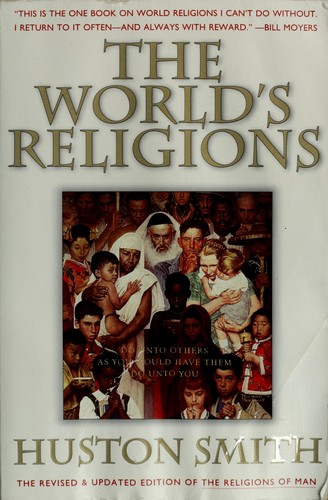
Huston Smith’s classic comparative-religion textbook — originally published in 1958 as The Religions of Man, substantially revised in 1991 as The World’s Religions — covering Hinduism, Buddhism, Confucianism, Taoism, Islam, Judaism, Christianity and the indigenous traditions. The book’s distinguishing feature is Smith’s insider-friendly treatment: he had practised in each tradition he wrote about, and the chapters read as sympathetic portraits rather than detached surveys.
Contents
Point of Departure
Hinduism
Buddhism
Confucianism
Taoism
Islam
Judaism
Christianity
The Primal Religions
A Final Examination
Reception
One of the bestselling religion textbooks ever written — over 3 million copies, the standard introductory text in comparative-religion courses for fifty years, and Smith’s career-defining work. Bill Moyers’s PBS series The Wisdom of Faith with Huston Smith (1996) brought it to a much wider audience. Critics inside post-1990s religious studies have argued the book reflects a perennialist sympathy that the field has since moved away from (towards more historically-situated approaches); the Diana Eck and Christine Hedlin generation of textbooks have largely succeeded it pedagogically. The book’s reach as a popular introduction remains intact.
Frequently asked
What is The World’s Religions about?
It is Huston Smith’s comparative study of the world’s major religious traditions — Hinduism, Buddhism, Confucianism, Taoism, Islam, Judaism, Christianity, and indigenous traditions. Smith’s approach is insider-sympathetic: he practised in each tradition he wrote about, presenting chapters as portraits of living wisdom rather than detached academic surveys.
What is the difference between The Religions of Man and The World’s Religions?
They are the same book. Originally published in 1958 as The Religions of Man, the text was substantially revised and retitled The World’s Religions in 1991, updating coverage of traditions such as Tibetan Buddhism and Sufism and adopting more inclusive language throughout.
Why has The World’s Religions remained a standard introductory text for over fifty years?
Smith presented each tradition as its most committed practitioners understand it from within — sympathetic engagement rather than critical deconstruction. That insider approach made the book accessible to general readers and students alike, even as academic religious studies later moved toward more historically-situated methods.