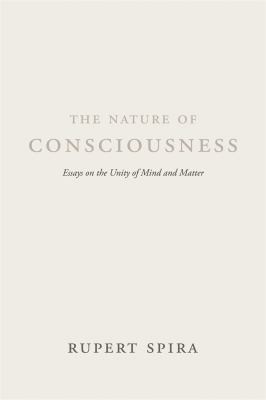
The Nature of Consciousness — Essays on the Unity of Mind and Matter is Rupert Spira's most argumentative book, published in 2017 by Sahaja Publications and reissued in paperback by New Harbinger in 2018. The book sets out a sustained case for what Spira calls the consciousness-only model: that materialism's hard problem dissolves if awareness is taken as primary rather than as something the brain produces.
The eighteen chapters move from a phenomenological analysis of perception, through a critique of the standard scientific assumption of an objective world independent of any subject, to a positive account in which the apparent multiplicity of minds and objects is a modulation of a single field of knowing. It is the volume most often cited by readers who first encountered Spira through his appearances on Sam Harris's Waking Up app or Bernardo Kastrup's Essentia Foundation.
Contents
Introduction: The Hard Problem of Consciousness
The Nature of Mind
Only Awareness Is Aware
Panpsychism and the Consciousness Only Model
The Inward Facing Path
The Direct Path to Enlightenment
Self-Inquiry and Self-Remembering
The Experience of Being Aware
The Essence of Meditation
The Outward Facing Path
Existence Is Identical to Awareness
The White Radiance of Eternity
The Focusing of Consciousness
There Are No States of Consciousness
Wordsworth and the Longing for God
The Shared Medium of Mind
The Memory of Our Eternity
Consciousness' Dream
The Search for Happiness
Reception
The Nature of Consciousness is the book that moved Rupert Spira from the contemplative-non-duality circuit into the philosophy-of-mind conversation around analytic idealism. Bernardo Kastrup has cited it repeatedly in his own published work as the most accessible phenomenological-first defence of an idealist position, and Iain McGilchrist's The Matter With Things (2021) draws on it in its chapters on the primacy of experience. Within the analytic philosophy of mind it is treated by sympathetic readers (Galen Strawson, Philip Goff) as a serious entry in the panpsychism / idealism debate and by less sympathetic ones (Daniel Dennett, Patricia Churchland) as begging the question of how a single subject-pole would individuate the apparent many. The book is the highest-selling of Sahaja Publications' catalogue and has appeared on multiple year-end consciousness-studies reading lists since 2019.
Frequently asked
What is The Nature of Consciousness about?
It is eighteen essays arguing that the hard problem of consciousness dissolves when awareness is taken as ontologically primary rather than as a product of matter. The book moves from a phenomenological analysis of perception to a positive account in which minds and objects are modulations of a single field of knowing.
How does this book relate to Bernardo Kastrup's analytic idealism?
Kastrup wrote the afterword and has cited the book as the most accessible phenomenological case for an idealist position. Deepak Chopra contributed a foreword. Spira's approach is phenomenological rather than strictly analytic, but his conclusions converge with idealist positions in contemporary philosophy of mind.
Where does this book sit in Spira's writing?
It is his most argumentative work, intended for readers who want to engage the consciousness-only model at a philosophical level rather than through contemplative practice alone. His earlier books — Transparency of Things and Presence Volumes I and II — cover the same territory in more contemplative form.