What is Dream Interpretation?
Dream interpretation is the practice of assigning meaning to the images, symbols, and narratives that arise during sleep. The underlying assumption, shared across most traditions, is that dreams carry information not available to ordinary waking attention. Whether that information comes from a god, a spirit, the collective unconscious, or the deeper layers of the individual mind, the act of interpretation is the same: read the dream as a message and ask what it means.
Dream Interpretation vs dream yoga, prophecy, and lucid dreaming
Dream yoga is a Tibetan Buddhist practice for maintaining awareness inside the dream state rather than reading it afterward. The two practices are adjacent but not the same. Prophecy is the broader claim that dreams foretell events; interpretation is the hermeneutic skill of reading what that foretelling means. Lucid dreaming, as documented in the secular research literature, is the practice of becoming aware one is dreaming while still inside the dream. It does not require interpretation, though contemporary spiritual curricula often teach the two together. What these practices share is the premise that dreams have content worth attention. Dream interpretation adds the further step of decoding that content once the dream has ended.
Ancient and cross-traditional accounts
In ancient Egypt, dreams were understood as communications from the gods. Specialist priests held the formal office of dream interpreter. The Papyrus Chester Beatty (c. 1350 BCE) is the oldest surviving Egyptian manual of dream symbols. Greek practice added the institution of incubation: sleeping within a sanctuary of Asclepius to receive a healing dream. Artemidorus of Daldis codified the Greek tradition in the Oneirocritica (second century CE), a systematic taxonomy of dream symbols that influenced European interpretation manuals for more than a millennium.
The Hebrew Bible carries Joseph as its most prominent dream interpreter. He reads Pharaoh's dreams of seven fat and seven lean cattle as seven years of plenty followed by seven of famine (Genesis 41). In Islamic tradition, the Hadith literature records the Prophet Muhammad classifying dreams into three kinds: true dreams (ruʾyā ṣāliḥa, described as a portion of prophethood), disturbing dreams (attributed to Satan), and the working-through of the day's thoughts. Ibn Sirin (d. 728 CE) produced Tafsir al-Ahlam — the most influential Islamic dream manual — which the tradition copied, translated, and commented on continuously.
Hindu scripture situates the dream within a map of consciousness rather than a communications model. The Māṇḍūkya Upaniṣad identifies four states of awareness: waking (jāgrat), dreaming (svapna), deep sleep (suṣupti), and the unconditioned fourth (turīya). The dream state is associated with the subtle body and with the mind's own projections rather than external messages. The Tibetan Buddhist tradition inherits a related framework. The *bardo* of dreaming is one of six transition states the tradition maps, and dream yoga uses the dream state as a training ground for the post-death transition the *Tibetan Book of the Dead* describes.
Jung and depth psychology
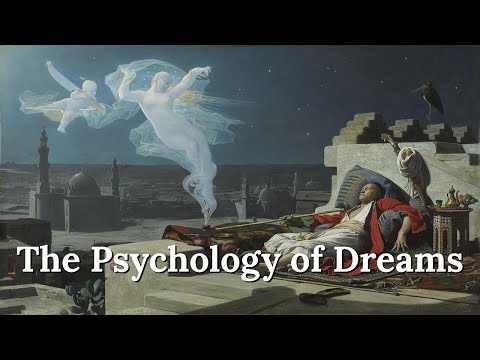
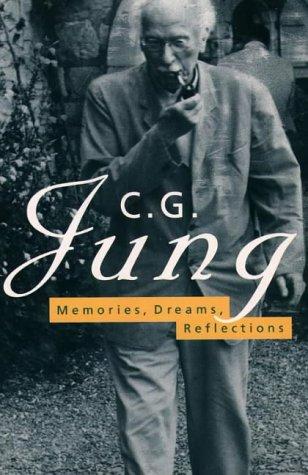
Carl Jung broke with Freud on the nature of dreams. Freud read them as disguised wish-fulfillment, largely organised around repressed sexual material. Jung argued that dreams have a prospective function. They do not only reflect what the conscious mind has suppressed. They also orient the psyche toward what needs to be integrated or developed. In Jung's model, dream symbols carry both personal associations and archetypal weight, drawing on the collective unconscious. The collective unconscious is the inherited layer of the psyche that stores recurring themes of human symbolic life: the shadow, the anima and animus, the self. The method Jung developed is called amplification. It enriches a dream symbol not just with the dreamer's own associations but with parallel images from mythology, religion, and alchemy. The Academy of Ideas channel carries a dedicated explainer, *Carl Jung and the Psychology of Dreams*, that traces this therapeutic programme. Jung's memoir *Memories, Dreams, Reflections* documents the dream life that shaped his theoretical development, including numinous dreams he described as the empirical basis for his later work on the collective unconscious.
Disagreement and limits
The traditions do not agree on what dreams are made of. The secular neuroscientific view, associated with Hobson and McCarley's activation-synthesis model (1977), holds that dreams are the cortex's attempt to impose narrative on random neural activation during REM sleep. On this account, assigning symbolic meaning to dream content is pattern-matching onto noise. The traditions dispute this, but they also dispute each other. The Islamic three-category model is theological in structure. The Jungian model is psychological. The Tibetan model is a practice theory about states of consciousness. What they share is the conviction that dismissing the dream entirely is an error. The honest position is that the interpretive frameworks themselves are real even if the metaphysical ground each assumes is contested.
Dream interpretation in the index
The index reaches dream interpretation primarily through the Jungian lineage. *Carl Jung and the Psychology of Dreams* is the dedicated explainer. *Memories, Dreams, Reflections* is the primary autobiographical source from Jung himself. The dream yoga entry documents the Tibetan tradition's approach to working with the dream state. The *bardo* entry sets the cosmological context in which dream yoga sits. The *Māṇḍūkya Upaniṣad* entry carries the Hindu four-state framework that situates the dream state philosophically. The consciousness entry addresses the broader question of what kind of knowing the dream state represents.