What is Synchronicity?
Synchronicity is Carl Jung's term for events that coincide in time, appear meaningfully related, and yet have no discoverable causal connection between them. Jung coined the term in the late 1920s and stated his central argument in 1952, in Synchronicity: An Acausal Connecting Principle, co-authored with physicist Wolfgang Pauli. The claim is not that a hidden force is arranging events. It is that causality is not the only form of meaningful connection reality contains. Jung proposed synchronicity as a third principle alongside cause-and-effect and pure chance.
Synchronicity vs coincidence, causality, and magical thinking
Coincidence in the ordinary sense refers to events sharing a time or place by chance, with no meaning attached. Synchronicity describes the subset of coincidences that strike an observer as meaningfully connected, usually in a way that bears on something psychologically significant in the moment. It is not a challenge to causality. Jung accepted that most events have ordinary causal explanations. The distinction is between the causal order, where A produces B, and what Jung called the acausal connecting principle, in which two events belong together not because one caused the other but because they share a meaning. Synchronicity is also not the same as magical thinking or supernatural causation. Jung did not posit a spirit or agency arranging the coincidence. The concept is psychological: something in the structure of mind and world allows meaning to appear across events that cause-and-effect alone does not connect.
The Pauli collaboration and the I Ching
Jung developed synchronicity in dialogue with Wolfgang Pauli, the quantum physicist who had come to him for analysis in 1930. Their collaboration produced a two-part monograph in 1952: Jung on synchronicity, Pauli on archetypal images in Johannes Kepler's cosmology. The pairing was deliberate. Quantum mechanics had shown that deterministic causality broke down at the particle level. Both men thought the implication extended into the structure of mind. Jung's other primary reference was the I Ching (Yìjīng), the Chinese divination classic. In his foreword to Richard Wilhelm's translation, Jung proposed that the I Ching operated not by predicting the future but by surfacing the quality of the present moment. This is the same claim synchronicity makes about meaningful coincidence. The connection to Taoism's concept of the Tao as an underlying pattern that holds events together without causing them was not lost on Jung.
Where to encounter it in the index
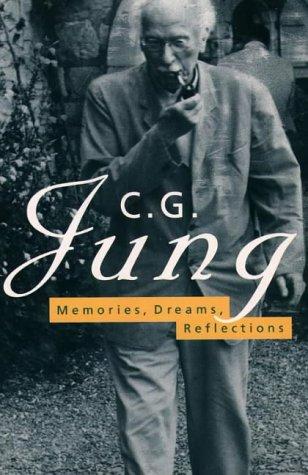
Rupert Spira's *Intuition, Synchronicity, and the Collective Unconscious* is the most direct engagement in the index. Spira reads the Jungian constructs from a non-dual standpoint, asking whether synchronistic connection is better understood as an expression of a single undivided consciousness rather than as a psychological phenomenon separate from the world. *Memories, Dreams, Reflections* is the volume where synchronicity appears most accessibly, anchored in personal experience rather than theory. *Modern Man in Search of a Soul* sets up the wider framework the 1952 monograph extends. The perennial philosophy tradition reads the convergence of inner and outer events as a pointer toward the unity behind appearances, the same territory synchronicity maps from a psychological angle.
What synchronicity is not
Synchronicity is not confirmation of whatever a person already believes. Jung noted that people in periods of emotional intensity tend to notice more coincidences. He read this as the psyche becoming more permeable to synchronistic experience. The cognitive-science literature reads the same pattern as heightened attention and pattern-detection. The two accounts are not mutually exclusive, but they are different claims. Synchronicity is also distinct from the law of attraction as it appears in New Age teaching. The law of attraction is a causal claim: thought produces reality. Synchronicity is an acausal one. The proposal is not that a person caused the coincidence. It is that the coincidence happened to be meaningful. Collapsing the two loses the distinction Jung was working to establish, and has contributed to considerable confusion in contemporary spiritual discourse.