What is the I Ching?
The I Ching (Yìjīng, the Classic of Changes) is an ancient Chinese oracle text. Its core was compiled in the Western Zhou period (c. 1000–750 BCE) and organised around sixty-four hexagrams. Each hexagram is a symbol of six stacked lines, either solid or broken. Consulting the book involves generating a hexagram by casting yarrow stalks or coins, then reading the matching passage as a description of the present moment and the direction change is moving through it.
I Ching vs adjacent divination traditions
The I Ching is sometimes grouped with tarot, runes, and astrology as an oracular system. All four are used to read the quality of a situation. But the I Ching's context is different. It grew from Chinese cosmology, became one of the Five Classics of the Confucian canon, and was the subject of serious scholarly commentary for two thousand years. It is as much a philosophical text as a divination tool.
Structure and origins
The core of the I Ching is the Zhouyi (the Changes of Zhou), probably dating to the ninth or tenth century BCE. It contains sixty-four hexagrams, each with a brief judgment (guà cí) and a commentary on each of its six lines (yáo cí). The building blocks are the bāguà, eight three-line trigrams. Any two trigrams stacked together produce one hexagram, giving sixty-four combinations. A later set of ten appendices called the Ten Wings (shí yì) provided the philosophical framework that turned the divination manual into a cosmological text. The tradition attributed the Ten Wings to Confucius, but scholars now place them in the Warring States period (500–221 BCE), after his death. By the 2nd century BCE, the I Ching had become one of the Five Classics, the canonical texts of Chinese learning.
Confucian, Taoist, and Western readings
The two main currents of Chinese thought read the I Ching differently. The Confucian reading, developed in the Ten Wings, treats each hexagram as guidance for self-cultivation and right action. The sage reads the pattern of change to know when to act and when to wait. The Taoist reading sees the Tao itself in the yin-yang alternation the hexagrams map. In this reading the book is not a moral guide but a description of how change moves naturally through the world. Carl Jung introduced the I Ching to a large Western audience through his foreword to Richard Wilhelm's translation, completed in German in 1923 and published in English in 1950. Jung read the book not as prediction but as a way of registering the quality of the present moment. That account led directly to his concept of synchronicity: meaningful coincidence rather than causal connection.
In the index
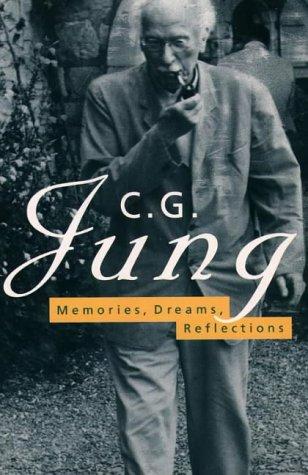
I Ching-specific material in the index is sparse. Alan Watts's lecture on Confucianism and Lao Tzu places the I Ching in its Chinese cosmological context, covering yin-yang polarity and the five-phase framework underlying the hexagram system. Carl Jung's *Memories, Dreams, Reflections* recounts his sustained engagement with the Yìjīng, including the consultation he wrote about in his foreword to Wilhelm's translation. The taoism entry and the hexagram entry cover the text's cosmological and symbolic dimensions in more detail. The index holds no dedicated I Ching commentary series or Wilhelm translation recording at this stage.