What is Hexagram?
A hexagram in the I Ching (Yìjīng, the Classic of Changes) is one of sixty-four six-line symbols. Each is formed by stacking two three-line trigrams, every line being either solid (yang, —) or broken (yin, – –). The sixty-four possible combinations cover every pairing of the eight trigrams with each other. Together they map the full range of situations, transitions, and qualities of change that, according to classical Chinese cosmology, govern the movement of events in the world.
Hexagram vs adjacent symbol systems
The word hexagram has two entirely separate meanings in use today. In Western esoteric tradition, a hexagram is the six-pointed star formed by two overlapping triangles, known in Judaism as the Star of David and in Hermetic ceremonial magic as a symbol of the union of heaven and earth. This is unrelated to the I Ching. The I Ching hexagram is a stack of six horizontal lines, not a polygon, and carries a completely different cosmological function.
Within the I Ching system itself, a hexagram is sometimes confused with a trigram. A trigram is a three-line figure; there are eight of them. The eight trigrams (bāguà) represent fundamental natural forces: heaven, earth, thunder, wind, water, fire, mountain, and lake. Each hexagram is made from two trigrams stacked upper over lower. Eight times eight gives the sixty-four hexagrams. The trigrams are the vocabulary; the hexagrams are the sentences.
The Yìjīng and its structure
The Yìjīng is one of the Five Classics traditionally associated with Confucius, who is said to have edited and commented on it, though modern scholarship places the core text, the Zhouyi, in the Western Zhou period (c. 9th century BCE). The text consists of sixty-four hexagrams, each with a brief judgment (guà cí) and a line commentary (yáo cí). Ten supplementary appendices, called the Ten Wings, were added in the Warring States period and attributed to Confucius by the tradition, though scholars debate this attribution.
Consulting the I Ching involves generating a hexagram through a casting procedure. The classical method uses forty-nine yarrow stalks, sorted in a sequence of operations that produces each line from bottom to top. A simpler later method uses three coins tossed six times. The resulting pattern of solid and broken lines identifies a hexagram, and the text is read. If any lines are changing — ones about to flip from yin to yang or vice versa — a second hexagram is derived, representing the situation in transition.
Confucian and Taoist readings
The I Ching holds a distinctive position in Chinese intellectual history because both major streams of Chinese thought claimed it. The Confucian tradition treated it as a vehicle for moral cultivation. The Ten Wings interpret each hexagram in terms of virtue, right relationship, and the sage's self-development. The Taoist tradition read the same hexagrams as a map of the Tao's natural patterning: yin and yang in ceaseless interchange, neither pole permanently dominant, each calling the other into being. In the Taoist reading, the I Ching is not a moral guide but a description of how change moves through the world. Carl Jung wrote the foreword to Richard Wilhelm's German translation (1923, English 1950) and proposed that the I Ching operated not by predicting the future but by surfacing the quality of the present moment, a reading compatible with his concept of synchronicity.
Hexagram in the index
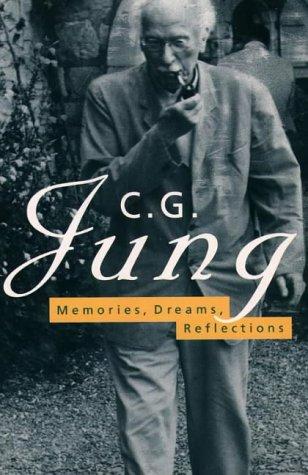
The index holds limited I Ching-specific material. Alan Watts's lecture on Confucianism and Lao Tzu places the I Ching in its Chinese cosmological context, covering the yin-yang polarity and the five-phase framework that underpins the hexagram system. Carl Jung's *Memories, Dreams, Reflections* is where Jung's sustained engagement with the Yìjīng is most accessible in English, including his account of consulting the book and writing his foreword to Wilhelm's translation. The taoism entry maps the broader tradition; the tao entry covers how the I Ching's cosmological register relates to the Tao's movement through yin-yang alternation. The gap in dedicated I Ching items is genuine: the index holds no Wilhelm translation, no dedicated reading series, and no commentary recordings at this stage.