What is Kalpa?
Kalpa is the cosmic aeon: the unit of time the Hindu and Buddhist cosmologies use to frame cycles of creation and dissolution. In the Hindu reckoning a standard kalpa runs 4.32 billion years (one day of Brahmā); in the Buddhist cosmology, four sub-kalpas of formation, persistence, dissolution, and emptiness make one full cycle.
Kalpa (Sanskrit kalpa, Pāli kappa) names the cosmic aeon. The standard Hindu reckoning, codified in the Purāṇas, has each kalpa run 4.32 billion years (one day of Brahmā), comprising one thousand cycles of the four yugas. Each kalpa is followed by an equal pralaya (cosmic night) in which the manifest universe is reabsorbed before the next emergence. The mahā-kalpa of the Buddhist cosmology is similarly structured: four sub-kalpas of formation, persistence, dissolution and emptiness make one full cosmic cycle. The numerical values are not the load-bearing claim. The load-bearing claim is structural: the universe and its inhabitants are not on the timescale ordinary perception takes them to be on, and the path the traditions describe is engineered for a temporal horizon the ordinary lifespan barely registers.
Where the path-traditions use it
The functional role of the kalpa concept in the contemplative literature is to hold the timeline of practice open at a scale large enough to make the long forms of the path structurally intelligible. The *bodhisattva*'s vow in the Mahāyāna tradition — to remain in *saṃsāra* for as many lives as it takes until all beings are liberated — is unintelligible without the kalpa horizon: the vow becomes a slogan if the timeline is restricted to a single lifetime. The Jain ascetic curriculum operates inside an even longer kalpic accounting in which an individual jīva may take innumerable lifetimes to exhaust the karmic matter binding it, with the kāla-cakra (the wheel of time) running cycles of utsarpiṇī and avasarpiṇī of unimaginable extent. The Theravāda four-stage progression — stream-enterer, once-returner, non-returner, *arhat* — is similarly kalpic in scope. The arhat has exhausted the conditions for further rebirth; the literature treats the journey from stream-entry to arhatship as work that may extend across seven lives at minimum, and many more in less favourable cases. The kalpa unit is what makes these path-architectures coherent rather than rhetorical.
In the index
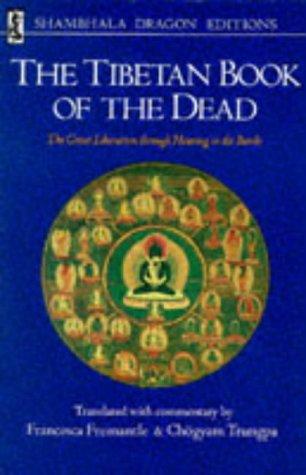
The contemplative-practice corpus the index carries inherits the kalpa horizon in operationally different forms across its principal lineages. Pema Chödrön's *When Things Fall Apart* and her course on awakening compassion work the Vajrayāna *bodhicitta* curriculum inside a Tibetan cosmology that retains the kalpa reckoning as a working assumption; the bodhisattva vow she received from Chögyam Trungpa is the long-timeline orientation toward sentient beings the kalpic horizon licenses. Trungpa's *Cutting Through Spiritual Materialism* operates inside the same Tibetan inheritance. Pema Chödrön's teaching on uncertainty as the practice is the dying-bardo register that the Karma Lingpa *Tibetan Book of the Dead* maps in detail. The Tibetan Book of the Dead and the long kalpic horizon of post-mortem rebirth are inseparable in the Karma Kagyu curriculum. The Plum Village teaching of Thich Nhat Hanh on emptiness, signlessness and aimlessness and the reflection from Br. Troi Duc Niem reframes the kalpic horizon through interbeing: the timeline of cosmic emergence and dissolution is not other than the present moment's conditioned arising, and the bodhisattva vow is renewed in each act of attention rather than deferred to a future life. Paramahansa Yogananda's *Autobiography of a Yogi* presents the Hindu kalpa reckoning matter-of-factly as a working assumption of the kriyā-yoga curriculum, and Sadhguru's longer-form lecture carries the southern-Indian Śaiva reading of the yuga and kalpa cycles into the contemporary register without apology. Jon Kabat-Zinn's MBSR is the contrast case: the eight-week clinical protocol deliberately removes the cosmological scaffolding, including the kalpic timeline, and presents the attention practices in the present-life frame the secular clinical context can receive.
What it isn't
The kalpa unit is not literal historical chronology. The numerical values the Purāṇas and the Buddhist Abhidharma assign to each cycle are not measurements but cosmological scaffolding; treating the 4.32-billion-year figure as a hypothesis to be reconciled with cosmological dating is a category error that misreads the function the unit was built to serve. The unit is also not a doctrine of cyclic recurrence in the Nietzschean eternal-return sense. The cycles described in the kalpic literature are not exact repetitions but successive instances of a general pattern. The practitioner who awakens in one cycle is not predestined to do so in the next. And the unit is not necessary to the practice on the modern contemplative-traditions' own readings: the secularising adaptations (MBSR most explicitly, but also the wider mindfulness and non-dual streams of contemporary teaching) operate without the kalpic cosmology and report the same operational results in the present-life frame. Whether the long-timeline scaffolding is dispensable or load-bearing is one of the chronic debates inside the modern reception of the path-traditions, and the answer turns on whether the practitioner needs the *bodhisattva* vow's full kalpic reach to keep the present moment's attention in place, or whether the present-life frame is sufficient. The traditions' historical answer was that the kalpic reach was structural; the contemporary clinical adaptations have wagered the opposite.