What is Trikāya?
Trikāya is the Mahāyāna Buddhist doctrine that the Buddha exists in three simultaneous modes. The *dharmakāya* is the truth body: the Buddha as unconditioned reality itself, identical with *emptiness*. The sambhogakāya is the bliss body: the Buddha as a luminous deity-form visible to advanced bodhisattvas in pure realms. The nirmāṇakāya is the emanation body: the Buddha as a historical person in the ordinary world. Developed in the fourth century by the Yogācāra masters Asaṅga and Vasubandhu, trikāya underpins virtually every Mahāyāna and Vajrayāna practice, from deity yoga to the recitation of refuge.
The three bodies
The classical Mahāyāna formulation distinguishes three modes in which buddhahood is manifest. The *dharmakāya* (the truth body or reality body) is the buddha as he is in himself: not a person but the unconditioned, unfabricated nature of reality, identical with *emptiness* and with the awakened nature any practitioner can in principle recognise. The sambhogakāya (the enjoyment body or bliss body) is the buddha as he appears to advanced bodhisattvas in pure visionary fields. These are the luminous deity-form manifestations that teach the highest Mahāyāna and Vajrayāna doctrines, and they are visible only to practitioners whose perception has been refined enough to register them. The nirmāṇakāya (the transformation body or emanation body) is the buddha as he appears in the ordinary historical world: the physical, walking, teaching person whom ordinary beings can see, hear, and follow. Śākyamuni, the historical Buddha of the sixth-century BCE Ganges plain, is the nirmāṇakāya the present world-age received. The sambhogakāya figures of Avalokiteśvara and Mañjuśrī populate the Pure Lands. The *dharmakāya* is what both are expressions of, and what the practitioner's own awakened nature, when recognised, turns out to be.
The doctrinal problem it solves
The doctrine emerges in the fourth century as Asaṅga and Vasubandhu, the founding figures of the Yogācāra school, work to systematise the earlier Mahāyāna sūtra literature. Two problems converged. First, the Prajñāpāramitā sūtras described buddhas and bodhisattvas operating across cosmic time-scales and in pure visionary fields, in a register entirely unlike the human teacher of the early Pāli canon. The early tradition had no way to distinguish the historical teacher from these cosmic figures, and the appearance of multiple buddhas teaching simultaneously across the Mahāyāna cosmos needed an explanation. Second, the emptiness teaching of the Madhyamaka school, articulated by Nāgārjuna, had undermined any substantialist account of a self-existent buddha. On the strictest Madhyamaka reading, the buddha cannot be a thing with its own being, but the tradition was not prepared to say the buddha is therefore a fiction. The three-body doctrine resolves both problems at once. The dharmakāya is empty in the Madhyamaka sense. The sambhogakāya and nirmāṇakāya are upāya (skilful-means) appearances through which the empty dharmakāya makes itself perceptible to beings at different levels of capacity.
Trikāya in practice
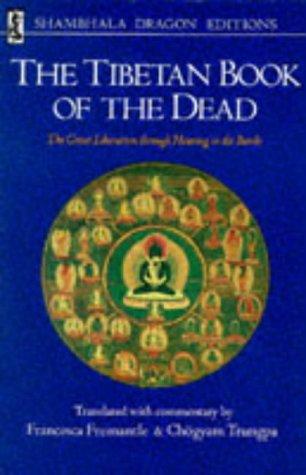
In the Vajrayāna inheritance, the three bodies are not only a metaphysical map of the buddha but a structural map of the practitioner's own awakening. The classical Tibetan formula maps the three doors of practice onto the three bodies: mind is the dharmakāya, speech is the sambhogakāya, body is the nirmāṇakāya. The path is the systematic recognition that they have always been so. Deity-yoga practice, the central method of the higher Tibetan tantras, is organised around this correspondence. The practitioner dissolves ordinary appearance into the emptiness of the dharmakāya, arises as the sambhogakāya deity-form, and re-engages the world as a nirmāṇakāya expression of that recognition. The dedication formula that closes every formal practice encodes the doctrine into daily prayer: whatever virtue I have produced, may it ripen as the three bodies of buddhahood for all beings. The Tibetan Book of the Dead maps the three bodies onto the post-death sequence: the chos nyid bardo (the bardo of dharmatā) is the moment when the dharmakāya manifests as the clear light, the peaceful and wrathful deity-visions are sambhogakāya appearances, and the next rebirth's body is taken as a nirmāṇakāya in ignorance rather than in recognition.
Where to encounter it in the index
Chögyam Trungpa's *Cutting Through Spiritual Materialism* treats the three-body schema directly and uses it as the structural backbone of the path's later chapters. The same author's collaboration with Francesca Fremantle on Karma Lingpa's *Tibetan Book of the Dead* provides the most accessible English-language reading of the trikāya through the bardo sequence. Pema Chödrön's *When Things Fall Apart* and Awakening Compassion carry the doctrinal apparatus into ordinary emotional life, mostly without naming the technical vocabulary but presupposing it throughout. Tenzin Palmo's *Cave in the Snow* is the lived testimony of a Western nun whose long Himalayan retreat was structured around the three-kāya curriculum of the Drukpa Kagyu lineage. For the Mahāyāna textual sources on which the doctrine rests, the standard English translations of the *Heart Sūtra* and *Diamond Sūtra* carry the Prajñāpāramitā substrate, and the Hsing Yun and Tu Vinh Hoa edition of the Heart Sutra continues it in the East Asian register. Thich Nhat Hanh on emptiness, signlessness and aimlessness approaches the same field through the Vietnamese Thiền lineage. The Sōtō and Rinzai Japanese descendants (Shunryū Suzuki's *Zen Mind, Beginner's Mind*, D.T. Suzuki's English-language essays, Alan Watts's *The Way of Zen*) preserve the three-body framework even where they speak in plainer registers.
What it isn't
The trikāya is not three separate buddhas. The three modes are aspects of a single buddhahood. The bodies are not numerically additive but functionally distinct. It is also not a Buddhist version of the Christian Trinity. The structural parallel (three modes of one) has invited comparison since the nineteenth-century academic encounter, and some early twentieth-century theological writers pressed the analogy hard. But the dharmakāya is empty in the Madhyamaka sense rather than personal in the Trinitarian sense. The sambhogakāya deities are upāya appearances rather than the second person of a Godhead. The nirmāṇakāya is not a single Incarnation but the recurring mode in which buddhahood becomes ordinarily visible. The two doctrines are doing different work in different ontologies; the surface resemblance is shallower than it looks. The doctrine is also not a non-dual claim that the world is the buddha. The recognition that the dharmakāya is the nature of one's own mind is sometimes paraphrased that way, but the Madhyamaka conditioning is part of the doctrine, and stripping it produces a different teaching.