What is Mary?
Mary of Nazareth was a first-century Jewish woman from Galilee and the mother of Jesus of Nazareth. The Gospel of Luke records the Annunciation: the angel Gabriel's announcement that she would conceive by the Holy Spirit. The Gospel of Matthew records a parallel account from Joseph's perspective. She appears at the Crucifixion, and in the Acts of the Apostles, among the early community of disciples in Jerusalem. The primary text attributed directly to her voice is the Magnificat (Luke 1:46–55), a hymn of praise spoken to her cousin Elizabeth.
Mary vs adjacent figures
Mary the mother of Jesus is routinely confused with Mary Magdalene, a different woman from the town of Magdala on the Sea of Galilee. Mary Magdalene was a close follower of Jesus and, according to three of the four Gospels, the first witness to the Resurrection. A sermon by Pope Gregory I in 591 CE conflated her with the unnamed sinful woman of Luke 7, a misidentification the Catholic Church formally withdrew in 1969. The two figures have different roles, different stories, and different theological freight. The Gnostic Eye's reading of Mary Magdalene covers the divine-feminine tradition that has grown around her figure, which is distinct from Marian devotion proper.
Some historians of religion argue that Marian devotion absorbed elements of earlier goddess cults, particularly in the Mediterranean. The title Queen of Heaven predates Christianity in Canaanite religion. Catholic and Orthodox theology rejects this framing, placing Marian veneration squarely in the specific historical role of the mother of the incarnate God. The scholarly conversation is ongoing, and both positions have serious representatives. The goddess entry covers the divine-feminine archetype as it appears in pre-Christian and non-Christian traditions.
Marian doctrine
Three formal doctrines define the Church's position on Mary. The title Theotokos, God-bearer or Mother of God, was settled at the Council of Ephesus in 431 CE. The council's primary concern was the nature of Christ, not Mary's status: if Jesus was fully divine from conception, his mother carried God. The Immaculate Conception, the doctrine that Mary herself was conceived without original sin, was defined as Catholic dogma by Pope Pius IX in 1854. The Assumption, that Mary was taken body and soul into heaven at the end of her life, was defined by Pope Pius XII in 1950. The Eastern Orthodox tradition holds a corresponding feast, the Dormition, which is doctrinally distinct but reaches a similar conclusion. Protestant traditions generally honour Mary as a model of faith and obedience while rejecting all three of these additional doctrines as lacking clear scriptural foundation. This is one of the cleaner fault lines between the Western confessions.
Devotion and practice
Marian devotion is among the most widespread forms of popular Christian piety. The rosary, a cycle of prayers structured around mysteries from the lives of Jesus and Mary, became the dominant Catholic Marian practice after the fifteenth century. Pilgrimage to sites associated with Marian apparitions draws tens of millions annually: Guadalupe (1531, the oldest formally recognised), Lourdes (1858), and Fátima (1917) are the largest. In the Eastern Orthodox liturgy, the Theotokos appears in almost every service. She is the most frequently invoked figure after Christ himself.
Hildegard of Bingen understood Mary as the point at which the old creation and the new met: the one in whom God's entry into matter became possible. Contemplative prayer in the Western tradition has always been framed within a theology that gives Mary a central role. Her fiat, the let it be of the Annunciation, is read as the model of the surrendered will that the contemplative tradition seeks to cultivate. Prayer addressed to Mary, asking for her intercession, is the most widely practised form of Christian prayer after direct petition to God.
In the index
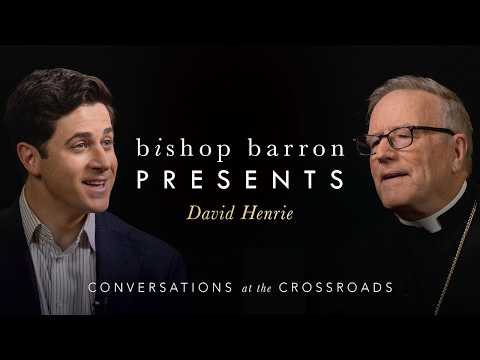
Jonathan Pageau's Christmas talk treats the Nativity within the Eastern Orthodox symbolic framework. Pageau argues the symbolism is inseparable from the doctrine: Mary's yes to the Annunciation is the created order opening itself to the transcendent, which is why the tradition places her above all created beings in its cosmological hierarchy. David Henrie on faith and film comes from within a Catholic tradition of Marian devotion. His account of artistic making as a form of devoted attention draws on the same contemplative background in which Mary functions as a model of receptive openness.