What is a Monastery?
A monastery is a community of monks or nuns who withdraw from ordinary life to follow a structured daily schedule of prayer, meditation, and work. The word comes from the Greek monasterion, itself from monazein, meaning to live alone. Despite the etymology, most monasteries are communal. The solitude they offer is from the world, not from one another.
Monastery vs hermitage, ashram, and sangha
A hermitage houses a single solitary practitioner or a very small group and has no fixed rule. An ashram is the South Asian term for the household of a teacher and those who live and practice around them; the structure is relational rather than rule-based. A sangha, in Buddhist usage, is the wider community of practitioners — anyone committed to the path — not a residential institution. A monastery is necessarily communal, necessarily residential, and governed by a formal rule that makes authority, property, and daily rhythm explicit.
Origins across traditions
Buddhist monastic communities are among the oldest surviving organised religious institutions. The Vinaya, the section of the Buddhist canon that governs monastic conduct, records rules attributed to the Gautama Buddha himself in the 5th century BCE. It covers dress, food, and conflict resolution, and remains the governing code of Theravāda monasteries today.
Christian monastic life developed independently. The first recognised form was the solitary asceticism of the desert fathers in Egypt and Syria, beginning in the 3rd century CE. The first communal Christian monastery is attributed to Pachomius, who organised his followers in the Egyptian Nile valley around 318 CE. Benedict of Nursia then codified communal Western monastic life in the Regula Benedicti in the 6th century, a rule still in use today.
Hindu monastic institutions called matha follow a different logic, centred on the unbroken lineage of a teacher. The tradition traces its institutional form to Ādi Śaṅkara in the 8th century CE, who established four principal monasteries at the geographic corners of India. Zen monasteries took their characteristic form in Tang-dynasty China, where Baizhang Huaihai (720–814 CE) established the Pure Rules that shaped Chan monastic life for centuries.
The daily rule
What distinguishes a monastery from a commune or a teacher's centre is the rule — a written code governing when practitioners rise, pray, eat, work, and sleep. The rule makes life predictable enough that the mind is freed for practice rather than constant decision-making. In Zen, the timetable divides into periods of seated zazen, formal meals in silence, work periods called samu, and dharma teaching. In Theravāda contexts, monks follow the 227 rules of the Vinaya Pitaka and do not eat after noon. In Benedictine Christian life, the day is structured by eight prayer periods called the Liturgy of the Hours.
Where this entry appears in the index
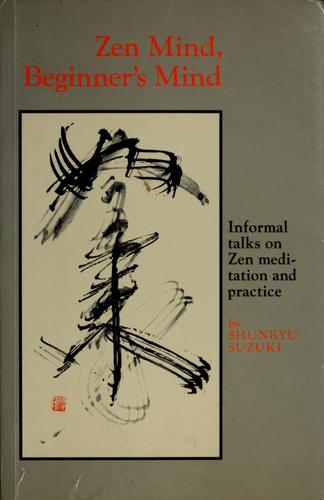
Thomas Merton's *New Seeds of Contemplation* and *Thoughts in Solitude* both come from his decades as a Trappist monk at the Abbey of Gethsemani in Kentucky. Shunryu Suzuki's *Zen Mind, Beginner's Mind* reflects the practice culture of Tassajara Zen Mountain Center, founded in 1967 as the first Zen monastery in the United States. Thomas Keating's *Open Mind, Open Heart* emerged from the centering prayer movement developed at St. Joseph's Abbey in Massachusetts. Br. Troi Duc Niem's teaching from Plum Village and Thich Nhat Hanh's reflection on emptiness come from the Plum Village monastery in southwest France, which Thich Nhat Hanh founded in 1982 as a community of interbeing.
Scholarly and denominational tensions
Whether monastic life is the superior form of religious practice is a live question within most traditions that have it. Theravāda Buddhism has historically elevated the monastic sangha above lay practitioners, though modern movements such as engaged Buddhism challenge this hierarchy. The Protestant Reformation rejected monasticism as works-righteousness; Catholic and Orthodox traditions maintain it as a distinct path. In Hindu contexts, the status of the renunciant relative to the householder has been debated since at least the Upaniṣads.