What is Hesychasm?
Hesychasm is the Eastern Orthodox tradition of interior prayer built around hesychia, the Greek word for stillness. Its central practice is the Jesus Prayer, a short formula repeated continuously until it settles into the heart. The tradition runs from the Desert Fathers of Egypt and Syria in the third and fourth centuries, through the Byzantine monasteries of Mount Athos, to the Philokalia and the living churches of the Orthodox world today. Its distinctive theological claim, formulated by Gregory Palamas in the fourteenth century, is that the uncreated light the practitioner comes to perceive is God's own energy, directly experienced.
Hesychasm vs. centering prayer, meditation, and lectio divina
Hesychasm is not generic Christian meditation in the sense the modern English word implies. It is a specific lineage with a specific theological claim. The uncreated light the hesychast reports is, in Palamite theology, not a subjective state, not a symbol and not a created phenomenon. It is God's own energy, directly perceived. Western critics from Barlaam onwards have read this as either a category mistake or Messalian heresy. The Orthodox response is that Western discomfort comes from a theological architecture that insists on a sharp divide between divine essence and creation. Hesychast experience refuses that divide.
The practice is also distinct from centering prayer and lectio divina, which are Western Catholic adaptations from a different lineage. The Jesus Prayer is older, more austere and more theologically committed. Modern Orthodox writers have generally resisted exporting the practice as a technique abstracted from the sacramental life of the Church. Their argument is that hesychasm without the liturgy and the sacraments becomes something else.
What hesychia means
The Greek hesychia names a quality of stillness. It is not the absence of external noise. It is the cessation of the inner chatter that the Desert Fathers called logismoi: the stream of stray thoughts, fantasies and self-talk that rises unbidden in the attentive mind. The hesychast is the person who has settled into that stillness and made it stable. The associated discipline of nepsis, meaning sobriety or watchfulness, is the active counterpart. It is the alert noticing of each logismos as it arises, before it captures the attention. The two together define the tradition: hesychia is the ground, nepsis is the activity. The Jesus Prayer is the technical instrument. It is a single short formula, repeated continuously until it descends, as the Greek manuals put it, from the lips to the mind to the heart.
From the desert to Mount Athos
The tradition begins in the Egyptian and Syrian deserts of the third and fourth centuries. Its earliest figures are collected in the Apophthegmata Patrum, the Sayings of the Desert Fathers: Antony, Macarius, Evagrius Ponticus and John Cassian. These were people who fled the cities after the Constantinian peace and went into the wilderness to find God in silence. Evagrius gave the tradition its early psychology of the eight thoughts, later Latinised in the West as the seven deadly sins. John Cassian carried the desert teaching westward, into the Conferences and Institutes that would shape the Benedictine Rule.
The eastern lineage continued through John Climacus's seventh-century Ladder of Divine Ascent, still read aloud in Orthodox monasteries during Lent. It crystallised in the fourteenth century at Mount Athos, the monastic peninsula in northern Greece, around the figure of Gregory Palamas. Palamas defended hesychast practice against the Calabrian monk Barlaam, who argued that the uncreated light the Athonite monks reported seeing during prayer could not be God himself, since God in his essence is unknowable. Palamas answered with the essence-energies distinction: the divine essence remains beyond all knowing, but the divine energies can be directly experienced. This became Orthodox dogma at the Constantinople councils of 1341 and 1351. The Philokalia, compiled by Nicodemus the Hagiorite and Macarius of Corinth at Mount Athos in 1782, is the canonical anthology of the lineage.
Where it lives in the index
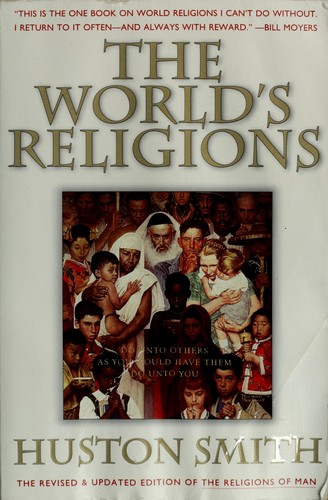
Jonathan Pageau is the index's most prolific living voice on Eastern Orthodoxy. His Orthodoxy in America lecture is the most direct entry point into the tradition's contemporary self-understanding. His teaching on icons, symbolic patterning and Christian metaphysics in pieces like Fractals — The World Is Full of Meaning and The Real Meaning of Lucifer sits inside the hesychast frame, even when it does not name the practice. Christians Are Not Called to Be 'Nice' draws on a strain of patristic moral realism that the desert lineage made central. From the Western side, Thomas Merton's *New Seeds of Contemplation* and *Thoughts in Solitude* represent the twentieth century's clearest attempt to bring the contemplative current of the Christian East into a vocabulary accessible to Western readers. Huston Smith's *The World's Religions* treats the hesychast tradition in its Christianity chapter as integral to the religion, not peripheral. The practice itself is mapped in the wider contemplative prayer entry and parallels the Western Catholic lectio divina as the eastern wing of the same family of monastic prayer.