What is William James?
William James (1842–1910) was an American philosopher and psychologist. His Gifford Lectures, published in 1902 as *The Varieties of Religious Experience*, established the comparative study of mystical experience as a serious academic project. He coined four marks of the mystical state (ineffability, noetic quality, transiency, and passivity) that researchers and writers in the field still use today.
His route to the question
William James was born in New York City in 1842 into a wealthy Swedenborgian family. His father, Henry James Sr., had reorganised his own theology around a crisis-and-recovery experience of the kind James would later study. His brother Henry, the novelist, was the more publicly visible sibling during James's lifetime. James trained as a physician at Harvard and taught physiology there from 1873. He founded the first American laboratory of experimental psychology, a year before Wundt at Leipzig by James's own retrospective accounting, and produced in 1890 the two-volume Principles of Psychology, which established the discipline as a serious academic subject in the United States. The Gifford Lectures of 1901–1902, delivered at Edinburgh and published as *The Varieties of Religious Experience*, were James's turn from the laboratory to the philosophical and religious questions that had pressed at him personally since a near-suicidal crisis in his late twenties. The work is the closest the late-Victorian English-speaking world produced to a sustained empirical study of mystical experience.
What the book attempts
*The Varieties of Religious Experience* is built around a specific methodological commitment. James worked from first-person accounts — diaries, conversion narratives, contemplative reports from a wide cross-tradition sample including Jonathan Edwards, John Bunyan, George Fox, Teresa of Ávila, and Sufi sources that had reached the Anglophone literature by the turn of the century. He refused to either institutionalise or dismiss this material on theological grounds. The four-mark framework named in the lectures is: ineffability (the report routinely fails to translate into ordinary language), noetic quality (the experience presents itself as knowledge rather than feeling), transiency (the state does not persist beyond minutes to hours), and passivity (the experiencer reports being acted upon rather than acting). The key methodological point is that the same four marks recur across traditions that share no common theology. James treats that recurrence as evidence to be taken seriously, not as a literary accident. The book leaves open whether the experiences point to anything real outside the experiencer's psychology. James was a pragmatist on the metaphysical question. But it establishes the experiences themselves as data that philosophy of religion must work from.
His work in the index
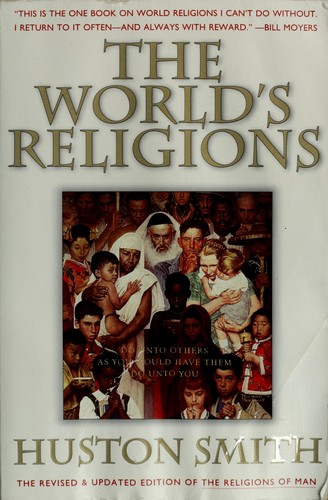
The book sits at the head of a recognisable lineage. Aldous Huxley's *The Perennial Philosophy*, published in 1945, takes the structural recurrence James documented and reformulates it as a metaphysical thesis: that one underlying recognition is being reported across the traditions, however differently each tradition theologises it. Huxley's later *The Doors of Perception* extends the same investigation into the psychedelic literature whose modern recovery is partly Huxley's doing. Huston Smith's *The World's Religions* is the mid-century comparative-religion synthesis that has sold past three million copies in English. Smith took James's phenomenology as the implicit register for the comparison, and the section on mysticism that opens each tradition's chapter in his book is recognisably Jamesian in its taxonomy. The first-person material James was reading turns up in the contemplative literature the index gathers around — Nisargadatta Maharaj's *I Am That* and Anthony de Mello's *Awareness* are the kind of report the Varieties method takes as primary data. The question James left open about the metaphysical status of these reports is the question contemporary post-materialist writers have pressed from the side of the philosophy of mind, Bernardo Kastrup's *The Idea of the World* included.
What he isn't
James is not himself a mystic on his own report. He writes in the Varieties that the material he is studying is constitutionally unavailable to him, and the book is structured throughout as the work of an observer rather than a participant. He is not a perennialist in the Aldous Huxley sense. The structural recurrence the Varieties documents is presented as empirical data, not as evidence for a single underlying truth, and the metaphysical step Huxley took forty years later is one James was careful not to take. And he is not a theologian in the institutional sense. The lectures were addressed to the Gifford brief (natural theology: the philosophical study of religion without confessional commitment), and James worked through his own religious questions outside the seminary structure of the late-Victorian American academy.