What is Joseph Campbell?
Joseph Campbell (1904–1987) was an American mythologist who proposed the monomyth: a single hero's journey structure of separation, initiation, and return that he traced across the world's culturally distinct mythologies. His 1949 *The Hero with a Thousand Faces* placed this comparative framework, drawn from Carl Jung's depth psychology, into the working vocabulary of a wide English-reading public.
What he isn't
Campbell was not a contemplative teacher. He held no transmission in any of the traditions he wrote about and did not present his work as religious instruction. He is not, on his own account, a Jungian. The depth-psychological inheritance is conspicuous in the monomyth and elsewhere, but Campbell took the Jungian categories as comparative tools rather than as clinical apparatus. His late-life reservations about the more systematic claims of the Zurich school are on record in the Moyers interviews. The monomyth has been contested in the academic comparative-religion literature on the grounds that the comparative leap from textual specificity to structural generality flattens the particularity the mythologies operate from. The structuralist reading the work most resembles (Lévi-Strauss in anthropology) is rarely cited as a parallel by either side. The phrase follow your bliss, which Campbell used in the Moyers interviews to gloss the hero's call, became his most-quoted line. It is also the line most often charged with misplacing the seriousness of what the underlying material was asking the reader to do.
His route to the question
Campbell was born in 1904 in White Plains, New York into an Irish-Catholic family that took him as a child to the American Museum of Natural History. The encounter with the museum's totem-pole hall is the recurring origin story he told in later interviews. He took his BA and MA in English at Columbia, then spent the late 1920s on a travelling fellowship in Paris and Munich. There he read Carl Jung for the first time and encountered the Parisian literary circles around James Joyce. On returning to a United States in the depths of the Depression, he chose to forgo a doctorate. The five years that followed were a hermit's reading programme in a cabin in Woodstock, New York, working through the world's mythologies in nine languages. In his own telling, this was the formative period of the work. He took a teaching position at Sarah Lawrence in 1934 and remained there for thirty-eight years. The published work falls into two streams: the lecture-derived books (The Hero with a Thousand Faces, the four-volume Masks of God, the posthumous Inner Reaches of Outer Space), and the edited and co-edited volumes (the Bollingen edition of the German indologist Heinrich Zimmer's posthumous papers, the Eranos annual yearbooks Campbell co-edited with Mircea Eliade and others in the late 1940s).
His work in the index
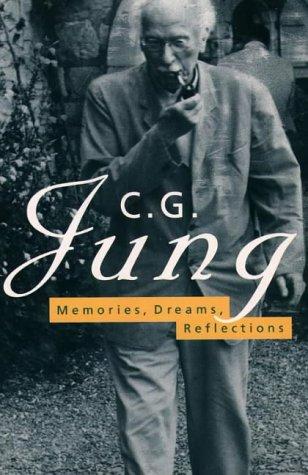
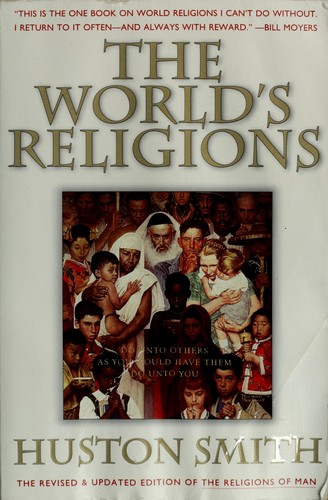
*The Hero with a Thousand Faces* is the foundational statement, the 1949 Bollingen volume in which Campbell distilled the monomyth across roughly two hundred pages of comparative reading. The thesis: a single underlying narrative of separation, initiation, and return recurs across the world's heroic mythologies. The recurrence is evidence of a shared structural feature of the psyche. The reading sits inside the depth-psychological inheritance Campbell took from Carl Jung and Zimmer. Jung's *Memories, Dreams, Reflections* and *Modern Man in Search of a Soul* are the autobiographical and theoretical volumes through which Campbell's reading of Jung was filtered. The line continues through Erich Neumann's *The Origins and History of Consciousness* and *The Great Mother*, the two systematic statements of the developmental-archetypal programme Campbell drew on directly in The Masks of God. Outside the Jungian circle, Campbell read the Asian material extensively. He edited the Zimmer papers and wrote the introduction to the English-language edition of Zimmer's Philosophies of India. D.T. Suzuki's *An Introduction to Zen Buddhism* is one of the volumes Campbell credited with shifting his early reading of Asian religion away from the orientalising frame Western academic religion still carried in the 1930s. The closest contemporary parallel within the index is Huston Smith's *The World's Religions*, the mid-century comparative-religion programme that took a similarly wide-survey approach to a non-specialist American audience and reached an even larger one.