What is Subconscious Mind?
The subconscious mind is the part of mental processing that runs below the threshold of deliberate awareness. It governs the body's autonomic functions, filters sensory data before it reaches conscious attention, and holds habituated emotional and behavioural patterns. These are the responses a person experiences as the way they are.
The term is not a single technical category. It covers several overlapping but distinct constructs. Sigmund Freud's unconscious is the reservoir of repressed content his clinical theory required. The cognitive-science adaptive unconscious is the high-throughput processing layer that laboratory research has documented. The New Thought subconscious, found in Joseph Murphy, Neville Goddard, and the lineage running to Wayne Dyer and Bruce Lipton, is the substrate that sustained imaginal practice is meant to reshape. These constructs are not interchangeable, but they share one premise: much of what the conscious mind takes as its own thinking is the output of a layer it cannot directly inspect. Change, on this view, means reaching that layer through indirect means. The techniques the various lineages converge on include sustained intention, repetition, hypnotic suggestion, meditative state-change, and imaginal rehearsal at the threshold of sleep.
Subconscious mind vs. related concepts
The subconscious of New Thought is not the same construct as the cognitive-science adaptive unconscious. Confusing them is the most common error in the popular literature. The cognitive-science construct names the preconscious processing layer behind implicit attitudes, automatic categorisation, and motor routines. It is well-evidenced as a causal substrate of perception and behaviour at short timescales. The New Thought construct adds a stronger claim: that the subconscious responds to sustained imaginal rehearsal across timescales and domains the laboratory literature has not established. This includes, in the strongest readings, the claim that the subconscious can influence outer-world events the practitioner has no evidenced causal pathway to affect.
Some of the practices the lineage converges on, such as sleep-threshold rehearsal, sustained affect-state holding, and repeated visualisation, have a limited evidence base in mindfulness research and clinical hypnosis. The law-of-attraction claim, that the subconscious draws outer conditions to the practitioner, is a separate claim the same evidence does not support.
The subconscious is also not the unconscious of the non-dual contemplative lineages. In Advaita Vedānta and the direct-path teachers, what New Thought calls the subconscious is one more layer of conditioned mind. Its contents arise inside consciousness rather than forming the substrate from which consciousness emerges. This difference in metaphysical priority is invisible at the operational level but decisive for what the path is ultimately aiming at.
Where to encounter it in the index
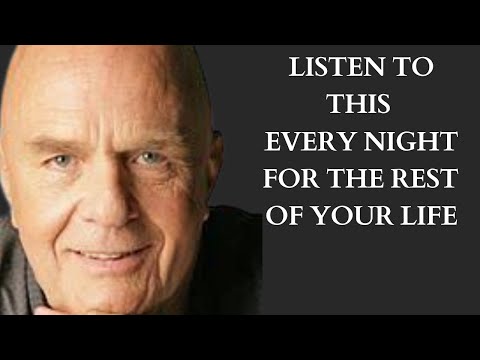
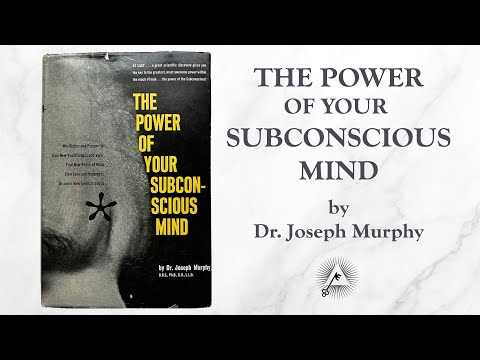
Joseph Murphy's *The Power of Your Subconscious Mind*, first published in 1963 and still in print, is the foundational popular text of the New Thought reading. The Master Key Society's recorded reading of the original 1963 edition is the unabridged audio. Bruce Lipton's *Bruce Lipton on Epigenetics, the Subconscious Mind and Mindfulness* sets out his cell-biology framing: gene expression responds to the sustained internal environment the subconscious maintains, and personal change means updating the subconscious programmes installed in early childhood. *How to Reprogram Your Mind and Become a Conscious Creator* is the more practice-oriented Lipton talk. Hans Wilhelm's *Conscious, Subconscious and Spirit-Conscious Mind* extends the model into the three-layer cosmology his work is built on. The spirit-conscious layer is his addition to the standard New Thought two-layer model. Wayne Dyer's *Programme Your Subconscious Before Sleep* and the longer *21-Night Subconscious Reprogramming Meditation* carry the practice lineage in the form Dyer adapted from Neville Goddard's pre-sleep instructions. The shared instruction is precise: the threshold of sleep is the window in which the subconscious is most receptive to suggestion, and the practitioner's task is to occupy a chosen affective state during that window rather than allow the day's residual reactivity to occupy it by default.