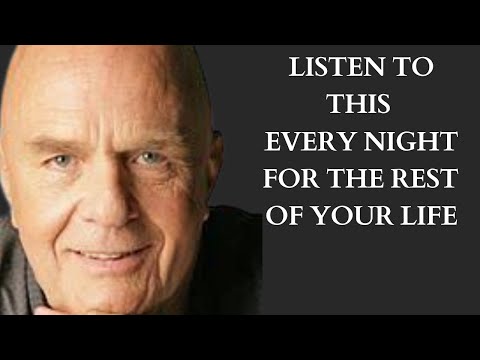
What is Wayne Dyer?
Wayne Dyer (1940–2015) was an American self-help author and PBS television regular. His 1976 debut, Your Erroneous Zones, sold over thirty-five million copies. In his later career he moved toward spirituality, producing a commentary on the Tao Te Ching and several books in the New Thought tradition.
Dyer vs law-of-attraction teachers and lineage holders
Dyer is not a law-of-attraction teacher in the strict sense. The Power of Intention (2004) makes a more careful case for alignment with a creative source than most popular law-of-attraction material does. His late work sits closer to New Thought pastoral writing than to the commercial self-help books that followed The Secret. He is also not a teacher in the lineage sense. There is no documented transmission from a master, no extended retreat practice on his record, and his *Tao Te Ching* commentary drew on existing English translations rather than Chinese-language scholarship. The strongest case for his work is as popular pastoral writing, not lineage transmission.
Background
Wayne Walter Dyer grew up in Detroit, spending part of his childhood in an orphanage after his father left the family. He worked as a high school guidance counsellor and later as a professor of counselling psychology at St. John's University before writing the 1976 book that made him a national figure. Your Erroneous Zones, a pop-psychology manual on self-defeating thought patterns, was the highest-selling non-fiction title of the late 1970s. It put Dyer on the lecture circuit and daytime television, where he stayed for thirty-five years. His evolution from secular self-help writer to overtly spiritual teacher is unusual in the genre. Most self-help authors do not migrate toward Lao Tzu and Patañjali, and most contemplative teachers do not start with bestseller paperbacks. That arc made him an entry point for readers who would otherwise never have encountered contemplative material, and also a figure whom readers in those traditions sometimes view with reservation.
The Tao Te Ching turn
The most consequential book of Dyer's later career was Change Your Thoughts, Change Your Life: Living the Wisdom of the Tao (2007), a verse-by-verse commentary on the eighty-one chapters of the *Tao Te Ching*. The book is not a translation; Dyer drew on existing English renderings rather than working from the Chinese. It is not a scholarly commentary either. It is a pastoral commentary that treats each verse as practical instruction for contemporary life. The result was that millions of American readers encountered Lao Tzu's text via Dyer's interpretation. The companion video pieces are the clearest expression of the project: Dyer reading verse twenty-nine and explaining what the world is a sacred vessel that should not be tampered with means for someone trying to control too much. The earlier Power of Intention (2004) is his most direct work in the New Thought register. Change Your Thoughts is where he committed to a single tradition rather than synthesising several.
In the index
Dyer's contribution to the corpus is concentrated in the Tao Te Ching commentary line. Three YouTube pieces — *There Is a Time for Everything*, *Edging God Out*, and *Allow Your Life to Unfold* — explore verse twenty-nine of the Tao at different lengths and registers. *Die While You're Alive* carries the detachment-from-possessions thread. *There Are No Justified Resentments* and two pieces on changing the way one looks at things (the short, the longer with Einstein's *friendly universe*) carry the cognitive-pivot register that connects his Taoist work back to the Erroneous Zones roots. *The Power of Intention* and its 2004 hardcover edition are the New Thought-line books. *A Sign from God* is his most explicitly devotional short piece. *10 Principles of Living Fully* and *Five Lessons to Live By* are summary talks of his late position. The subconscious-reprogramming pieces — *Programme Your Subconscious Before Sleep*, *Change Your Thoughts, Change Your Life*, and *21-Night Subconscious Reprogramming Meditation* — are the operational manifestation-adjacent practice forms, closer in method to Neville Goddard's imaginal pre-sleep instructions than Dyer himself usually acknowledged.