What is Anuttarayoga Tantra?
Anuttarayoga Tantra (Sanskrit: no-higher yoga) is the highest of four tantric classes in the Tibetan Vajrayāna tradition. It organises deity yoga into generation and completion stages, and forms the practical core of all four major Tibetan schools.
The fourfold classification
The Tibetan tantric literature is divided into four classes. The organisation was codified by Bu-ston Rin-chen-grub in the fourteenth century and is arranged by how directly each class approaches the recognition the path is meant to produce.
Kriyā-tantra (action tantra) emphasises external ritual purity. The practitioner approaches the deity as a subordinate approaches a sovereign. Caryā-tantra (conduct tantra) balances external ritual and internal yoga; the practitioner relates to the deity as a sibling. Yoga-tantra makes internal yoga primary and treats the deity as an equal whose form the practitioner adopts.
Anuttarayoga-tantra collapses the distinction between inside and outside entirely. The practitioner is the deity from the opening of the practice. Emptiness and appearance are inseparable. The methods include those the earlier classes avoid: sexual symbolism and, in some contexts, actual sexual practice. The New Translation schools subdivide the class into three types. Father tantras (the Guhyasamāja class) foreground the illusory body and the generation-stage construction. Mother tantras (the Cakrasaṃvara class) foreground the clear light and completion-stage subtle-body work. Non-dual tantras (the Kālacakra class and the Hevajra material) treat both as the same operation seen from different angles.
Generation and completion stages
The practice has two phases.
In the generation stage (utpatti-krama, Tibetan kyerim), the practitioner takes refuge, generates bodhicitta, dissolves the ordinary world into emptiness, and from that emptiness builds up the visualised form of the yidam with the figure's seat, retinue, and surrounding palace. The form is held in mental imagery for the duration of the session while the mantra is recited a set number of times. The goal is divine pride (lha'i nga rgyal): the trained capacity to hold the ordinary self aside and to function, within the session, as the awakened figure the visualisation embodies.
In the completion stage (niṣpanna-krama, Tibetan dzogrim), the visualised maṇḍala is dissolved into the practitioner's subtle body. The subtle body is described in tantric physiology as channels (nāḍī), winds (prāṇa), and drops (bindu). The recognition that follows the dissolution is rested in. The Six Yogas of Nāropa — inner heat (tummo), illusory body, dream yoga, clear light, bardo, and consciousness transference (phowa) — are the Kagyu lineage's organisation of the completion-stage curriculum. Mahāmudrā and Dzogchen are two converging accounts of what the resulting recognition ultimately is.
Where the curriculum surfaces in the index
The index does not carry the root tantras of the anuttarayoga class as source texts. The Sanskrit and Tibetan originals of the Guhyasamāja, Cakrasaṃvara, Hevajra, and Kālacakra exist in scholarly editions, but those editions are outside the contemporary teaching material the corpus primarily collects.
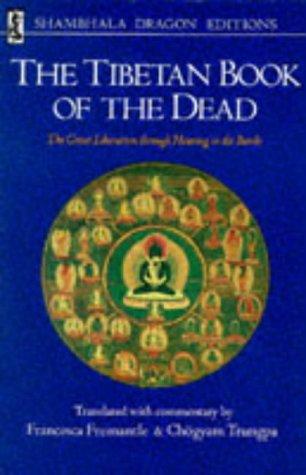
What the index carries is the curriculum's downstream English-language reception. Chögyam Trungpa's *Cutting Through Spiritual Materialism* is the foundational English-language Karma Kagyu text. It works throughout inside the anuttarayoga framework, treating the path's methods of working directly with the energy of confusion as the class's defining move. His collaboration with Francesca Fremantle on Karma Lingpa's *Tibetan Book of the Dead* maps the bardo yoga that the completion stage's clear-light and consciousness-transference instructions are designed to prepare.
Pema Chödrön's *When Things Fall Apart*, her course on awakening compassion, and her teaching on uncertainty as the practice carry the bodhicitta and lojong curriculum. The New Translation schools treat this as the ethical and motivational ground without which the anuttarayoga generation stage produces only inflation. Tenzin Palmo's *Cave in the Snow* is the lived account of a Western Drukpa Kagyu nun whose twelve-year Himalayan retreat was structured around the completion-stage curriculum. It remains the most direct first-person account of long-form Tibetan tantric retreat in the corpus.
What it isn't
Anuttarayoga-tantra is not the curriculum of sacred sexuality that the word tantra came to mean in late-twentieth-century North America. The sexual symbolism in the higher tantras is technical: the union of male and female deity figures (yab-yum) represents the union of upāya (skilful means) and prajñā (wisdom). The rare cases in which classical texts describe an actual sexual partner are framed inside the most demanding samaya (commitment) requirements the Vajrayāna lineage holds. The Western popular tantra movement that runs from Osho to its contemporary descendants is largely independent of this Indo-Tibetan classical material.
The class is also not a path-superior alternative the practitioner should skip the lower curriculum to reach. The classical Tibetan teaching is explicit: anuttarayoga without the foundations the Lamrim (graded path) supplies — bodhicitta, the emptiness view, stable śamatha — produces inflation rather than recognition.
Finally, the class is not a hidden teaching withheld from readers. The surface methods are now broadly described in public sources. The lineage's reticence about detailed instructions reflects the view that the methods become operative only within an authorised teacher-to-student relationship, not on the page.