What is Sambhogakāya?
Sambhogakāya (the enjoyment body or bliss body) is the second of the three buddha-bodies in the Mahāyāna Trikāya doctrine. It is the luminous, deity-formed body in which a buddha appears to advanced bodhisattvas in pure visionary fields. The doctrine was developed by Asaṅga and Vasubandhu in fourth-century India and codified by the Yogācāra school. It is the doctrinal basis for the cosmic figures of the Mahāyāna and Vajrayāna traditions: Avalokiteśvara, Amitābha, Mañjuśrī, and Tārā.
What it isn't
The sambhogakāya is not a divine being in the theistic sense. Classical commentary is clear on this: the deity-forms are upāya appearances of the empty dharmakāya, not separate persons to be addressed in petition. The surface resemblance to theistic devotion that visualisation practices invite is a category mistake the literature explicitly rules out. The sambhogakāya is also not a metaphor. The tradition is more committed to the literal reality of these appearances than modernist readings sometimes credit. The Pure Lands in which the figures appear are held to be perceptually real to the bodhisattvas whose practice has admitted them to that register. They are not allegories of inner states. And the sambhogakāya is not a second buddha alongside the historical one. The three kāyas are aspects of a single buddhahood, functionally distinct but numerically one. Treating the sambhogakāya as a separate cosmic figure parallel to the historical Śākyamuni collapses the architecture the Trikāya analysis was built to articulate.
The three buddha-bodies
The Trikāya schema distinguishes three modes in which buddhahood is manifest. The dharmakāya is the buddha as the unconditioned nature of reality, identical with emptiness. The nirmāṇakāya is the buddha as he appears in the ordinary perceptual field of unawakened beings. The sambhogakāya sits between them: the buddha in luminous, deity-formed appearance, visible to advanced bodhisattvas in pure visionary fields. The compound sambhoga means complete enjoyment, naming the saturation of the bodhisattva's perception by the awakened qualities this body embodies. The form is only visible to practitioners whose contemplative work has refined their capacity enough for the appearance to register.
The Pure Lands and the deity-form figures
The sambhogakāya is the doctrinal home of the cosmic figures described in the developed Mahāyāna sūtras. Amitābha in the Pure Land Sukhāvatī, Avalokiteśvara the figure of compassion, Mañjuśrī the figure of discriminating wisdom, Tārā in her green and white forms, Vajrasattva the figure of purification. Classical doctrine holds each of these to be a sambhogakāya manifestation of the same awakened recognition the formless dharmakāya names at a deeper level. These figures are not external deities in the way the Hindu iṣṭadevatā practice often implies. They are upāya (skilful means): appearances through which the empty dharmakāya makes itself perceptible to beings at different levels of capacity. The Pure Lands in which they appear are not geographical locations but perceptual registers. Access is a function of contemplative refinement, not of cosmographical travel. In the Vajrayāna inheritance, yidam practice is the structured exercise by which the practitioner enters the sambhogakāya register from inside. The visualisation arises from emptiness, is sustained as a sambhogakāya deity-form, and dissolves back at the end of practice — a controlled rehearsal of the recognition the Trikāya doctrine describes.
Where the doctrine shows in the index
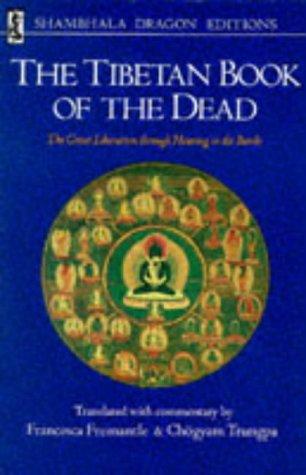
The doctrinal armature is most directly carried by Chögyam Trungpa's *Cutting Through Spiritual Materialism*. Trungpa uses the three-body framework as the structural backbone of the path's later chapters and addresses the sambhogakāya explicitly as the operative register of the Vajrayāna methods the book introduces. His collaboration with Francesca Fremantle on Karma Lingpa's *Tibetan Book of the Dead* is the most accessible English-language reading of the doctrine through the bardo sequence. The chos nyid bardo visions are sambhogakāya appearances, and the post-death sequence is mapped as a structured encounter with what practice has been training the practitioner to recognise. Tenzin Palmo's *Cave in the Snow* is the lived testimony of a Western nun whose long Himalayan retreat was structured around the three-kāya curriculum of the Drukpa Kagyu lineage. Pema Chödrön's *When Things Fall Apart* operates inside the same Tibetan inheritance and uses the doctrinal apparatus mostly without naming it. Her course on awakening compassion extends the same orientation through the bodhicitta curriculum. For the Mahāyāna textual sources, the standard English translations of the *Heart Sūtra* and *Diamond Sūtra* carry the Prajñāpāramitā substrate on which the Trikāya doctrine builds. Thich Nhat Hanh on emptiness, signlessness and aimlessness presents the doctrinal floor in Vietnamese-English idiom. The three doors of liberation he describes are the field in which the sambhogakāya and nirmāṇakāya arise. Br. Troi Duc Niem's reflection from Plum Village offers the same content one generation on. The trikaya, dharmakaya, yidam, mahamudra and dzogchen entries map the surrounding doctrinal and practice architecture.