What is Huayan?
Huayan is a Chinese Mahāyāna Buddhist school that formed in the seventh century CE around the *Avataṃsaka Sūtra*, the Flower Garland Sūtra. Its central teaching is interpenetration: every phenomenon contains and is contained by every other, without obstruction and without losing its own character. The school was synthesised by Fazang (643–712) under Tang-dynasty imperial patronage and shaped the doctrinal background of Chan, Zen, and the contemporary interbeing teaching of Thich Nhat Hanh.
Fazang and the Tang synthesis
The school takes its name from its central scripture, the *Avataṃsaka Sūtra*, in Chinese Huāyán Jīng, Flower Garland Sūtra. The text was translated from Sanskrit by Buddhabhadra in 420 CE in sixty fascicles, and retranslated by Śikṣānanda in 699 in eighty fascicles. The eighty-fascicle version became the canonical East Asian form. The Huayan tradition counts five patriarchs: Dushun (557–640), Zhiyan (602–668), Fazang (643–712), Chengguan (738–839) and Zongmi (780–841). The synthesist who gave the school its mature doctrinal shape was Fazang, the third patriarch, an ethnic Sogdian who worked at the court of the Empress Wu Zetian. Fazang's Treatise on the Golden Lion, composed as a lecture to the Empress, uses a single gold lion statue to illustrate the school's principal doctrines. It remains the most accessible single text in the school's literature. The school's institutional centre was the Yúnhuá-sì in the Tang capital of Chang'an. Its institutional life was largely absorbed by Chan after the Huichang persecution of 845, but its doctrinal contribution was preserved inside the broader East Asian Mahāyāna inheritance.
Interpenetration and the four dharma-realms
The school's central teaching is interpenetration (xiāngrù): every individual dharma contains and is contained by every other, without losing its individual character. The classical image is Indra's net (Yīntuó wǎng), drawn from the Avataṃsaka and elaborated by Fazang. Imagine an infinite net stretched across the heavens, with a jewel at every node. Each jewel reflects every other jewel in the net, and each reflection contains within it the reflections of all the other jewels, recursively without end. Fazang worked out this vision in analytical detail through the si fajie, the four dharmadhatu, four dharma-realms describing progressively comprehensive ways of understanding phenomena. The first is the shi fajie, the realm of phenomena as ordinary perception encounters them. The second is the li fajie, the realm of underlying principle, the emptiness the Madhyamaka tradition describes. The third is the lishi wu'ai fajie, the realm in which principle and phenomena interpenetrate without obstruction. The fourth is the shishi wu'ai fajie, in which phenomena and phenomena interpenetrate without obstruction. This fourth realm is the school's distinctive contribution. It moves beyond a two-truths analysis, in which phenomena are explained by reference to a deeper emptiness, into a four-level account where emptiness is what makes phenomena available to one another. The analysis takes dependent origination, emptiness and tathāgatagarbha as its foundation. The Huayan move is to read these three doctrines together as describing a single interpenetrative structure.
Reception in Chan, Zen and Plum Village
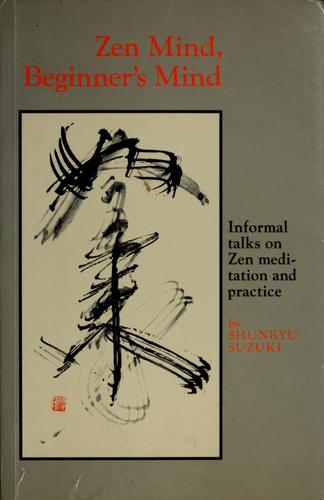
The school's institutional life faded after the ninth-century persecution, but its doctrinal inheritance was taken up by Chan and carried through it into Korean Sŏn, Japanese Zen and Vietnamese Thiền. The Huayan claim that the absolute is not behind or beneath phenomena but in their unobstructed interpenetration became the doctrinal background for the Chan insistence that awakening is not the transcendence of ordinary experience but its recognition. The familiar Chan slogan the willow is green and the flower is red compresses the Huayan analysis to its operative point. Junjīrō Takakusu's *The Essentials of Buddhist Philosophy* is the principal twentieth-century English-language survey of the East Asian doctrinal schools and treats Huayan as the doctrinal pinnacle of the Chinese Mahāyāna synthesis. *The Awakening of Faith in the Mahāyāna* supplied the doctrinal architecture the Huayan synthesis built on; the index carries the Hakeda translation, which remains the standard English-language edition. Thich Nhat Hanh on emptiness, signlessness and aimlessness is the most accessible contemporary teaching on the Huayan inheritance: the *interbeing* image Thich Nhat Hanh returns to — that a sheet of paper inter-is with the cloud, the rain, the tree, the logger, the bread the logger eats — is the Huayan interpenetration doctrine carried into Vietnamese-English idiom. Br. Troi Duc Niem's reflection from Plum Village extends the same teaching from within the next generation of the Vietnamese Mahāyāna lineage. Shunryū Suzuki's *Zen Mind, Beginner's Mind* carries the same inheritance into Sōtō Zen English. The beginner's mind the title names is the unobstructed knowing the Huayan analysis describes as available when ordinary conceptual perception loosens its grip.
What it isn't
Huayan does not claim that all phenomena are the same, or that distinctions are illusory, or that interpenetration dissolves things into a single undifferentiated absolute. The shishi wu'ai analysis preserves the particularity of each phenomenon while reading it as inseparable from every other. The willow is still the willow and the flower is still the flower. Their interpenetration is what makes their being-themselves possible, not what undoes it. The school is also not a mystical idealism, despite what the Indra's net image can suggest to Western readers. The interpenetration is not produced by a divine mind containing all phenomena. It is the structural feature of dependent origination read at its full extent. The emptiness doctrine of the Madhyamaka tradition provides the analytic warrant for taking the interpenetration as a description of how phenomena actually are, not as a poetic figure. The Huayan inheritance is not separable from the Tiantai and tathāgatagarbha developments that supplied its doctrinal materials, nor from the Chan and Zen traditions that carried the synthesis forward. The contemporary interbeing idiom is the operative tail of a synthesis the Chinese curriculum had stabilised under Tang patronage in the seventh century.