What is Tathāgatagarbha?
Tathāgatagarbha is the Mahāyāna teaching that awakened knowing is the latent ground of every sentient being's mind. The path does not produce this awakening. It uncovers something already present.
The womb of the thus-gone
The Sanskrit compound tathāgata-garbha joins tathāgata (an epithet of the Buddha meaning one thus gone or one thus come) with garbha (womb, embryo, matrix). Together they name the Mahāyāna teaching that awakened knowing is not produced by the path. It is the latent ground the path uncovers.
The word garbha is ambivalent in Sanskrit and the tradition has read it both ways. As womb, it means the awakened nature contains and gives rise to buddhahood the way a womb gives rise to a child. As embryo, it means buddhahood is already present in seed form, needing only the right conditions to mature.
The teaching first appears in third- to fifth-century Mahāyāna scriptures. The Tathāgatagarbha Sūtra offers nine similes for the buddha hidden inside ordinary experience: the gold in the dirt, the kernel inside the husk, the embryo carried by a destitute woman who does not know she carries it. The Śrīmālādevī Siṃhanāda Sūtra argues that the tathāgatagarbha supports both saṃsāra and nirvāṇa. The Mahāyāna Mahāparinirvāṇa Sūtra makes the claim explicit: all sentient beings possess buddha-nature.
The Ratnagotravibhāga (also called the Uttara-tantra-śāstra) compressed the scriptural material into a school-level doctrine. It is traditionally counted among the five treatises Asaṅga received from Maitreya. The Tibetan tradition treats it as the gotra (lineage, family) curriculum's foundational philosophical text.
How it relates to emptiness
The doctrine's most contested point is its relationship to emptiness as taught by Nāgārjuna's Madhyamaka school. Madhyamaka holds that every phenomenon lacks intrinsic nature (svabhāva). But some sūtras describe the tathāgatagarbha as permanent, blissful, self, and pure, language that sounds substantialist. The two teachings appear to be in tension.
The classical resolution distinguishes two readings. In the Tibetan gzhan stong (empty of other) view, defended by the Jonang school and adopted in parts of the Kagyu lineage, the garbha is a positive ultimate. In the rang stong (empty of self) view, dominant in the Geluk school, it is a conventional designation for an awakened nature that is itself empty in the strict Madhyamaka sense.
The East Asian inheritance, following *The Awakening of Faith* and the Laṅkāvatāra Sūtra, merged the two. It reads the tathāgatagarbha as the empty, luminous nature of mind itself. This is the buddha-nature the Chan and Zen lineages carry into the present. It is also what the Tibetan Mahāmudrā and Dzogchen curricula point the practitioner toward.
Where the doctrine surfaces in the index
The most direct text is *The Awakening of Faith in the Mahāyāna*, carried here in the Hakeda translation. The text is traditionally attributed to Aśvaghoṣa, though scholars place its composition in sixth-century China inside the Yogācāra inheritance. It reads the tathāgatagarbha and the *ālayavijñāna* into a single architecture: the storehouse consciousness, recognised as it is, is the buddha-nature the garbha doctrine names.
Junjirō Takakusu's *The Essentials of Buddhist Philosophy* surveys the East Asian doctrinal schools and reads the tathāgatagarbha across the Tiantai, Huayan, and Chan lineages as the doctrinal engine of the East Asian Mahāyāna. Thich Nhat Hanh on emptiness, signlessness and aimlessness carries the same teaching into Vietnamese Thiền idiom. His recurring image of seeds in the store consciousness is the tathāgatagarbha in plain English.
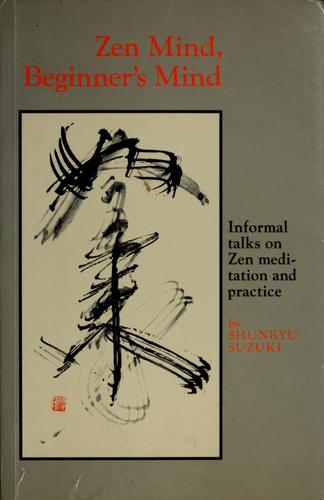
On the Tibetan side, Chögyam Trungpa's *Cutting Through Spiritual Materialism* is the foundational English-language Karma Kagyu text. It works throughout inside the tathāgatagarbha reading the lineage carries from the Ratnagotravibhāga. Pema Chödrön's *When Things Fall Apart* extends the same recognition into ordinary American emotional life without naming the technical vocabulary. The Sōtō Zen voice is Shunryū Suzuki's *Zen Mind, Beginner's Mind*. The beginner's mind of the title is the tathāgatagarbha's functional face: the unobstructed knowing that ordinary discursive activity is built on top of.
What it isn't
The tathāgatagarbha is not a soul (ātman) in the sense the anātman doctrine of the Pāli canon rules out. The school's classical argument, worked out in the Śrīmālādevī Sūtra and the Ratnagotravibhāga, is that the garbha is described as permanent and self in order to displace the defective ordinary sense of self the Buddha's earlier teaching diagnosed. The garbha is what shows when non-self is recognised completely, not partially.
It is also not a thing hidden inside the mind that the path goes searching for. The metaphors of womb, embryo, and seed are heuristic. They point toward an experiential recognition the practice is meant to occasion. They are not ontological claims about a literal entity.
The doctrine is also not a Buddhist analogue of the Christian imago Dei. The imago Dei is the impression of a creator God on a creature, with an implied metaphysical hierarchy. The tathāgatagarbha is the awakened nature of the practitioner's own mind, with no separation and no creator standing behind it.