What is Laṅkāvatāra Sūtra?
The Laṅkāvatāra Sūtra is a Mahāyāna Buddhist scripture composed in northwest India between the 3rd and 5th centuries CE. It teaches cittamātra, or mind-only: the idea that what we perceive as external reality is not independent of consciousness but is itself the activity of consciousness.
The Sanskrit title combines laṅkā (the island) with avatāra (descent or entry). The text uses an eight-consciousness model: the five sense consciousnesses, the discriminating mental consciousness (mano-vijñāna), the self-clinging manas, and the storehouse consciousness (ālaya-vijñāna) that carries karmic residues across lifetimes. Where the Madhyamaka tradition argues for emptiness through dialectical analysis, the Laṅkāvatāra argues for it phenomenologically. A meditator who watches her own perception closely will find the perceived object dissolving into the perceiving.
The text is dialogical: the bodhisattva Mahāmati questions and the Buddha replies. Doctrinal points emerge through analysis, parables, and verse-summaries (gāthās), not a single linear argument. The sūtra gives one of the earliest scriptural statements of [buddha-nature](lexicon:buddha-nature) (tathāgatagarbha): awakened knowing is the nature of the consciousness the path investigates, not something the path produces. This is part of why the tathāgatagarbha and ālaya-vijñāna doctrines have remained difficult to separate in the Indo-Tibetan tradition. The sūtra is also where the sudden awakening teaching that later shaped Chan finds one of its scriptural anchors. Liberation, the text insists, is the cessation of the discriminating habit of mind, not a gradual accumulation of content.
What it isn't
The Laṅkāvatāra is not the founding scripture of Zen in any sense an archival historian would accept. The image of Bodhidharma carrying it to China is hagiographical, dated to centuries after the events it describes, and reflects the lineage's doctrinal self-understanding rather than its archival history. The Platform Sūtra of Huineng, composed in the eighth century, is the founding text in the institutional sense. The Laṅkāvatāra's real presence in the tradition runs through the Yogācāra vocabulary the school retained, not through continuous study of the sūtra itself. The sūtra is also not a doctrinal idealism in the Berkeleyan sense. The claim that the perceived is consciousness-activity is phenomenological: it is addressed to a practitioner investigating her own experience, not a philosophical argument that the external world reduces to a perceiver's mental contents. Conflating the two is the standard nineteenth- and twentieth-century European misreading of cittamātra, and one the Laṅkāvatāra itself, in its more careful passages, repudiates.
Where to encounter it
The scholar who brought the Laṅkāvatāra to English-language Buddhism is D. T. Suzuki. His 1932 Studies in the Laṅkāvatāra Sūtra and accompanying translation remain the main Anglophone entry point. Suzuki's *An Introduction to Zen Buddhism* and the companion *Manual of Zen Buddhism* both treat the Laṅkāvatāra's doctrine as foundational to the Chan / Zen tradition; the latter reproduces selected passages in English. Alan Watts's *The Way of Zen* draws on Suzuki's reading and explains the Laṅkāvatāra's position as the text traditionally placed in Bodhidharma's hands at the start of the Chinese transmission.
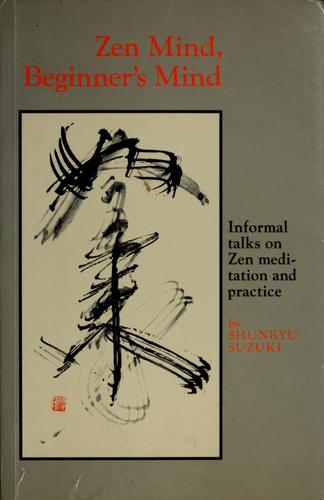
Kaiten Nukariya's *The Religion of the Samurai*, a 1913 study of Chan doctrinal history, places the Laṅkāvatāra in the same lineage frame. The sūtra's consciousness-only teaching also surfaces in Kazuaki Tanahashi's *Zen and Nonduality*, which compares the East Asian Chan inheritance with Advaita Vedānta and points to the Laṅkāvatāra as a place where the two converge. Shunryu Suzuki's *Zen Mind, Beginner's Mind* does not cite the sūtra directly but works within the Sōtō inheritance of its doctrine. The just-sitting of shikantaza, which Dōgen drew from the Laṅkāvatāra and the Platform Sūtra together, is the sūtra's phenomenological argument expressed in zazen form. No standalone English translation of the sūtra is currently in the index; the corpus reaches it through its commentarial reception.