What is Neoplatonism?
Neoplatonism is the school of Plotinus (c. 204–270 CE), the Roman-era Greek philosopher who taught in Rome and whose central doctrine is that all reality emanates from a single absolute source, the One, and returns to it. The name is a modern coinage — the philosophers themselves simply called their work Platonism. The school is the principal channel through which Greek non-dual philosophy entered Christian, Islamic, and Jewish mysticism.
What it isn't
Neoplatonism is not a single unified doctrine. Iamblichus's theurgy is a substantive departure from Plotinus's purely philosophical practice, and the later Athenian school under Proclus elaborated a far more populated ontology than the *Enneads* require. The differences between the figures are real philosophical differences, not variations within a shared system. Treating the school as one doctrine obscures this. Neoplatonism is also not a system in the modern academic sense. The surviving texts are seminar transcripts, commentaries on Plato, and treatises against opponents. None were written for a reader who wants a closed body of doctrine. The cleaner approach is to follow the figures one at a time, taking the *Enneads* as the centre of gravity around which they orbit at varying distances.
The school and its lineage
The school traces to Ammonius Saccas, who taught both Plotinus and the Christian theologian Origen at Alexandria in the third century. Ammonius left no writings; the substantive philosophical content was Plotinus's. After Plotinus's death in 270, his student Porphyry collected the surviving fifty-four treatises into the six groups of nine that the *Enneads* takes its title from. Porphyry's student Iamblichus (c. 245–325) opened a school in Syria and elaborated the system in a more ritual direction. He called this theurgy: the structured invocation of divine names and figures as a complement to philosophical contemplation. The Athenian successors Plutarch of Athens, Syrianus, and most influentially Proclus (412–485) wrote the dense commentary literature through which the system was transmitted to the medieval world. Proclus's student Damascius was the last head of the school of Athens. His tenure ended in 529 CE when the emperor Justinian closed the institution as part of a broader campaign against pagan philosophical centres.
The One, Intellect, Soul
The Plotinian metaphysics arranges reality as a hierarchical emanation from a single absolute source. At the top is to Hen, the One: simple, beyond being and predication, the condition of possibility for everything, yet not itself one thing among others. From the One emanates Nous, Intellect, the level at which thought and its object are not yet separate. Plato's Forms reside here, contemplated by an intelligence that is what it contemplates. From Intellect emanates Psychē, Soul, which orders the temporal cosmos and through which individual souls participate in the structure. The system closes with a fourth term, the henōsis (return): the practitioner's progressive turning inward through Soul to Intellect and finally to the One. Plotinus called this movement the flight of the alone to the alone. Because no positive predicate properly attaches to the One, the procedure that reaches it is necessarily negative. Every affirmation must be unsaid, every image released. The school's procedure is therefore apophatic by structural necessity rather than by stylistic preference.
The Christian, Islamic and Jewish reception
Neoplatonism reached Christianity through two intermediaries. The first is Augustine of Hippo. In the Confessions, he names certain books of the Platonists as the philosophical preparation through which he first grasped that the divine is not a body. Those books were almost certainly Plotinus in the Latin translation of Marius Victorinus. The second is Pseudo-Dionysius, writing in Syria around 500 CE. His Divine Names and Mystical Theology are structurally Plotinian and became canonical for the medieval Latin and Greek contemplative traditions. Through Pseudo-Dionysius, the Godhead-beyond-God register of Meister Eckhart and the cloud of unknowing of the fourteenth-century English contemplatives are Plotinian under a thin disguise. Islamic philosophy received the system through the Theology of Aristotle, an Arabic paraphrase of Enneads IV–VI misattributed to Aristotle. Through it, al-Fārābī, al-Ghazālī and Ibn ʿArabī absorbed the framework inside which the Sufi [waḥdat al-wujūd](lexicon:wahdat-al-wujud) doctrine operates. The Jewish reception ran more indirectly, through medieval Kabbalah and through the Renaissance Hermetic–Kabbalist synthesis in Ficino's Florence. There, Plotinus was translated into Latin alongside Hermes Trismegistus and read as part of a single prisca theologia.
Where it surfaces in the index
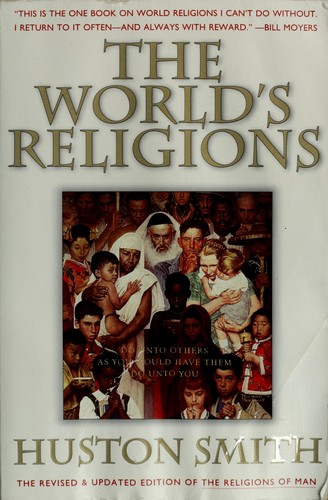
Neoplatonism enters the index obliquely, through the traditions it shaped rather than under its own name. Jonathan Pageau's iconographic work reads the Eastern Orthodox visual grammar as a Plotinian emanationist scheme. The icon's hierarchical descent of forms is structurally what the Enneads describe in late-Greek prose. Huston Smith's *The World's Religions* treats the Plotinus chapter as the spine of any honest comparative account of Western mysticism. Thomas Merton's *New Seeds of Contemplation* and *Thoughts in Solitude* write from inside the Christian contemplative line that descends from the Neoplatonic transmission. For the non-dual restatement of the henōsis in present-day English without the Hellenistic apparatus, Rupert Spira's *Being Aware of Being Aware* and his long-form lecture on how the infinite knows the finite work the same recognition in direct-path vocabulary. Nisargadatta's *I Am That* and Adyashanti's *Do Nothing* are the closest twentieth- and twenty-first-century parallels that the perennial-philosophy reading in the Aldous Huxley entry maps. The cross-tradition mapping is the corpus's primary use for the school.