What is Waḥdat al-Wujūd?
Waḥdat al-wujūd means the unity of being in Arabic. It is the central metaphysical doctrine of Sufi mysticism, most associated with Ibn ʿArabī (1165–1240). The doctrine holds that only one reality truly exists. What we call the world is not a separate thing alongside God but God's own self-disclosure. The position is the Islamic tradition's closest parallel to non-duality, and it resembles advaita Vedānta's only Brahman is real.
What the doctrine claims
Waḥdat al-wujūd, the unity of being, names a metaphysical position elaborated by Ibn ʿArabī (1165–1240) and given its systematic form by his stepson and commentator Ṣadr al-Dīn al-Qūnawī. The claim, stated plainly: only God truly is. Created things have no independent existence alongside God. They are self-disclosures (tajalliyāt) of the one Being, modes through which the absolute manifests itself to itself. The world is real, but its reality is not its own. To exist is to participate, momentarily, in the existence of the only One who exists.
The position is not a denial of multiplicity. The cup is still a cup; the lover still loves the beloved. What the doctrine denies is the ontological independence of the cup, the lover, and the beloved from the single underlying reality. They are real as appearances of the one Being, not real alongside it. The structural parallel to advaita Vedānta is close. The seventeenth-century Mughal prince Dārā Shikōh argued in his Majmaʿ al-Baḥrayn (The Meeting of the Two Seas) that the two traditions were the same recognition in different vocabularies, the Sanskrit and the Arabic each saying only the One exists in their own idiom.
Where to encounter it
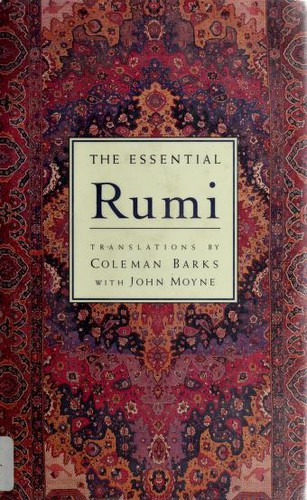
The primary texts are dense and the English translations technical. Ibn ʿArabī's Fuṣūṣ al-Ḥikam (The Bezels of Wisdom) is the shorter and the more difficult. The Futūḥāt al-Makkiyya (The Meccan Openings) is the encyclopaedic version, only partially available in English. Most readers encounter waḥdat al-wujūd not as systematic theology but as the metaphysical undertow of the Sufi poets. Coleman Barks's *The Essential Rumi*, the book that introduced Rūmī to a generation of English readers, turns on lines about the single ocean and its waves that are nothing other than itself. The Mojaddedi translation of book one of the *Masnavī* is the closer scholarly text for the same material. Hafiz's *The Gift*, in Daniel Ladinsky's loose adaptation, lands the same recognition in shorter lyrics. Idries Shah's *The Sufis* frames the tradition as a single perennialist current and is sympathetic to the doctrine without naming it in technical vocabulary.
For the comparative move between Sufi metaphysics and Hindu non-dualism, the closest non-dual counterparts in the index are Nisargadatta Maharaj's *I Am That* and Rupert Spira's *Being Aware of Being Aware*, together with Spira's longer guided enquiries. The vocabulary is different; the recognition the practitioner is being pointed at is structurally the same.
What it isn't
Waḥdat al-wujūd is not pantheism in the careless sense, the claim that everything is God. Its proponents distinguish the absolute Being from its self-disclosures: God is the substance, the world is the accident, and the two are not on the same ontological level. Critics within Islam, most prominently the Naqshbandī master Aḥmad Sirhindī (1564–1624), pressed the distinction further with the competing formula waḥdat al-shuhūd, the unity of witnessing. Sirhindī held that the unity is experiential rather than ontological. Whether that distinction does real metaphysical work, or merely re-describes the same recognition in safer language, is a question scholars have argued for four centuries.
The doctrine is not the consensus of mainstream Sunnī jurisprudence. Orthodox jurists from Ibn Taymiyya in the fourteenth century to contemporary Salafī polemicists have charged Ibn ʿArabī with pantheism. Several earlier proponents paid for the formulation with their lives, including the tenth-century Persian Sufi al-Ḥallāj, executed in Baghdad in 922 for the cry anā al-ḥaqq, I am the Truth. The metaphysics has costs. That the non-dual Vedāntins and the Christian apophatic theologians describe the same recognition, yet none of those traditions executed their own, is a fact about Islamic legal history more than about the doctrine itself.