What is the Enneads?
The Enneads are the fifty-four philosophical treatises of Plotinus (c. 204–270 CE), collected and arranged by his student Porphyry into six groups of nine after Plotinus died. They are the founding document of Neoplatonism and the principal text through which Platonic philosophy passed into Christian and Islamic mysticism.
Porphyry completed the editorial work in Rome a generation after his teacher's death. He divided Plotinus's treatises by subject and arranged each subject to receive nine — the Greek ennea — partly from doctrinal preference for the number, and partly because it produced a tidy six-volume corpus. The First Ennead covers ethics and the human person. The second and third treat the physical cosmos. The fourth turns to the soul; the fifth to the Intellect (Nous); the sixth, longest and most celebrated, to the One (to Hen). The architecture is hierarchical: the One overflows into Intellect, Intellect into Soul, Soul orders the cosmos. Return to the One is possible through contemplative ascent, stripping away particularity, image, and finally thought itself. Plotinus is said to have undergone this absorption four times in his own life, by Porphyry's count.
The prose is famously difficult. Plotinus wrote in late Greek with little concern for the reader, dictated rather than drafted, and refused to revise. What survives is the live voice of a philosopher thinking out loud across two decades of seminars at his Roman school, with the rough edges intact. Stephen MacKenna's English translation of the early twentieth century is the one most contemplative readers have used. Lloyd Gerson's Cambridge edition is the closer scholarly text.
The Enneads and adjacent traditions
The Enneads are not a Christian text and Plotinus was not a Christian. He lived in third-century Rome, taught a pagan philosophical school, and seems to have known very little about Christianity. He did write a treatise Against the Gnostics (Ennead II.9) polemicising against a movement he encountered in his lecture hall. The near-total Christian appropriation of his metaphysics is a later development. The doctrine of the One is structurally available to any monotheism and has been borrowed by most. The Enneads are also not Plato's dialogues. Plotinus drew on Plato deeply but systematised, extended, and reframed what Plato left suggestive. A reader expecting dialogic method and political thought will find something different: dense metaphysical treatises with no dramatic frame. Finally, the Enneads are not a unified system. Plotinus did not arrange them. Porphyry did, decades after his teacher's death. The internal repetitions and shifts of emphasis are traces of an oral teaching captured at different moments.
How the text has been read
The Enneads are read in three overlapping registers. As philosophy, they complete what Plato left implicit and pass it on to the Christian, Islamic, and Jewish traditions that took up the question of the One. As theology, they are the source-text of Christian apophatic theology, the discipline of saying what God is not, since what God is exceeds language. Pseudo-Dionysius the Areopagite, writing in Syria around 500 CE, drew the Plotinian moves directly into Christian terminology. Through him the entire Christian contemplative line descends: Meister Eckhart, the via negativa of The Cloud of Unknowing, and the modern centering prayer tradition all elaborate moves Plotinus made first.
As non-dual phenomenology, the Enneads describe a contemplative recognition that maps closely onto the Advaitic tat tvam asi and the Sufi *waḥdat al-wujūd*. Aldous Huxley used Plotinus as a touchstone for the perennial philosophy on this basis.
Where it surfaces in the index
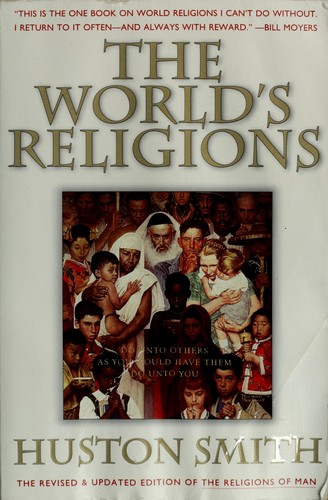
Plotinus is not the subject of a primary recorded teaching in the index. No lecture or course in his name has been added. He surfaces through the writers who quote him and through the contemplative tradition he founded. Huston Smith's *The World's Religions* treats Plotinus as the spine of Western mystical philosophy and an obligatory comparativist reference. Thomas Merton's *New Seeds of Contemplation* and his earlier *Thoughts in Solitude* write from inside the Christian contemplative line that descends from him. Jonathan Pageau's iconographic work treats the Neoplatonic emanationist structure as the metaphysical grammar Eastern Orthodox icons are organised by.
For the non-dual restatement of the Plotinian ascent (strip away the seer until only seeing remains), contemporary teachers in the index work the same recognition without the late-Greek vocabulary: Rupert Spira's *Being Aware of Being Aware*, Nisargadatta's *I Am That*, and Adyashanti's *Do Nothing* all describe what Plotinus described in Ennead VI.9, the closing treatise of the corpus, when he wrote of the flight of the alone to the Alone.