What is Mansūr al-Ḥallāj?
Mansūr al-Ḥallāj (c. 858–922) was a Persian Sufi mystic executed in Baghdad for the ecstatic utterance anā al-Ḥaqq — I am the Real. The phrase is among the most contested acts of speech in classical Islamic thought. Orthodox jurists read it as a claim to identity with God. The Sufi tradition reads it as a record of what happens when the apparent self dissolves and the divine alone remains.
Ḥallāj vs adjacent concepts
Anā al-Ḥaqq is often read as blasphemy — the claim that Ḥallāj believed himself to be God. The Sufi reading is different. *Fanāʾ*, the dissolution of the apparent self in God, produces states in which the first-person speaker is no longer the self but the divine speaking through what was the self. The grammar is first-personal. The ontology is not. Ḥallāj was condemned for the public speech, not for the experience the speech recorded.
Ḥallāj is sometimes grouped with Ibn ʿArabī under the heading of waḥdat al-wujūd — the unity of being. The two figures are related but distinct. Ibn ʿArabī, writing three centuries later, built the systematic doctrinal scaffolding that could explain what Ḥallāj had done. Ḥallāj himself had no equivalent system. He was a practitioner and preacher, not a theologian.
Ḥallāj is also not a Sufi order founder. No Ḥallājī ṭarīqa ever crystallised. The major Sufi orders trace their lineages back to Junayd of Baghdad — who was Ḥallāj's teacher, and who declined to defend him at his trial.
Life and the execution
He was born around 858 in the town of Ṭūr in Fārs. His father was a wool-carder (ḥallāj in Arabic, the trade name that became the family patronymic), probably of Zoroastrian background recently converted to Islam. His earliest training was under the Baghdad teacher Sahl al-Tustarī, with whom he spent two years in the early 870s. He then entered the circle of Junayd, but failed to find a settled place in Junayd's more sober teaching. He took the khirqa (the patched cloak of the Sufi initiate) from a third teacher, ʿAmr ibn ʿUthmān al-Makkī, with whom he eventually broke.
From the 880s onwards he became a wandering preacher who left the lodge system to take Sufi teaching into the marketplace. The institutional authorities of Baghdad treated this as a serious breach. He made three pilgrimages to Mecca — one of them barefoot and silent for a year — and travelled through Sind, Gujarat, Khurasan, and the Central Asian frontier. He accumulated a large public following that crossed the social lines the ʿAbbāsid jurists wanted preserved.
He was arrested in 911 and held in Baghdad for nine years. He was tried under the vizier ʿAlī ibn ʿĪsā, re-tried under his successor Ḥāmid, and executed on 26 March 922: flogged, hung on a gibbet at the Bāb al-Ṭāq square, dismembered, and his torso burned.
The trial record is unusually full for the period. The charges combined doctrinal accusations — the anā al-Ḥaqq utterance, claims of identity with God, alleged Qarmaṭī sympathies — with political ones, including rumoured contact with the ʿAlid pretender in Khurasan. The modern scholarly consensus, developed most fully in Louis Massignon's four-volume La Passion de Husayn ibn Mansûr Hallâj (1922, expanded posthumously 1975), is that the political charges were operative and the doctrinal framing was the public cover.
Anā al-Ḥaqq and the doctrinal question
The trial turned on two Arabic words: anā al-Ḥaqq, I am the Real. Al-Ḥaqq is one of the ninety-nine names of God in the Islamic tradition. The utterance can be read in two ways. In the *fanāʾ* reading, the apparent self has dissolved and what remains is the divine alone. The grammatical first-person belongs to God speaking through the dissolved self, not to a man claiming to be God. In the orthodox reading, the statement is the cardinal blasphemy.
Ḥallāj himself, in the surviving fragments of the Kitāb al-Ṭawāsīn, treats it as the former. The ʿAbbāsid jurists treated it as the latter.
The same recognition appears in other traditions. Advaita Vedānta encodes it in the mahāvākya *tat tvam asi* — that thou art — and in the ahaṃ brahmāsmi of the *Bṛhadāraṇyaka Upaniṣad* — I am brahman. The structure is the same in each case: the apparent first-person, followed to its ground, turns out to be the absolute speaking through what was the separate self.
Ḥallāj's tragedy is that the Islamic juridical apparatus of his time had no vocabulary for distinguishing the fanāʾ-utterance from the blasphemous claim. He had also taken the teaching into the public square, removing the doctrinal hedging the Junayd school had built to protect it.
The doctrinal aftermath
Ḥallāj's death became the founding event of the orthodox-mystical synthesis the major Sufi orders crystallised around in the eleventh and twelfth centuries. Junayd's school's commitment to the fanāʾ–*baqāʾ* pair, and to sobriety after intoxication, was sharpened by what had happened to the man who had not observed those constraints.
The intoxicated register Ḥallāj represented — shared by Abū Yazīd al-Bisṭāmī, whose utterance Glory be to me; how great is my majesty sits in the same line — was preserved in poetry rather than in public teaching. Rumi's *Masnavī* and Hafiz's Dīvān both return repeatedly to Ḥallāj as a figure of vindicated truth.
Ibn ʿArabī's thirteenth-century synthesis is the most consequential doctrinal vindication. The *waḥdat al-wujūd* laid out in the Fuṣūṣ al-Ḥikam is the systematic exposition of what Ḥallāj had compressed into two words.
The position Al-Ghazālī takes in Iḥyāʾ ʿUlūm al-Dīn became the standard jurisprudential settlement: the ecstatic state is real, utterances spoken inside it are not legal evidence against the speaker, and the practice that produces such states is permissible inside the lodges but not in the public square.
Where the recognition shows up in the index
The English-language material in the index that names Ḥallāj directly is thin. The gap is noted in the Sufism, dhikr and fanāʾ entries. But the recognition the anā al-Ḥaqq compresses appears across the corpus through adjacent traditions.
Nisargadatta Maharaj's *I Am That* is the most uncompromising twentieth-century articulation in English of the same structural recognition. The title is a translation of the mahāvākya the doctrine compresses. The dialogues conduct the same investigation Ḥallāj had conducted from inside the Islamic register a thousand years earlier: a patient pursuit of the apparent I until it is found to be a residual identification rather than a substantial self. Rupert Spira's *Being Aware of Being Aware* takes the same procedure as a careful enquiry, and his longer talk on how the infinite knows the finite extends it discursively. Adyashanti's *Do Nothing* is the lighter doorway.
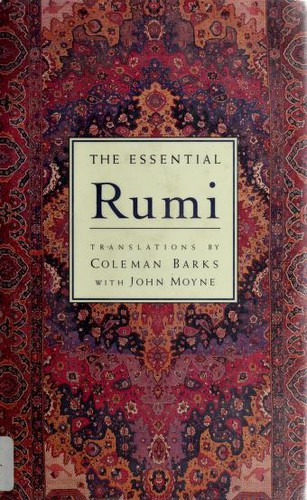
Coleman Barks's *The Essential Rumi* preserves the Sufi-vernacular reception of Ḥallāj most directly in English. The Masnavī parables in which Ḥallāj appears, the Dīvān fragments that name him, and the implication across the Persianate lyric tradition that what he was killed for saying was true are all present. Barks's *Rumi: Bridge to the Soul* and the Coleman Barks audiobook readings carry the same material in adjacent forms.
The neighbouring Junayd, waḥdat al-wujūd, fanāʾ and Ibn ʿArabī entries map the doctrinal apparatus the anā al-Ḥaqq utterance forced the tradition to develop in response.
What he isn't
Ḥallāj is not the unproblematic mystical hero the modern Western popular reception has made him. The historical record holds a much more contested figure: politically entangled with the ʿAbbāsid succession crises of his moment, doctrinally unstable in ways the early biographers (Hujwīrī, ʿAṭṭār) registered without resolving, and uncomfortable to the institutional Sufi establishment of Baghdad.
He is not the founder of a *ṭarīqa*. No Ḥallājī order ever crystallised. The major *silsilas* trace themselves back to Junayd, not to him.
The anā al-Ḥaqq utterance is also not a propositional doctrine. Ḥallāj did not produce a theology that could be taught as a settled curriculum. The Kitāb al-Ṭawāsīn fragments are aphoristic and pointer-like, not systematic.
The standard Western framing of his execution as religious persecution by a literalist orthodoxy is only part of the picture. The political dimensions of the trial were operative, and the Sufi establishment of Baghdad was not on his side.
What the tradition has preserved is not the historical Ḥallāj but the figure that centuries of Sufi reflection have made of him: a reminder, in poetry and prose, that the recognition the path produces is real, and that speaking it outside the conditions the lodges built to contain it is a different kind of operation.