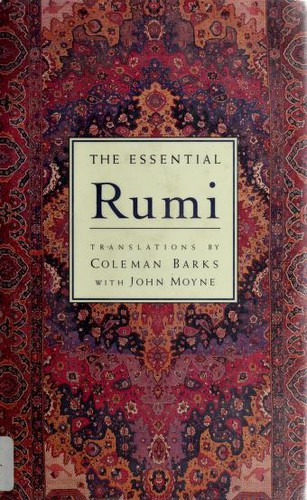
What is Coleman Barks?
Coleman Barks (1937–2026) was an American poet who made Rūmī the bestselling poet in the United States. He did not read Persian. His free-verse English renderings were built from literal cribs by the Cambridge Persianist A. J. Arberry (1905–1969) and the scholar Reynold Nicholson (1868–1945), with help from the Iranian-born linguist John Moyne, who collaborated on most of the early volumes. Barks's working method, by his own account, was to take Arberry's prose translations, find the poetic centre buried in the literal English, and write a free-verse American line that captured what he understood Rūmī to be doing. The first volume appeared in 1976. *The Essential Rumi*, published by HarperOne in 1995, is the book that made Rūmī the bestselling poet in the United States.
Interpreter, not translator
The Barks Rūmī is not a translation in the sense the academic field uses the word. Persian scholars have made this point for thirty years. Franklin Lewis's Rumi: Past and Present, East and West (2000) is the most thorough single critique, and the field has not changed its view. The renderings are also not what the Mevlevi order would recognise as a faithful presentation of the text it has been reciting in samāʿ for seven centuries. The quranic exegesis Barks strips out is the operative substance of the *Masnavi* in Sufi liturgical use. The love the Persian text describes is ʿishq, the technical term for the soul's structural orientation toward God. In the tradition, the human relationships the poem describes are read as mediated love, not as its object. The Barks lines tend to read as poems about ordinary human romantic love. That is not what the Persian supports. Barks consistently argued for the renderings as poetry on their own terms, separate from whether they are Rūmī. The publishing record bears that out.
What the renderings produced
The Barks Rūmī strips the quranic citations that anchor nearly every parable in the *Masnavi*. The technical Sufi vocabulary — *fanāʾ*, baqāʾ, ʿishq — and the doctrinal framework drawn from Ibn ʿArabī and the Khurasanian tradition are dissolved into plain American English. Arabic and Persian invocations are removed. The result is a Rūmī more lyrical than philosophical, more universalist than Islamic, more accessible than dense. The verse line owes as much to William Carlos Williams and Robert Bly as to the Persian prosody. The parables are regrouped into thematic clusters the original does not have. It reads like devotional poetry by a contemporary American. That is not what the Masnavi is.
Where the renderings surface in the index
*The Essential Rumi* is the version most English-language readers encounter first. The scholarly counterpart in the index is Jawid Mojaddedi's Oxford World's Classics translation of book one of the *Masnavī*, a more faithful path into the Persian text. The broader Sufi context Barks strips out is covered by Idries Shah's *The Sufis*. Shah's book is itself an English-language popularisation the academic field has questioned for similar reasons: it frames Sufism as a non-sectarian wisdom tradition rather than an Islamic mystical movement, which is the same move Barks's reception extended. The closest direct analogue is Daniel Ladinsky's *The Gift*, his renderings of Hafiz. Ladinsky's working method, distance from the Persian, and reception trajectory parallel Barks's almost exactly, a generation later and on a poet a century younger than Rūmī.