What is Beginner's mind?
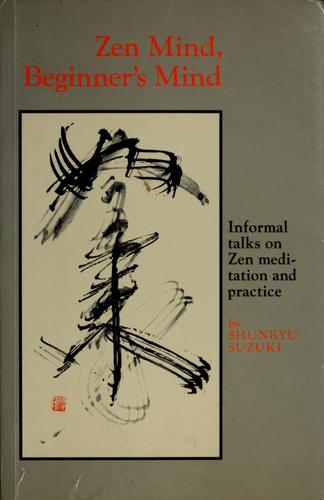
Shoshin is the Zen term for meeting the present moment without the filter of accumulated expertise. Shunryū Suzuki made it the central idea of his 1970 book Zen Mind, Beginner's Mind, whose opening line — in the beginner's mind there are many possibilities; in the expert's there are few — became the most-quoted sentence in Anglophone Buddhism.
The word is built from two Japanese characters: sho (beginning, original) and shin (mind or heart). The claim the term makes is structural. Expertise builds a mental filter that organises perception in advance. What an experienced practitioner sees in a zazen posture, a kōan, or a passing thought is already sorted by years of practice. That filter is useful in ordinary life and a liability in contemplative practice, where the point is to meet the prior, unsorted field of experience directly. Shoshin names the capacity to sit without letting the filter run — not by pretending the years of practice did not happen, but by not letting them pre-arrange the present moment.
Beginner's mind vs. naïveté and casual use
Beginner's mind is not naïveté. The practitioner with ten years of zazen does not pretend to be new. The recognition is that those ten years have produced the very filter the practice is now meant to suspend. The willingness to meet the next sit as though that filter were not running is what shoshin means. It is also not, in the Suzuki register, a license for the absence of training. The Sōtō school's position is that the suspension is only intelligible against the form that training has stabilised. Without the form, there is nothing to suspend. The contemporary self-help use of shoshin — "approach every situation with beginner's mind" — keeps the phrase and discards the condition that gave it content. What Suzuki named is what becomes available inside a sustained training when the practitioner stops mistaking the training's products for the training's goal.
The book and the lineage
*Zen Mind, Beginner's Mind* was assembled from talks Suzuki gave to American students in the 1960s, edited by Marian Derby and Trudy Dixon, and published in 1970 — a year before Suzuki died of gallbladder cancer. The register is deliberately plain. The talks treat shikantaza — just sitting — not as a beginner's technique before the kōan curriculum but as the central work of the Sōtō school, faithful to Dōgen's thirteenth-century Fukan-zazengi. The instruction is consistent throughout: posture, breath, presence with whatever arises, no adding. That plainness is itself the teaching the term names. The book has remained in print for over fifty years and is most often recommended in English as a first encounter with sustained Zen practice.
Where it surfaces in the index
*Zen Mind, Beginner's Mind* is the canonical English source. Adyashanti's *Do Nothing* is its American descendant — fourteen years of Maezumi-lineage Sōtō-Rinzai training stand behind it, and the framing Adyashanti uses (recognition rather than attainment) is shoshin operationalised without the Japanese vocabulary. Alan Watts's *The Way of Zen* is the bridge that gave Suzuki's eventual audience its working categories. Watts tends to emphasise the dramatic register the Rinzai curriculum prizes; reading him alongside Suzuki shows the two registers in dialogue. D.T. Suzuki's essays stand behind both — the technical Anglophone vocabulary of Zen entered English through that channel. On the Mahāyāna side, Thich Nhat Hanh on emptiness, signlessness and aimlessness reaches the same orientation from the Vietnamese Thiền lineage, and the Plum Village teaching from Br. Troi Duc Niem carries the same register into the next monastic generation.