What is D.T. Suzuki?
D.T. Suzuki (1870–1966) was a Japanese scholar and the most influential English-language interpreter of Zen Buddhism. Born Teitarō Suzuki in Kanazawa, he trained at the Rinzai monastery Engaku-ji under Shaku Sōen, who gave him the dharma name Daisetsu, meaning Great Simplicity. His Essays in Zen Buddhism (1927–1934) and Manual of Zen Buddhism (1935) were the first systematic expositions of Rinzai Zen in English. The technical vocabulary English speakers now use for the tradition, including zazen, kōan, kenshō, and satori, entered general use largely through his books.
D.T. Suzuki and similar figures
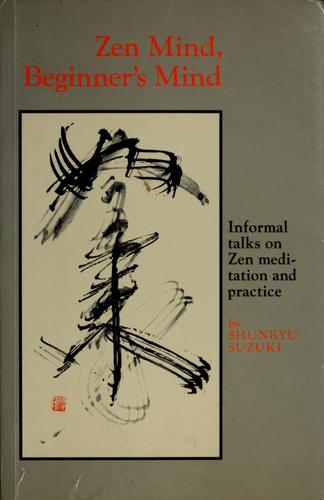
D.T. Suzuki is often confused with Shunryū Suzuki. They share a surname but are unrelated. D.T. was a scholar and translator; Shunryū was a Sōtō priest who founded the San Francisco Zen Center and brought residential sitting practice to America a generation later. D.T. is also distinct from Alan Watts, who built on D.T.'s scholarly platform but was a writer and broadcaster rather than a trained practitioner or academic translator.
Life and training
Suzuki was born in 1870 in Kanazawa into a samurai family that the Meiji Restoration had left impoverished. He trained under Shaku Sōen at Engaku-ji, the Rinzai monastery in Kamakura. Sōen brought him to the 1893 World Parliament of Religions in Chicago as a translator, marking the first serious encounter between English-speaking American audiences and an ordained Japanese Zen teacher. Suzuki stayed in the United States from 1897 to 1909, working as translator and editor at the Open Court Publishing Company in LaSalle, Illinois under the philosopher Paul Carus. He returned to Japan and married the American Theosophist Beatrice Lane in 1911. He took a teaching post at Otani University in Kyoto, which remained his base for the rest of his career, apart from a second period in the United States in the 1950s as a visiting lecturer at Columbia.
The English-language project
Suzuki's three-volume Essays in Zen Buddhism (1927, 1933, 1934) was the first systematic exposition of Rinzai Zen literature in English. Manual of Zen Buddhism (1935) collected liturgical texts, the Hakuin Wasan, and selections from the kōan records in translation. Zen Doctrine of No-Mind (1949) focused on Huineng. Zen and Japanese Culture (1959) argued for an internal connection between Zen training and the aesthetic disciplines of tea, calligraphy, archery, and swordsmanship. That argument has been contested by later scholars. The standard English-language Suzuki remains the core body of work for an Anglophone reader approaching the Rinzai records. Alan Watts's *The Way of Zen*, written in 1957, acknowledges in its preface that it would have been impossible without Suzuki's preceding decades of translation.
The bridge to Christianity
From the 1930s onward, Suzuki argued that Meister Eckhart's account of the Godhead and the Birth of the Word in the Soul was structurally the same as what Zen calls kenshō. Mysticism: Christian and Buddhist (1957) developed this argument across two hundred pages of close textual reading. He corresponded with Thomas Merton through the early 1960s. Merton's Zen and the Birds of Appetite (1968) collected their exchanges and Merton's essays on Mahāyāna emptiness. The title came from a remark Suzuki made about Christian mystics. The German theologian Hugo Lassalle and the psychiatrist Karlfried Graf Dürckheim were working on the same project in Europe. The apophatic theology tradition gave Suzuki the Christian vocabulary he needed for the comparison. The mysticism entry maps the broader convergence.
Reception and contestation
Suzuki's reading of Zen was Rinzai-leaning, kōan-centred, and foregrounded sudden enlightenment. Later scholars, including Bernard Faure, Robert Sharf, and Brian Victoria, have argued that he constructed an ahistorical Zen shaped for Western philosophical taste, that he downplayed the institutional and ritual dimensions of actual Japanese practice, and that he was more politically compromised in the 1930s and 1940s than his postwar reputation suggested. His wartime essays have been read as accommodation with the Japanese militarist state. How to weigh that record against his comparative-religious work remains contested. Despite the criticism, most English-language Zen vocabulary still descends from the framework he put in place.
Where to encounter him in the index
The standard English-language Suzuki is the entry point. The Essays and the Manual are still in print, and the early translations are still cited. Alan Watts's *The Way of Zen* is the popularising bridge that took Suzuki's platform and prepared an American audience for what Shunryū Suzuki would bring a decade later as a sustained sitting practice. *Zen Mind, Beginner's Mind* is the practice-side counterpart to D.T.'s scholarship. Adyashanti's *Do Nothing* is a contemporary American descendant of the Maezumi-Glassman lineage. Adyashanti's framing of recognition rather than attainment echoes the position Suzuki spent forty years arguing into Western readers' vocabulary.